
Case Study: Fuel Savings Achieved with Maanya Boilers
Introduction: How Maanya Boilers is Redefining Industrial Efficiency
Fuel saving with Maanya Boilers is not just a concept—it’s a proven engineering reality. Across India’s industrial landscape, especially in energy-intensive sectors like rice milling, food processing, and textiles, energy efficiency has become the backbone of profitability.
In the competitive rice milling industry of Uttar Pradesh, rising fuel costs and outdated boiler systems were major obstacles to maintaining sustainable margins. Recognizing this challenge, Maanya Boilers Pvt. Ltd., one of India’s leading IBR-certified boiler manufacturers, partnered with a top rice mill to optimize its steam generation process.
This case study explores how a 4 TPH (Tons Per Hour) Water-Tube Boiler from Maanya Boilers transformed operational efficiency, reduced fuel consumption, and delivered a faster ROI—proving that modernization is not an expense, but an investment in performance and sustainability.
Industry Background: The Role of Boilers in Rice Milling
The rice milling process depends heavily on consistent and reliable steam supply for parboiling, drying, and milling. In most Indian mills, rice husk—a by-product of the milling process—is used as a primary fuel source due to its easy availability and cost-effectiveness.
However, many rice mills still rely on old, inefficient husk-fired boilers with limited heat transfer capability and poor combustion control. These systems waste significant amounts of fuel, generate excessive ash, and increase maintenance costs.
In contrast, fuel saving with Maanya Boilers has become a benchmark for modern mills looking to maximize energy efficiency, reduce operating costs, and minimize environmental impact—all while complying with IBR safety standards.
The Challenge: High Fuel Costs and Frequent Downtime
Before collaborating with Maanya Boilers, the rice mill faced multiple operational issues that directly affected productivity and profitability.
1. Inefficient Fuel Usage
The existing husk-fired boiler was over 10 years old and operated at only 60% efficiency. For every kilogram of rice husk burned, the system produced merely 3.2–3.5 kg of steam—far below the industry benchmark.
2. Frequent Maintenance Shutdowns
The boiler required frequent cleaning and manual ash removal, resulting in extended downtime and inconsistent steam availability.
3. Unstable Pressure and Temperature
Due to uneven combustion and poor air-fuel control, steam output fluctuated during production, disrupting the parboiling process and reducing product quality.
4. High Labor and Operational Costs
Manual ash handling and cleaning increased labor costs, while irregular maintenance led to higher repair expenses.
5. Declining Profit Margins
The combination of high fuel consumption, maintenance delays, and energy inefficiency led to rising costs, reduced throughput, and declining ROI.
The mill’s management realized the need for a reliable, high-efficiency, IBR-compliant solution to ensure sustained growth and profitability.
The Solution: Installing a Maanya 4 TPH Water-Tube Boiler
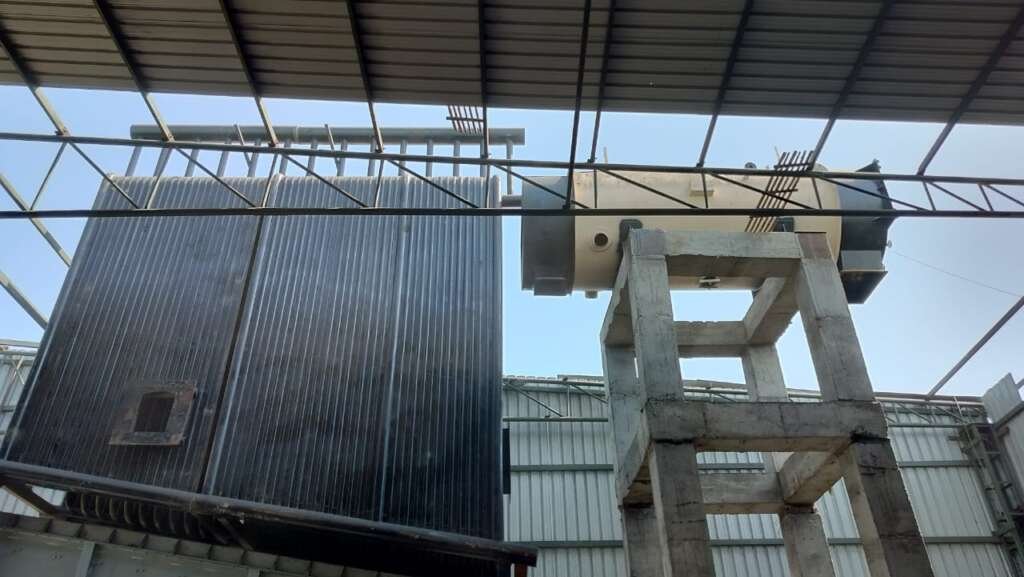
After a detailed site audit and performance analysis, the Maanya Boilers technical team proposed replacing the outdated system with a 4 TPH Water-Tube Boiler, specifically optimized for rice husk fuel.
This upgrade represented more than just equipment replacement—it was a comprehensive shift toward fuel efficiency, operational reliability, and sustainable steam generation.
Key Features of the Maanya Water-Tube Boiler
The fuel saving with Maanya Boilers technology is powered by engineering precision and IBR-certified safety.
Here are the standout features that made the 4 TPH Water-Tube Boiler a game-changer:
- High Combustion Efficiency:
The advanced furnace design ensures complete combustion of rice husk, minimizing unburned fuel and particulate emissions. - Optimized Air Control:
An automatic balanced draft system adjusts airflow for optimal air-fuel ratios, ensuring consistent and efficient burning. - Integrated Heat Recovery:
The inclusion of an economizer and air preheater recovers heat from flue gases, increasing overall thermal efficiency by 10–12%. - Mechanized Ash Handling System:
Automated ash removal reduces manual labor, prevents blockages, and supports continuous operation. - Low Maintenance Design:
Easy access points for cleaning and a sturdy IBR-certified construction ensure long life and minimal downtime. - Sustainability Focus:
Reduced emissions and efficient combustion contribute to lower carbon footprints and cleaner production. - IBR Compliance:
The system meets all Indian Boiler Regulation (IBR) safety and quality standards—critical for industrial approval and long-term reliability.
Performance Comparison: Old vs. Maanya Boiler
| Parameter | Old Husk-Fired Boiler | Maanya 4 TPH Water-Tube Boiler |
|---|---|---|
| Steam Output | 3.2–3.5 kg steam/kg husk | 4.2 kg steam/kg husk |
| Efficiency | ~60% | 78–82% |
| Downtime | Frequent | Minimal |
| Ash Handling | Manual | Mechanized |
| Maintenance | High | Low |
| Steam Quality | Fluctuating | Consistent |
This clear performance jump directly reflected how fuel saving with Maanya Boilers results in measurable operational benefits.
The Results: Measurable Efficiency and ROI Gains
Within just a few weeks of commissioning the Maanya 4 TPH Water-Tube Boiler, the rice mill began observing tangible results across key performance metrics:
- Efficiency Increased: From 60% to 82%, marking a 35% improvement.
- Steam Output: Improved from 3.2 to 4.2 kg steam/kg husk, translating into direct fuel savings.
- Downtime Reduced: Unplanned shutdowns were reduced by over 70%.
- Maintenance Cost: Decreased significantly due to improved system reliability.
- Fuel Savings: Husk consumption dropped by 15–20%.
Annual Savings Summary
| Parameter | Before (Old Boiler) | After (Maanya Boiler) | Savings |
|---|---|---|---|
| Husk Usage | 100% baseline | 80–85% | 15–20% reduction |
| Operating Cost | ₹1.5 crore | ₹1.2 crore | ₹25–30 lakh saved annually |
| Payback Period | — | 12–14 months | — |
This case study clearly demonstrates that fuel saving with Maanya Boilers isn’t just theoretical — it’s a quantifiable outcome backed by engineering innovation and real-world ROI.
Environmental Benefits: Cleaner, Greener Operations
Sustainability is an integral part of industrial efficiency today. The new Maanya system not only reduced fuel usage but also contributed to a cleaner environment.
Environmental Impact Highlights:
- Reduced CO₂ Emissions: Lower husk consumption means reduced carbon output.
- Reduced Ash Generation: Mechanized systems collect ash more effectively, minimizing airborne dust.
- Cleaner Work Environment: Better combustion and heat recovery lead to reduced smoke and particulate matter.
By upgrading, the rice mill achieved compliance with India’s environmental norms and demonstrated its commitment to green manufacturing — a growing necessity for export-oriented businesses.
Key Takeaways: Why Maanya Boilers Outperform
- Higher Fuel Efficiency = Direct Cost Savings
Every percentage gain in efficiency translates to thousands of rupees saved annually in fuel costs. - IBR-Compliant Design = Safety and Reliability
Maanya Boilers are manufactured under strict Indian Boiler Regulation guidelines to ensure operational safety and long life. - Automation = Consistency and Productivity
Mechanized controls reduce manual intervention, ensuring continuous operation and steady performance. - Custom Engineering = Tailored Solutions
Each boiler is engineered according to client-specific fuel types, capacities, and operational goals. - Sustainability = Future-Ready Operations
Lower emissions and cleaner combustion align with India’s evolving green manufacturing goals.
About Maanya Boilers Pvt. Ltd.
With over three decades of engineering excellence, Maanya Boilers Pvt. Ltd. has become a trusted name in industrial steam systems.
From designing IBR-certified boilers to providing complete fuel and performance audits, the company has helped hundreds of industries improve efficiency, reduce costs, and achieve sustainable growth.
Maanya’s portfolio includes:
- Water-Tube Boilers
- Thermic Fluid Heaters
- Husk and Biomass-Fired Boilers
- Customized Industrial Heating Systems
Whether your goal is fuel saving, efficiency improvement, or IBR compliance, Maanya Boilers delivers dependable, future-ready solutions built for long-term success.
Learn more about our Biomass Boiler Solutions engineered for efficiency and sustainability.
Discover how our Max Pac Boiler delivers powerful performance with zero accidents.
Conclusion: Proven Results, Sustainable Future
This Fuel Saving with Maanya Boilers case study from Uttar Pradesh’s rice milling sector is proof that efficiency and sustainability can go hand in hand.
By replacing an outdated husk-fired boiler with a Maanya 4 TPH Water-Tube Boiler, the rice mill achieved:
- 15–20% fuel savings
- 35% efficiency improvement
- 12–14 month payback period
- Significantly reduced maintenance and emissions
Fuel saving with Maanya Boilers isn’t just an industrial upgrade—it’s a strategic move toward operational excellence, profitability, and environmental stewardship.
For industrial consultation or audits, visit our Contact Page.
Reference: Bureau of Energy Efficiency (India) — official resource on boiler efficiency standards.safety and design standards for industrial boilers in India.
No responses yet