

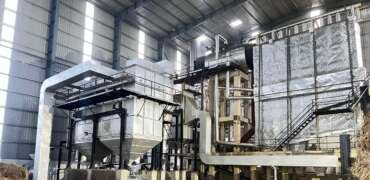
Case Study: 84 TPD Parali-Fired Biomass Boiler Project
Turning a Seasonal Pollution Crisis into a Reliable Energy Solution – Why Parali Fired Biomass Boilers Matter in India
A parali fired biomass boiler is increasingly being adopted by Indian industries as a reliable waste-to-energy solution that converts crop residue into useful steam.
Every year, as the paddy harvest season ends across North India, the same problem returns—fields filled with leftover rice straw, farmers pressed for time, and smoke rising across the horizon. What is often called parali or stubble becomes a symbol of pollution, health hazards, and policy failure. Cities choke, air quality drops, and farmers are blamed for a problem that has no easy, affordable solution at the ground level.
But what if this “waste” was never waste at all?
What if the same agricultural residue that causes severe air pollution could instead power factories, generate steam, reduce fossil fuel dependence, and cut carbon emissions—all at the same time?
This is where waste-to-energy through biomass boilers enters the conversation, not as a theory, but as a working, industrial-scale reality.
At Maanya Boilers Pvt. Ltd., we work closely with industries that face a dual challenge: rising energy costs and increasing environmental responsibility. One of the most practical answers to both lies in parali-fired steam generation, when engineered and operated correctly.
This article explores a real operating scenario, explains the math behind parali fired biomass boiler usage, and shows how agricultural residue can be converted into useful steam energy—with measurable environmental benefits.
Why Parali Became an Environmental Problem in the First Place
Parali is the dry rice straw left behind after harvesting paddy crops. Mechanized harvesting methods, especially combine harvesters, leave behind short stubble that cannot be easily collected by hand.
Farmers face three major constraints:
- Very short turnaround time between rice harvesting and wheat sowing
- High cost of residue management machinery
- Lack of a local, consistent buyer for parali
As a result, open-field burning becomes the fastest and cheapest option—even though it causes massive air pollution, soil degradation, and carbon emissions.
From an energy perspective, this is a paradox.
Parali has:
- Good calorific value
- Abundant seasonal availability
- Local sourcing potential
Yet, when burned openly, 100% of its energy is wasted and 100% of its emissions enter the atmosphere without any benefit.

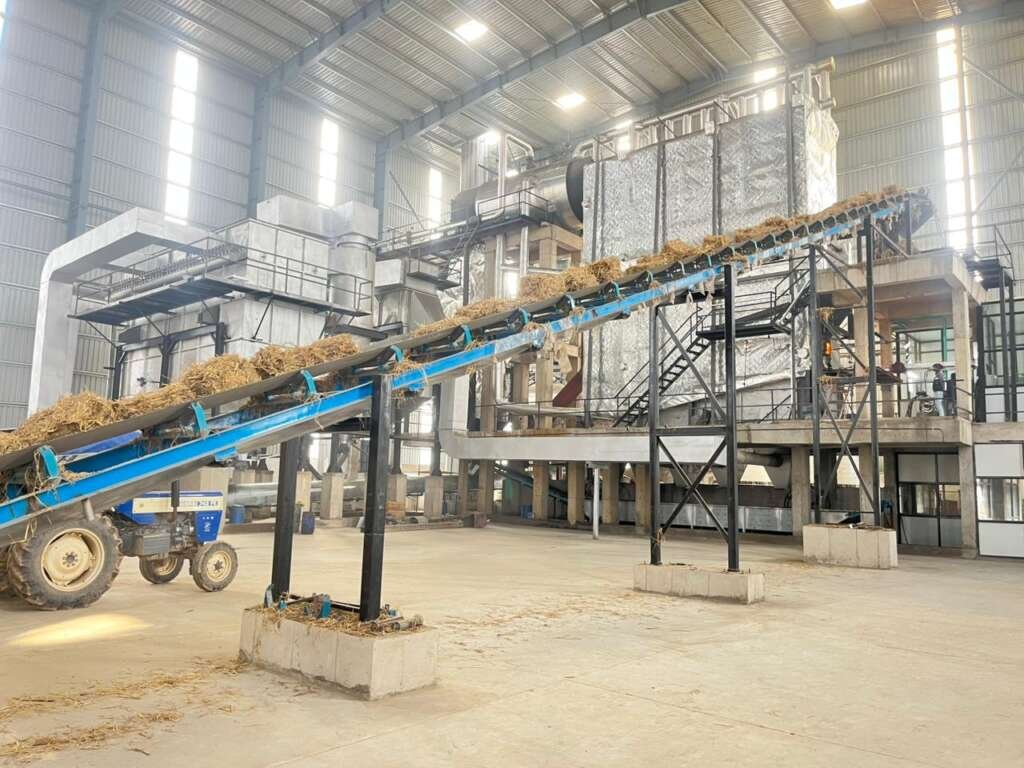
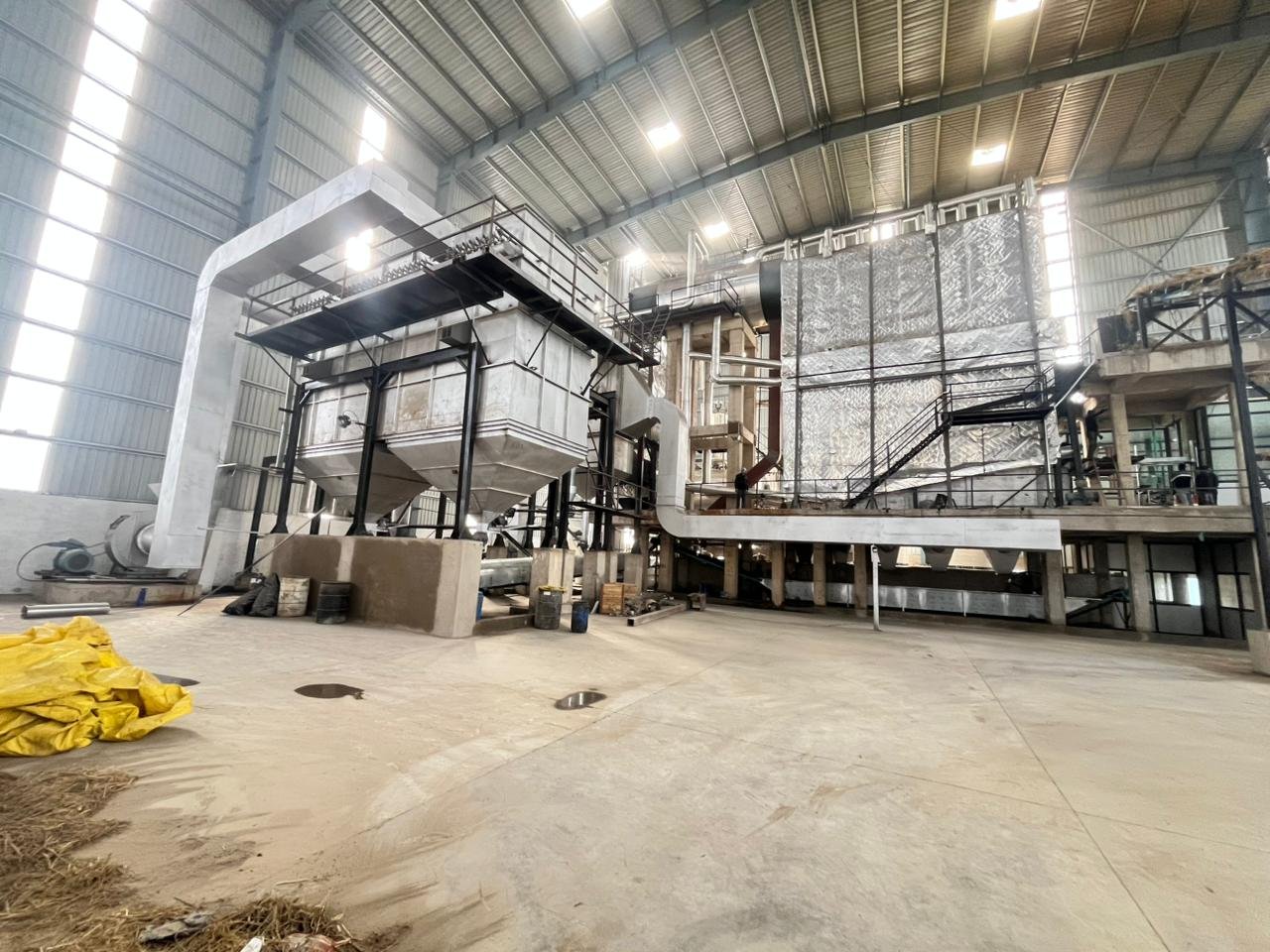
Parali fired Biomass Boiler
Using parali as fuel in a biomass boiler to reduce stubble burning and carbon emissions
Parali fired biomass boiler converting agricultural residue into high-pressure steam through waste-to-energy technology
Why Parali Fired Biomass Boilers Are a Practical Waste-to-Energy Solution
Industries that require continuous steam—textiles, food processing, chemicals, paper, distilleries—already consume large amounts of thermal energy. Traditionally, this demand has been met using coal, furnace oil, or gas.
Parali fired Biomass boilers change this equation by allowing controlled combustion, heat recovery, and useful steam generation from agricultural residue.
However, not all biomass fuels behave the same way.
Parali presents challenges such as:
- High ash content
- Variable moisture
- Bulk handling issues
These challenges are discussed in detail in our related blog on
👉 Challenges of Using Parali as Boiler Fuel — And How to Overcome Them
When these challenges are addressed through proper boiler design and fuel handling systems, parali becomes a reliable industrial fuel.
Our Biomass Boiler Page:
👉 Biomax Boiler
A Real Operating Scenario: Parali-Fired Biomass Boiler Steam Generation
Let us look at a single-boiler operating case to understand the actual numbers involved.
Boiler Operating Parameters
- Parali firing rate: ~ 4.2 tons per hour
- Boiler Capacity: 16 tons per hour
- Operating hours: ~20 hours per day
This is a realistic configuration for a medium-to-large industrial biomass boiler.
How Much Parali Is Burned Per Day?
The calculation is straightforward but extremely important to state clearly.
A parali fired biomass boiler typically consumes around 4.2 tons of parali per hour to generate steam, depending on operating conditions.
Daily Parali Consumption
Parali per hour = 4.2 tons
Hours per day   = 20 hours
4.2 × 20 = 84 tons per day
Final Result
84 tons of parali are utilized per day by a single boiler operating for 20 hours.
This is the amount of agricultural residue that is diverted away from open-field burning every single day.
How Much Land’s Parali Does This Represent?
To understand the real-world impact, we need to connect industrial fuel usage back to the farm.
Average Parali Yield per Acre
Across North India, rice straw yield typically ranges between:
- 2.5 to 3 tons per acre
For conservative estimation, we take:
- Average: 2.75 tons per acre
Land Equivalent Calculation
Parali per day = 84 tons
Parali per acre = 2.75 tons
84 ÷ 2.75 = 30.55 acres per day
What This Means in Practical Terms
- ~30 acres of farmland per day
In simple terms, one boiler absorbs the residue of nearly 30 acres every day, converting what would have been smoke and ash into usable energy.
Based on an average parali yield of 2.75 tons per acre, one ton of parali corresponds to approximately 1,760 square yards of agricultural land. Accordingly, a boiler consuming 84 tons of parali per day utilises crop residue generated across ~1.48 lakh square yards of farmland daily.
From Combustion to Conversion: Recovering Waste Heat as Steam
Open-field burning releases heat randomly into the atmosphere. In contrast, a boiler captures this heat and converts it into structured energy.
Energy Characteristics of Parali
- Typical calorific value: 3,000–3,200 kcal/kg
- Daily parali input: 84,000 kg
Total Thermal Energy Available (Approximate)
84,000 kg × 3,200 kcal/kg ≈ 269 million kcal/day
With a well-designed biomass boiler operating at 75–80% efficiency, a large portion of this energy is recovered as useful steam.
~200–215 million kcal/day recovered as useful steam energy
This recovered heat:
- Powers industrial processes
- Replaces fossil fuels
- Delivers consistent thermal output
This is the core of waste-to-energy conversion—not theoretical, but operational.
Unlike conventional systems, a parali fired biomass boiler allows industries to recover thermal energy while directly addressing the stubble-burning problem.
Carbon Impact: What Is Actually Being Saved?
Environmental claims must be backed by numbers. Let’s look at carbon savings from two angles.
1. Avoided Open-Field Burning Emissions
When parali is burned in fields, it releases approximately:
- 1.46 tons of CO₂ equivalent per ton of straw
Daily Avoided Emissions
84 tons × 1.46 = 122.64 tons CO₂ per day
That is approximately 123 tons of CO₂ emissions prevented every day simply by diverting parali into a biomass boiler instead of burning it in fields.
2. Avoided Fossil Fuel Usage
To generate equivalent thermal energy using coal, an industry would typically consume 30–33 tons of coal per day, depending on coal quality and boiler efficiency.
Coal emits approximately:
- 2.4 tons of CO₂ per ton of coal
This translates into an additional:
- 32 tons × 2.4 = 76.8 tons CO₂ per day
- ~77–79 tons of CO₂ per day avoided
Total Environmental Benefit
When both effects are considered for parali fired biomass boiler :
- Avoided stubble burning emissions
- Avoided fossil fuel emissions
The combined carbon benefit can exceed 190-200 tons of CO₂ per day for a single boiler.
This is not a marginal improvement—it is a structural reduction in industrial carbon footprint.
Why This Matters Beyond Numbers
For farmers, it creates:
- A buyer for residue
- An alternative to burning
- A circular economy opportunity
For industries, it delivers:
- Fuel cost stability
- ESG compliance
- Reduced regulatory risk
For society, it means:
- Cleaner air
- Lower carbon emissions
- Practical climate action
Where Maanya Boilers Comes In
Designing a boiler that can reliably operate on parali is not just about combustion—it requires an understanding of Indian fuel realities, seasonal variability, and industrial operating pressures.
At Maanya Boilers, our focus has been on:
- Biomass-specific furnace design
- Efficient heat recovery
- Robust ash handling systems
- Fuel flexibility for Indian conditions
The goal is simple: turn agricultural waste into dependable steam, without compromising performance or sustainability.
What Comes Next
In the next part of this series, we will explore:
- How much parali is actually generated per acre in India
- Parali vs coal: a true energy and carbon comparison
- What industries should evaluate before switching to biomass
Continue Reading
- 👉 Challenges of Using Parali as Boiler Fuel — And How to Overcome Them
- 👉 Biomass Boilers for Indian Industry: Design, Efficiency, and Fuel Flexibility
How Much Parali Is Generated Per Acre in India — And Why It Matters for Energy & Air Quality
Understanding the Real Volume of Parali at the Farm Level
When discussions around parali burning come up, the focus is often on smoke, pollution, and penalties. What is rarely discussed is a simple but powerful question:
How much parali is actually produced per acre of farmland?
Without understanding this number, it is impossible to design realistic solutions—whether for farmers, policymakers, or industries looking to adopt biomass-based energy systems.
In this article, we break down per-acre parali generation, connect it to industrial fuel demand, and explain why accurate data matters for sustainable waste-to-energy planning.
What Is Parali, Technically Speaking?
Parali refers to rice straw, the stalk left behind after harvesting paddy crops. With the widespread use of combine harvesters, most of the straw remains spread across the field in short lengths, making manual collection difficult.
Key characteristics of parali:
- Low bulk density
- Seasonal availability
- High silica and ash content
- Moderate calorific value
While these traits make disposal challenging, they also make parali a viable biomass fuel when handled correctly.
Average Parali Yield per Acre in India
Based on agricultural data and field studies across Punjab, Haryana, and Western Uttar Pradesh:
- Minimum: ~2.5 tons per acre
- Maximum: ~3.0 tons per acre
To avoid overestimation, most technical analyses use an average of 2.75 tons per acre.
This range accounts for:
- Crop variety
- Soil conditions
- Harvesting method
- Moisture content
Why Per-Acre Yield Matters
Understanding per-acre residue generation in a parali fired biomass boiler helps answer critical questions:
- How much land residue is required to fuel one boiler?
- Can local agriculture support continuous biomass operations?
- What is the real impact on stubble burning reduction?
These are not theoretical questions—they directly affect:
- Boiler sizing
- Fuel logistics planning
- Environmental reporting
Connecting Farmland to Industry: A Practical Example
In above part, we examined a boiler operating at:
- 4.2 tons of parali per hour
- 20 hours per day
- 84 tons of parali per day
Let’s translate that into agricultural terms.
Land-to-Fuel Conversion
84 tons per day ÷ 2.75 tons per acre ≈ 30.5 acres per day
What This Means:
- One boiler absorbs residue from ~30.5 acres daily
- ~915 acres per month
- ~3,050 acres over a 100-day season
This directly offsets residue that would otherwise be burned in open fields.
Why Farmers Burn Parali (And Why That’s Not the Root Problem)
Farmers do not burn parali by choice—they burn it due to constraints:
- Very short sowing window between rice and wheat
- High cost of removal machinery
- Limited storage options
- Lack of assured buyers
Unless parali is monetized and removed quickly, burning remains the fastest option.
This is where industrial demand for biomass fuel becomes part of the solution for a parali based biomass boiler.
Industrial Biomass Demand as a Stubble-Burning Solution
When industries use parali as fuel:
- Farmers gain a disposal route
- Collection ecosystems develop
- Burning becomes economically unnecessary
Biomass boilers create consistent demand, which is essential for:
- Aggregators
- Transporters
- Baling operations
This ecosystem cannot exist without reliable industrial consumers.
Role of Biomass Boilers in Closing the Loop
At Maanya Boilers Pvt. Ltd., biomass boiler systems are designed keeping Indian fuel realities in mind:
- Variable moisture content
- Seasonal supply fluctuations
- Mixed biomass firing
By aligning boiler design with agricultural output, waste becomes fuel—not pollution foe the parali fired biomass boiler.
Why Accurate Data Builds Better Policy and Better Plants
Overestimating or underestimating parali availability leads to:
- Oversized plants that face fuel shortages
- Undersized systems that fail to scale impact
Clear, conservative data enables:
- Better planning
- Reliable operations
- Honest environmental reporting
Read Next
👉 Parali vs Coal vs Diesel: A Real Carbon Comparison for Industrial Boilers
Parali vs Coal: A Real Energy and Carbon Comparison for Industrial Boilers
Why This Comparison Matters Now More Than Ever
As industries face rising pressure to reduce emissions, many sustainability discussions stop at buzzwords. What decision-makers actually need is clarity:
Is switching from coal to parali truly better—for energy, cost, and carbon?
This article answers that question using real operating data, not assumptions.
Fuel Basics: Coal vs Parali
| Parameter | Coal | Parali |
|---|---|---|
| Source | Fossil | Agricultural residue |
| Renewability | Non-renewable | Renewable |
| Carbon cycle | Adds new CO₂ | Short carbon cycle |
| Ash content | Moderate | Higher |
| Availability | Imported / mined | Local & seasonal |
The key difference lies not just in energy—but in carbon accounting.
Energy Output Comparison
To generate the same thermal energy as:
- 84 tons of parali per day
An industry would require approximately:
- 30–33 tons of coal per day
This varies based on:
- Coal grade
- Boiler efficiency
- Operating conditions
Carbon Emissions: The Real Difference
Coal Combustion Emissions
- ~2.4 tons CO₂ per ton of coal
32 × 2.4 = 76.8 tons CO₂ per day
Parali Open-Field Burning Emissions
- ~1.46 tons CO₂ per ton of straw
84 × 1.46 = 122.64 tons CO₂ per dayTotal daily carbon benefit:
122.64 + 76.8 = 199.44 tons of CO₂ per day,
which can be safely stated as ~200 tons of CO₂ avoided per day.
What Happens with Biomass Boilers?
When parali is used in a boiler:
- Open-field burning is avoided
- Fossil fuel use is displaced
- Heat is recovered efficiently
Combined Carbon Benefit
~190–2000 tons of CO₂ avoided per day
This includes:
- Avoided stubble burning emissions
- Avoided coal combustion emissions
Understanding the “Carbon Neutral” Argument
Parali is often described as carbon-neutral because:
- The CO₂ released was absorbed by the crop during growth
- No new carbon is introduced into the atmosphere
Coal, in contrast, releases carbon stored for millions of years.
This difference is crucial in ESG and sustainability reporting.
Operational Considerations
Switching to parali requires:
- Proper boiler design
- Ash handling systems
- Fuel storage planning
This is why biomass projects succeed or fail at the engineering stage, not the concept stage.
Where Biomass Boilers Fit Strategically
Industries using biomass boilers gain:
- Lower long-term fuel volatility
- Improved ESG scores
- Reduced regulatory exposure
At Maanya Boilers, biomass systems are engineered to ensure:
- Stable steam output
- Fuel flexibility
- Long operational life
Final Conclusion
The shift from coal to parali is not about choosing between:
- Cost or sustainability
It is about designing systems where:
- Waste becomes fuel
- Pollution becomes power
- Compliance becomes opportunity
Read the Full Case Study
👉 From Farm Waste to Steam Power: How Parali Is benefitting Sustainable Industrial Boilers in India
FAQs: Parali, Biomass Boilers & Waste-to-Energy
1. How much parali is required 16 TPH boiler?
To generate 16 tons of steam per hour, a well-designed biomass boiler typically consumes around 4.2 tons of parali per hour, depending on fuel quality, moisture content, and boiler efficiency.
2. How much parali is burned per day in a parali-fired boiler?
If a boiler consumes 4.2 tons of parali per hour and operates for 20 hours per day, the total daily parali consumption is:
4.2 × 20 = 84 tons of parali per day
3. How much parali is generated per acre of farmland in India?
On average, one acre of paddy farmland generates 2.5 to 3 tons of parali.
For technical and environmental calculations, an average value of 2.75 tons per acre is commonly used.
4. How much farmland’s parali is used by one boiler per day?
If a boiler consumes 84 tons of parali per day, and one acre yields 2.75 tons, then:
Approximately 31 acres of farmland per day
This means one boiler can prevent stubble burning across nearly 31 acres daily.
5. Is parali a reliable fuel for industrial boilers?
Yes—when the boiler is specifically designed for biomass fuels.
Challenges like high ash content, low bulk density, and variable moisture must be addressed through proper furnace design, fuel feeding systems, and ash handling mechanisms.
6. How much energy is recovered from parali in a biomass boiler?
Parali has a typical calorific value of 3,000–3,200 kcal/kg.
At 84 tons per day, this represents over 200–215 million kcal/day of thermal energy, a large portion of which is recovered as usable steam in an efficient biomass boiler.
7. How does using parali help reduce air pollution?
When parali is burned in open fields, all emissions are released directly into the atmosphere with no energy recovery.
Using parali in boilers:
- Prevents open-field burning
- Captures heat for industrial use
- Reduces particulate matter and uncontrolled emissions
8. How much carbon emission is avoided by using parali instead of burning it in fields?
Open-field burning of parali emits approximately 1.46 tons of CO₂ equivalent per ton.
Using 84 tons per day in a boiler avoids roughly:
~123 tons of CO₂ emissions per day
9. How does parali compare with coal in terms of carbon emissions?
Coal releases new fossil carbon into the atmosphere, while parali releases carbon already absorbed during crop growth.
Replacing coal with parali can avoid:
- ~70+ tons of CO₂ per day from coal combustion
- Plus emissions avoided from stubble burning
Resulting in a combined benefit of ~190–200 tons of CO₂ per day.
10. Is parali considered a renewable or carbon-neutral fuel?
Parali is considered renewable biomass because:
- It is generated annually
- Its carbon is part of the short biological cycle
While not emission-free, it is significantly lower-impact than fossil fuels when used in controlled combustion systems.
11. Can parali-based boilers operate throughout the year?
Parali is seasonal, but boilers can operate year-round by:
- Blending parali with other biomass fuels
- Planning seasonal fuel storage
- Using multi-fuel biomass boiler designs
This approach ensures uninterrupted steam generation.
12. Which industries benefit most from parali-fired boilers?
Industries with continuous steam demand benefit the most, including:
- Food processing
- Textiles
- Paper & packaging
- Distilleries
- Chemicals and pharmaceuticals
13. How does waste-to-energy using parali support ESG goals?
Using parali helps industries:
- Reduce Scope 1 emissions
- Improve ESG and sustainability scores
- Demonstrate circular economy adoption
- Align with government clean-energy objectives
14. What role do boiler manufacturers play in successful parali utilisation?
The success of parali-based energy systems depends heavily on:
- Fuel-specific boiler design
- Efficient heat recovery
- Robust ash handling
At Maanya Boilers Pvt. Ltd., biomass boiler systems are engineered keeping Indian agricultural fuels and operating conditions in mind.
15. Can parali-based energy completely replace coal?
In many industrial applications, yes—either fully or partially.
However, feasibility depends on:
- Steam demand
- Fuel availability
- Boiler design
- Storage and logistics planning
Biomass & Waste-to-Energy (Government of India)
Ministry of New & Renewable Energy (MNRE)
🔗 https://mnre.gov.in/bio-energy/
No responses yet