

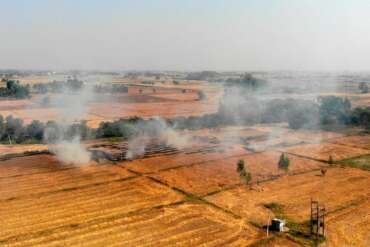
Case Study: Tackling the Parali Burning Problem in India
Understanding the Parali (पराली) Burning Problem in India
The parali burning problem in India has become one of the biggest environmental challenges during the winter season.
Every year during the winter season, northern India faces a serious environmental challenge. Thick smog covers cities such as Delhi, Gurugram, Noida, and Chandigarh, making the air difficult to breathe. One of the biggest reasons behind this seasonal pollution is the parali burning problem.
But what exactly is parali, and why do farmers burn it?
To understand this issue, we must first understand what happens after crops like paddy (dhaan) are harvested.
What Is Parali?
After harvesting crops such as rice or wheat, a large portion of the plant remains in the field. This leftover part of the crop is known as parali (पराली) or crop residue.
When farmers harvest crops using machines such as combine harvesters, the grain portion of the crop is collected while the lower stalk remains in the soil.
These leftover stalks form a thick layer of dry agricultural waste across the field.
For farmers preparing to plant the next crop, this residue becomes a major obstacle.
Fields must be cleared quickly before the next sowing season begins. If the field is not cleared on time, the next crop may be delayed, affecting the farmer’s income.
This is where the parali burning problem begins.
Why Farmers Burn Parali (पराली)
Many people often ask:
“Farmers parali kyu jalate hain?” (किसान पराली क्यों जलाते हैं?)
The answer is not simply carelessness.
Most kisan (farmers) understand that burning crop residue causes pollution. However, they face practical challenges that leave them with very limited options.
One of the biggest challenges is time.
After harvesting paddy in October and November, farmers must quickly prepare their fields for wheat cultivation. The gap between these two crops is extremely short, often only 10–15 days.
Within this limited time, farmers must:
- clear crop residue
- prepare the soil
- sow the next crop
Removing parali manually requires a large workforce and additional machinery. For many small farmers, these costs are difficult to afford.
Burning the residue becomes the fastest and cheapest solution.
Within a few hours, the entire field can be cleared and prepared for the next crop.
This is why the parali burning problem continues every year despite widespread awareness of its environmental impact.
Environmental Impact of Parali Burning
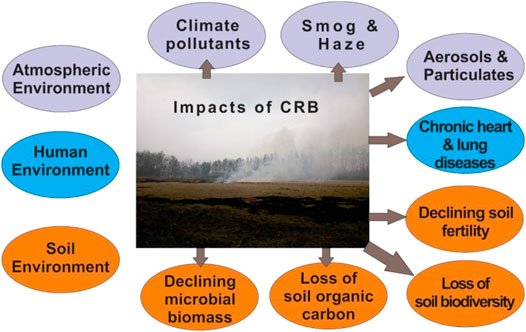
When large amounts of crop residue are burned in open fields, thick smoke rises into the atmosphere.
This smoke contains harmful pollutants such as:
- carbon monoxide
- nitrogen oxides
- particulate matter (PM2.5 and PM10)
- carbon dioxide
These pollutants spread across nearby regions and combine with winter weather conditions to create dense smog.
Cities like Delhi often experience severe air pollution during this time.
Environmental studies from organizations such as the International Energy Agency (IEA) show that burning agricultural residue contributes significantly to regional air pollution in many countries.
https://www.iea.org
During the winter months, wind speeds are lower and temperatures drop, which traps pollutants close to the ground.
As a result, the smoke from crop burning remains suspended in the air, causing severe health problems for millions of people.
These health risks include:
- breathing problems
- asthma attacks
- eye irritation
- lung infections
The parali burning problem therefore affects not only farmers but also urban populations living hundreds of kilometers away.
Why the Issue Is Difficult to Solve
Although the government has taken steps to reduce stubble burning, solving the parali burning problem is not easy.
This issue exists because of multiple interconnected factors.
Farmers face:
- short crop cycles
- rising agricultural costs
- limited access to residue management equipment
- lack of buyers for agricultural waste
Government agencies have introduced programs that provide subsidies for machines such as the Happy Seeder, which allows farmers to sow seeds without removing crop residue.
Organizations such as the Bureau of Energy Efficiency (BEE) also encourage industries to explore the use of agricultural waste as a source of renewable energy.
https://beeindia.gov.in
However, large-scale adoption of these technologies takes time.
Many experts believe that industry participation could play a major role in solving the problem.
Instead of burning crop residue in fields, parali can be converted into biomass fuel.
Industries that require steam or heat for manufacturing can use this biomass fuel in industrial boilers.
Companies working with experienced providers such as industrial boiler manufacturer in India are increasingly exploring such solutions.
If agricultural residue becomes a valuable fuel resource, farmers may have a financial incentive to collect and sell parali rather than burn it.
The Opportunity Hidden in Agricultural Waste
India produces millions of tonnes of agricultural residue every year.
Instead of being treated as waste, this biomass can be converted into useful energy.
Biomass fuel made from agricultural waste can be used in industrial boilers to generate steam and heat for manufacturing processes.
This creates a win-win situation.
Farmers can earn income by selling crop residue, industries gain access to an alternative fuel source, and pollution caused by open burning can be reduced.
Many industries are already exploring these opportunities through energy-efficient industrial boiler solutions designed to utilise biomass fuel.
By turning agricultural waste into energy, the parali burning problem could gradually transform into an economic opportunity for both farmers and industries.
The Real Reasons Behind the Parali (पराली) Burning Problem
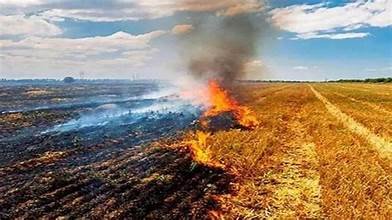
To truly understand the parali burning problem, it is important to look beyond the surface. Many people believe farmers burn parali simply because it is convenient. However, the reality is far more complex.
Most kisan (farmers) know that burning crop residue damages the environment. They also understand that it creates pollution that affects nearby cities and villages. Despite this awareness, the practice continues every year because farmers face several practical challenges.
These challenges include time pressure, financial constraints, machinery availability, and the absence of a strong market for crop residue.
Let us explore these factors in detail.
1. Short Time Between Paddy Harvesting and Wheat Sowing
One of the biggest reasons behind the parali burning problem is the very short time gap between two major crops.
In northern states like Punjab and Haryana, farmers usually grow paddy (dhaan) during the monsoon season. After harvesting paddy in October or November, farmers must quickly prepare their fields for wheat cultivation.
The time available between these two crops is extremely limited — often only 10 to 15 days.
During this short window, farmers must:
- clear crop residue from the field
- prepare the soil
- sow the next crop
If this process is delayed, the wheat crop may not grow properly, which directly affects the farmer’s income.
Removing parali manually from large agricultural fields can take several days or even weeks.
Burning the residue clears the field in just a few hours.
Because of this time pressure, many farmers feel they have no practical alternative.
2. High Cost of Removing Crop Residue
Another major factor contributing to the parali burning problem is the cost associated with removing crop residue.
There are machines designed to manage crop residue without burning it. Some of the commonly used machines include:
- Happy Seeder
- Super Straw Management System (SMS)
- Rotavators
- Straw Reapers
These machines help farmers manage parali by either cutting, collecting, or spreading it across the soil.
However, these machines are expensive.
Many small and medium farmers cannot afford to purchase such equipment.
Even renting machinery or hiring labor increases farming expenses significantly.
For farmers who already operate with limited profits, spending extra money to remove crop residue becomes difficult.
Burning parali, unfortunately, becomes the cheapest solution.
Government initiatives and research organizations such as the Bureau of Energy Efficiency (BEE) are encouraging industries and agricultural sectors to find alternative ways to use crop residue instead of burning it.
https://beeindia.gov.in
3. Lack of a Proper Market for Parali
Another important reason behind the parali burning problem is the absence of a strong market for agricultural residue.
If farmers could easily sell crop residue, they would have a financial reason to collect and store it instead of burning it.
In many developed biomass energy systems, agricultural waste is treated as a valuable resource. Farmers sell crop residue to industries that convert it into energy.
However, in many parts of India, the supply chain for collecting and transporting parali is still underdeveloped.
Farmers often have no buyers nearby who are willing to purchase crop residue.
Without a reliable market, parali becomes a waste product rather than a valuable resource.
If industries begin purchasing agricultural residue on a larger scale, farmers could earn additional income while reducing pollution caused by burning.
Some industrial projects are already exploring these opportunities through industrial boiler manufacturer in India who provide solutions that allow industries to use biomass fuel efficiently.
4. Changing Agricultural Practices
Modern farming practices have also contributed to the parali burning problem.
Earlier, crops were harvested manually, and farmers used most of the leftover crop residue for various purposes such as:
- cattle feed
- cooking fuel
- roofing material
However, modern farming uses machines like combine harvesters, which leave behind large amounts of crop residue across the field.
These machines make harvesting faster and more efficient, but they also create more leftover residue than traditional methods.
As a result, farmers today face a larger quantity of crop waste than before.
Managing this large amount of residue becomes difficult within the limited time available between crops.
This change in agricultural practices has unintentionally increased the amount of parali left in fields.
You can read more about how crop residue can be used as fuel in this related article on the Maanya Boilers website:
https://maanyaboilers.co.in/parali-as-boiler-fuel-challenges-solutions/
5. Limited Awareness About Alternative Uses
Many farmers are still unaware that parali can be converted into biomass fuel.
Biomass fuel is produced from organic materials such as:
- agricultural residue
- rice husk
- bagasse
- wood chips
- crop waste
Instead of burning parali in fields, this residue can be collected and processed into fuel that industries can use in boilers.
Biomass boilers convert this agricultural waste into heat and steam, which are essential for many industrial processes.
This approach offers several advantages.
Farmers can earn money by selling crop residue, industries gain access to an alternative fuel source, and air pollution caused by open-field burning can be reduced.
Environmental research organizations such as the International Energy Agency (IEA) have highlighted the potential of agricultural biomass as a renewable energy source for industries.
https://www.iea.org
This makes biomass energy an important part of sustainable industrial development.
Moving Toward Sustainable Solutions
The parali burning problem cannot be solved by farmers alone.
It requires cooperation between multiple stakeholders including:
- farmers
- government agencies
- industries
- technology providers
If industries begin using agricultural waste as fuel, crop residue could become a valuable resource instead of a pollution problem.
Many industrial facilities are already exploring energy-efficient industrial boiler solutions that can utilize biomass fuel such as agricultural waste.
By creating demand for crop residue, industries can play a significant role in reducing stubble burning while also promoting sustainable energy solutions.
How Industry Can Help Solve the Parali Burning Problem
The parali burning problem in India is not only an agricultural issue but also an environmental and economic challenge. While farmers burn crop residue mainly because of time and cost constraints, the long-term solution requires cooperation between farmers, industries, and policymakers.
One of the most promising solutions to the parali burning problem is converting agricultural waste into biomass energy.
Instead of burning crop residue in open fields, the same material can be collected and used as fuel for industrial energy generation.
This approach not only reduces pollution but also creates economic value from agricultural waste.
Turning Parali (पराली) Into Biomass Fuel
Agricultural residue such as parali (crop residue) can be converted into biomass fuel through simple processing techniques.
The collected residue can be compressed into biomass pellets or briquettes, which are used as fuel in industrial heating systems.
Biomass fuel can be produced from:
- parali (crop residue)
- rice husk
- wheat straw
- bagasse
- wood chips
Instead of contributing to the parali burning problem, these materials can become an important renewable energy source.
Industries that require large amounts of heat or steam can use biomass boilers to convert this agricultural waste into usable energy.
How Biomass Boilers Can Reduce the Parali Burning Problem
One of the most effective industrial solutions to the parali burning problem is the use of biomass boilers.
Biomass boilers are designed to burn organic materials such as crop residue in a controlled and efficient manner.
Unlike open-field burning, biomass combustion inside industrial boilers is regulated and optimized for energy production.
This process offers several advantages:
Reduced Air Pollution
Open burning of crop residue releases harmful pollutants directly into the atmosphere.
When the same biomass is used in industrial boilers, emissions are controlled through advanced combustion technology.
This significantly reduces the environmental impact associated with the parali burning problem.
Environmental organizations such as the International Energy Agency (IEA) highlight biomass energy as a renewable solution that can help reduce emissions from traditional energy sources.
https://www.iea.org
Economic Opportunity for Farmers
One of the most promising aspects of solving the parali burning problem is the potential to create new income sources for farmers.
If industries begin purchasing crop residue as biomass fuel, farmers could sell parali instead of burning it.
This would create a new agricultural supply chain where crop residue becomes a valuable commodity.
Farmers could benefit from:
- additional income from crop residue
- reduced environmental criticism
- improved soil health
Instead of being blamed for pollution, farmers could become partners in producing renewable energy.
Sustainable Energy for Industries
Industries require large amounts of heat and steam for manufacturing processes.
Biomass boilers allow industries to generate this energy using renewable fuels such as agricultural waste.
This reduces dependence on fossil fuels such as coal and oil.
Many companies are now exploring sustainable energy options through energy-efficient industrial boiler solutions that can use biomass fuel.
By adopting such technologies, industries can help reduce the parali burning problem while improving their sustainability performance.
Government and Policy Support
Government support is also important in addressing the parali burning problem.
Several initiatives have been introduced to promote better crop residue management.
These include:
- subsidies for crop residue management machines
- support for biomass energy projects
- awareness programs for farmers
Regulatory authorities such as the Ministry of Environment, Forest and Climate Change (MoEF) continue to emphasize the importance of reducing open-field burning to improve air quality.
https://moef.gov.in
Organizations like the Bureau of Energy Efficiency (BEE) also promote the use of biomass and other renewable energy sources in industrial applications.
https://beeindia.gov.in
With stronger cooperation between government programs and industrial initiatives, agricultural waste could become a major renewable energy resource.
The Role of Industry in Solving the Parali Burning Problem
Industries have an important role to play in solving the parali burning problem.
By adopting biomass energy solutions, industries can create demand for agricultural waste.
This demand encourages farmers to collect crop residue instead of burning it.
Industrial facilities working with companies such as industrial boiler manufacturer in India are increasingly exploring biomass fuel systems that use agricultural waste efficiently.
When industries create a market for crop residue, farmers gain a financial incentive to avoid burning parali.
This collaboration between agriculture and industry can significantly reduce the environmental impact of crop residue burning.
Why Solving the Parali Burning Problem Matters
Addressing the parali burning problem is important for several reasons.
First, reducing crop residue burning can improve air quality in northern India, especially during winter months when pollution levels are highest.
Second, converting agricultural waste into energy supports renewable energy development and reduces dependence on fossil fuels.
Third, creating economic value from crop residue benefits farmers and rural communities.
By turning agricultural waste into a resource, the parali burning problem can be transformed into an opportunity for sustainable development.
FAQ Section
What is the parali burning problem?
The parali burning problem refers to the practice of farmers burning crop residue in fields after harvesting crops like paddy and wheat, which causes severe air pollution.
Why do farmers burn parali?
Farmers burn parali mainly because they have very little time between crops and removing crop residue manually can be expensive.
How does parali burning affect air pollution?
Burning crop residue releases smoke and harmful pollutants into the atmosphere, contributing to severe air pollution in northern India.
Can parali be used as fuel?
Yes, parali can be converted into biomass fuel and used in industrial boilers to generate heat and steam.
How can industries help reduce the parali burning problem?
Industries can help by using agricultural waste as biomass fuel, which creates demand for crop residue and encourages farmers to sell it instead of burning it.
Related Articles
If you want to learn more about industrial boilers, biomass fuel, and sustainable energy solutions, you can explore these related articles:
- Parali as Boiler Fuel: Challenges and Solutions
https://maanyaboilers.co.in/parali-as-boiler-fuel-challenges-solutions/ - Why Grain Processing Units Are Shifting to Biomass Boilers in 2026
https://maanyaboilers.co.in/why-grain-processing-units-are-shifting-to-biomass-boilers/ - 7 Powerful Industrial Boiler ESG Strategies for 2026
https://maanyaboilers.co.in/sustainable-industrial-boiler-systems-strategies-2026/
These articles provide deeper insights into biomass energy, boiler technology, and sustainable industrial practices.
No responses yet