

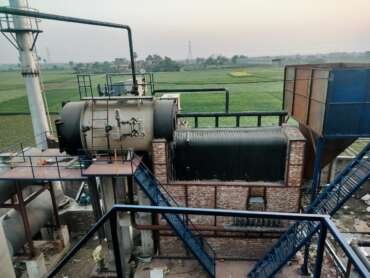
Case Study: Package Steam Boiler for a Manufacturing Plant
Introduction
In today’s highly competitive manufacturing environment, efficiency is no longer just an advantage—it is a necessity. Rising fuel costs, increasing production demands, stricter environmental regulations, and the need for uninterrupted operations have compelled industries to invest in reliable and energy-efficient steam generation systems. Among the many technologies available, a Package Steam Boiler for Manufacturing Industry has emerged as one of the most practical and cost-effective solutions for modern factories.
Steam continues to play a vital role in industrial operations across sectors such as food processing, textiles, pharmaceuticals, chemicals, paper production, engineering, packaging, and agro-processing. It is used for heating, sterilization, drying, cleaning, curing, and numerous process applications that require consistent thermal energy.
The performance of these operations depends heavily on the efficiency and reliability of the steam generation system. A poorly designed boiler can lead to excessive fuel consumption, production downtime, increased maintenance costs, and inconsistent process performance. Conversely, a well-engineered Package Steam Boiler for Manufacturing Industry can help businesses improve productivity, reduce operating expenses, and achieve long-term sustainability goals.
This guide explores the fundamentals of industrial steam generation, the role of packaged boilers in modern manufacturing, and why industries are increasingly choosing advanced packaged boiler solutions for their operations.
MAXPAC Product Overview Post:
👉 Click Here
Understanding the Role of Steam in Manufacturing Industries
Steam has been a trusted source of industrial energy for more than a century. Despite advancements in technology and automation, it remains one of the most efficient methods of transferring thermal energy across manufacturing facilities.
A modern manufacturing plant often depends on steam for multiple operations simultaneously. Steam can be generated centrally and distributed across various production departments, making it both flexible and economical.
Some of the most common applications include:
- Product heating
- Sterilization processes
- Equipment cleaning
- Drying and curing operations
- Chemical processing
- Textile finishing
- Food production
- Pharmaceutical manufacturing
- Power support systems
The ability of steam to deliver large amounts of energy quickly and uniformly makes it ideal for industrial applications where precision and consistency are critical.
For this reason, selecting the right Package Steam Boiler for Manufacturing Industry is one of the most important decisions a manufacturing company can make.
What Is a Package Steam Boiler for Manufacturing Industry?
A Package Steam Boiler for Manufacturing Industry is a factory-engineered steam generation system that is assembled, tested, and prepared before being delivered to the installation site.
Unlike conventional field-erected boilers, packaged boilers arrive as a complete unit, significantly reducing installation complexity and commissioning time.
The system typically includes:
- Furnace
- Boiler shell
- Heat transfer surfaces
- Combustion system
- Control panel
- Safety systems
- Feedwater arrangements
- Instrumentation
Because these components are integrated during manufacturing, packaged boilers offer improved quality control, predictable performance, and easier maintenance.
Manufacturers benefit from faster project execution and reduced installation risks, making packaged boilers a preferred choice across industries.
Why Manufacturers Are Moving Toward Packaged Boiler Systems
Industrial facilities today face several challenges:
- Rising fuel costs
- Increasing production targets
- Space limitations
- Labor shortages
- Environmental compliance requirements
A modern Package Steam Boiler for Manufacturing Industry addresses many of these concerns by combining efficiency, reliability, and ease of operation.
Faster Installation
One of the biggest advantages of packaged boilers is reduced installation time.
Traditional boiler systems often require extensive on-site fabrication, civil work, and assembly. This can delay project completion and increase costs.
Packaged systems minimize these challenges by arriving pre-engineered and pre-tested.
Reduced Capital Costs
Because installation requirements are simplified, manufacturers can often reduce project costs associated with construction, labor, and commissioning.
Improved Reliability
Factory-built systems undergo stringent quality inspections before shipment. This ensures greater consistency and minimizes the likelihood of field-related issues.
Lower Maintenance Requirements
Modern packaged boilers are designed for accessibility, allowing maintenance teams to inspect and service components more efficiently.
Compact Design
Industrial floor space is valuable. A compact Package Steam Boiler for Manufacturing Industry enables facilities to maximize production space while minimizing utility infrastructure requirements.
How Steam Is Generated in an Industrial Boiler
Understanding how steam is generated helps manufacturers appreciate the importance of boiler design and efficiency.
The process begins when fuel is introduced into the combustion chamber.
Step 1: Fuel Combustion
Fuel is burned inside the furnace under controlled conditions.
The combustion process releases thermal energy in the form of high-temperature gases.
The efficiency of combustion directly impacts fuel consumption and operating costs.
Step 2: Heat Transfer
The generated heat passes through engineered heat transfer surfaces.
These surfaces are designed to maximize energy transfer while minimizing losses.
Advanced boiler designs utilize multi-pass configurations to improve heat recovery and increase efficiency.
Step 3: Water Heating
Water inside the boiler absorbs thermal energy from the heat transfer surfaces.
As the temperature increases, the water begins to convert into steam.
Step 4: Steam Formation
Steam accumulates within the steam space and is separated from water before distribution.
Proper steam separation is essential for maintaining steam quality and process performance.
Step 5: Steam Distribution
The generated steam is transported through insulated pipelines to various manufacturing processes.
Step 6: Condensate Recovery
After steam releases its energy, it condenses back into water.
Many facilities recover this condensate and return it to the boiler system, improving efficiency and reducing water consumption.
Key Components of a Package Steam Boiler for Manufacturing Industry
The performance of any boiler depends on the quality and design of its components.
Furnace
The furnace is the heart of the combustion process.
A properly designed furnace ensures complete fuel combustion, stable flame characteristics, and efficient heat generation.
Boiler Shell
The shell contains water and steam under pressure.
Its structural integrity directly influences safety and durability.
Water Walls
Water walls absorb heat from combustion gases while protecting internal surfaces from excessive temperatures.
Heat Transfer Tubes
These tubes transfer thermal energy from combustion gases to the water.
Efficient heat transfer contributes significantly to overall boiler performance.
Steam Drum
The steam drum separates steam from water and maintains consistent steam quality.
Feedwater System
The feedwater system continuously supplies treated water to the boiler.
Maintaining proper feedwater quality is critical for preventing scale formation and corrosion.
Control Systems
Modern control systems monitor:
- Pressure
- Temperature
- Water level
- Combustion performance
- Fuel consumption
Automation improves operational efficiency while reducing manual intervention.
Safety Devices
Every industrial boiler must include:
- Safety valves
- Pressure controls
- Low-water protection systems
- Emergency shutdown mechanisms
These systems help ensure safe and reliable operation.
Why Boiler Efficiency Matters
For most manufacturing facilities, fuel costs represent one of the largest ongoing operational expenses.
An inefficient boiler consumes more fuel to generate the same amount of steam.
This directly impacts profitability.
A high-efficiency Package Steam Boiler for Manufacturing Industry helps manufacturers:
- Reduce fuel consumption
- Lower operating costs
- Improve productivity
- Minimize emissions
- Support sustainability initiatives
Even a small improvement in boiler efficiency can result in substantial annual savings for facilities operating continuously.
According to energy-efficiency studies and industrial best practices, improving heat recovery and combustion efficiency remains one of the most effective ways to reduce energy costs in manufacturing operations.
Read More: Bureau of Energy Efficiency (BEE)
Read more about our Energy Saving Equipments
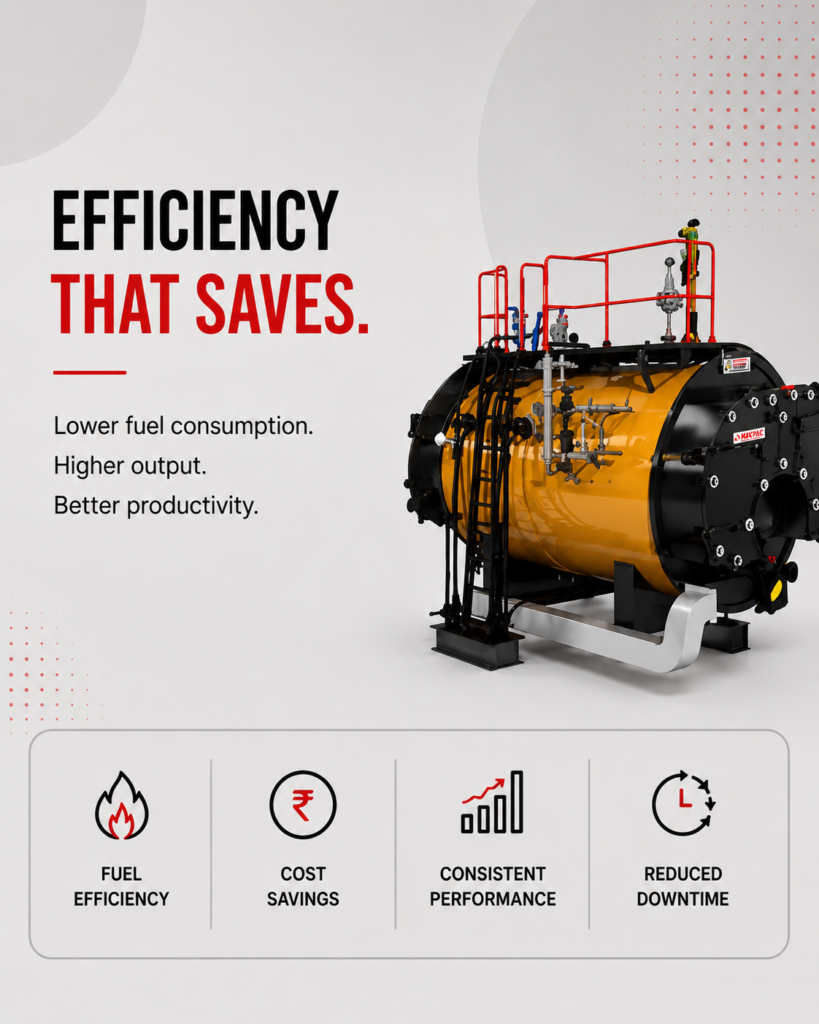
The Relationship Between Boiler Performance and Production Efficiency
Many manufacturers focus heavily on production machinery while overlooking the steam system that supports those operations.
However, steam generation performance directly influences:
- Product quality
- Process consistency
- Production output
- Energy consumption
- Equipment reliability
When steam supply becomes unstable, production efficiency often suffers.
Common consequences include:
- Temperature fluctuations
- Product defects
- Increased fuel consumption
- Production delays
- Higher maintenance costs
Investing in a reliable Package Steam Boiler for Manufacturing Industry helps manufacturers maintain stable operating conditions and support long-term growth.
The Future of Steam Generation in Manufacturing
Industrial facilities are increasingly adopting advanced technologies to improve efficiency and sustainability.
Modern boiler systems now incorporate:
- Automated controls
- Advanced combustion systems
- Heat recovery technologies
- Improved insulation
- Smart monitoring systems
- Fuel-flexible combustion designs
These innovations allow manufacturers to reduce costs while meeting environmental and operational objectives.
As manufacturing continues to evolve, efficient steam generation will remain a critical component of industrial success.
In the next section, we will explore the industries that depend on packaged steam boilers, the different fuel options available, and how manufacturers can reduce operating costs through fuel flexibility and efficient boiler selection.
Industries That Depend on a Package Steam Boiler for Manufacturing Industry
A Package Steam Boiler for Manufacturing Industry is not limited to a single sector. Steam remains one of the most versatile utilities in industrial operations, making packaged boilers an essential asset across numerous industries.
The ability to generate reliable steam while maintaining operational efficiency is what makes packaged boilers indispensable for modern manufacturing facilities.
Food Processing Industry
The food processing sector relies heavily on steam for:
- Cooking
- Pasteurization
- Sterilization
- Cleaning
- Drying
- Packaging operations
Maintaining precise temperatures is critical in food production. Even small variations can affect product quality, shelf life, and regulatory compliance.
A reliable Package Steam Boiler for Manufacturing Industry helps food manufacturers maintain consistent production standards while reducing energy costs.
Textile Industry
Steam plays a central role throughout textile manufacturing.
Applications include:
- Fabric washing
- Dyeing
- Bleaching
- Finishing
- Drying
- Heat setting
Textile manufacturers require continuous steam availability to avoid production interruptions and quality issues.
Because of this, many textile facilities prioritize boiler reliability when selecting steam generation systems.
Pharmaceutical Industry
The pharmaceutical sector demands exceptionally high standards of cleanliness and process control.
Steam is commonly used for:
- Sterilization
- Cleanroom operations
- Equipment sanitation
- Product processing
Consistent steam quality is essential for meeting regulatory requirements and maintaining product integrity.
Chemical Processing Industry
Chemical plants frequently require controlled heating throughout production processes.
Steam supports:
- Distillation
- Chemical reactions
- Product heating
- Process temperature control
An efficient Package Steam Boiler for Manufacturing Industry enables chemical manufacturers to improve process stability while controlling operating expenses.
Paper and Pulp Industry
Steam plays a crucial role in:
- Pulp processing
- Drying operations
- Paper finishing
- Process heating
Because paper manufacturing consumes significant amounts of thermal energy, boiler efficiency directly impacts profitability.
Rice Mills and Agro Industries
Steam is widely used in:
- Paddy processing
- Rice drying
- Product conditioning
- Food-grade operations
For many agro-based industries, fuel flexibility is equally important because locally available biomass fuels can significantly reduce operating costs.
Engineering and Manufacturing Plants
General manufacturing facilities use steam for:
- Surface treatment
- Component cleaning
- Process heating
- Production support systems
As manufacturing operations expand, dependable steam generation becomes increasingly important for maintaining productivity.
Why Fuel Flexibility Is Becoming a Competitive Advantage
Fuel costs can account for a significant portion of a facility’s operating expenses.
As fuel prices fluctuate, manufacturers are increasingly seeking boiler systems capable of operating on multiple fuel types.
A modern Package Steam Boiler for Manufacturing Industry offers flexibility that allows businesses to optimize costs based on local fuel availability and market conditions.
Instead of depending on a single fuel source, facilities can adapt their fuel strategy to maintain profitability.
This flexibility provides both economic and operational benefits.
Understanding Different Fuel Options
Biomass Fuel
Biomass has become one of the most attractive fuel choices for industrial steam generation.
Common biomass fuels include:
- Agricultural waste
- Wood chips
- Biomass pellets
- Briquettes
- Crop residue
Biomass fuels often provide significant cost savings compared to conventional fossil fuels.
Additionally, many industries view biomass as an important component of their sustainability initiatives.
Rice Husk
Rice husk remains widely used in regions with strong agricultural activity.
Advantages include:
- Local availability
- Cost effectiveness
- Renewable fuel source
- Reduced dependency on conventional fuels
For rice mills and agro-processing facilities, rice husk can offer a highly economical fuel solution.
Briquettes
Biomass briquettes are manufactured from compressed agricultural residues and organic materials.
Benefits include:
- Consistent fuel quality
- Improved combustion performance
- Easier storage and handling
- Reduced fuel wastage
Many industries choose briquettes because they offer a balance between performance and affordability.
Biomass Pellets
Biomass pellets provide:
- Uniform fuel characteristics
- Improved combustion efficiency
- Reduced storage requirements
- Cleaner handling
Their growing availability has made them increasingly popular among industrial users.
Agro-Waste Fuels
Agricultural residues represent an important fuel source for many industries.
Examples include:
- Mustard stalk
- Cotton stalk
- Groundnut shell
- Sugarcane residue
- Crop waste
Utilizing agro-waste fuels helps industries reduce fuel costs while supporting waste utilization initiatives.
Read more about Parali Biomass Fuel
Fuel Selection Factors Manufacturers Should Consider
Choosing the right fuel involves more than simply comparing costs.
Several factors must be evaluated.
Fuel Availability
Reliable fuel supply is essential for uninterrupted operations.
Manufacturers should consider:
- Local availability
- Seasonal variations
- Transportation requirements
- Supplier reliability
Fuel Quality
Fuel quality influences:
- Combustion efficiency
- Ash generation
- Maintenance requirements
- Boiler performance
Consistent fuel quality supports stable operations.
Operating Costs
Fuel costs should be evaluated over the long term.
A slightly higher fuel price may be justified if it provides:
- Better efficiency
- Reduced maintenance
- Improved reliability
Environmental Considerations
Many organizations are adopting cleaner fuel options to support sustainability goals and comply with environmental regulations.
The Hidden Cost of Poor Boiler Efficiency
When discussing boiler economics, many businesses focus primarily on initial equipment costs.
However, operating costs often exceed the original purchase price several times over during the boiler’s service life.
An inefficient boiler can result in:
- Higher fuel consumption
- Increased maintenance costs
- Excess emissions
- Reduced productivity
- Frequent shutdowns
Even a small reduction in efficiency can create substantial annual losses.
For facilities operating continuously, these losses can accumulate rapidly.
Common Sources of Energy Loss in Industrial Boilers
Understanding energy losses helps manufacturers identify opportunities for improvement.
Excessive Stack Temperature
When exhaust gases leave the boiler at unnecessarily high temperatures, valuable energy is wasted.
Heat recovery solutions can help capture this lost energy.
Incomplete Combustion
Poor combustion reduces efficiency and increases fuel consumption.
Proper combustion control helps maximize fuel utilization.
Radiation and Convection Losses
Heat escaping through boiler surfaces contributes to energy waste.
High-quality insulation helps reduce these losses.
Blowdown Losses
Improper blowdown management can result in unnecessary heat and water losses.
Poor Maintenance
Dirty heat transfer surfaces reduce efficiency by limiting heat transfer performance.
Regular maintenance helps preserve optimal operation.
How Modern Boiler Systems Improve Energy Efficiency
Today’s boiler technology incorporates numerous features designed to maximize efficiency.
Advanced Combustion Systems
Modern combustion systems help:
- Improve fuel utilization
- Reduce emissions
- Enhance operating stability
Multi-Pass Designs
Multi-pass configurations increase heat transfer by extracting more energy from combustion gases before they exit the system.
Improved Heat Transfer Surfaces
Advanced heat transfer designs improve thermal performance while reducing fuel consumption.
Intelligent Controls
Automation systems continuously monitor performance and optimize operating conditions.
Heat Recovery Technologies
Recovering waste heat can significantly improve overall plant efficiency.
The Role of Economisers in Fuel Savings
An economiser is one of the most effective energy-saving components available for industrial steam systems.
It works by recovering heat from exhaust gases and transferring it to incoming feedwater.
Benefits include:
- Reduced fuel consumption
- Improved boiler efficiency
- Lower operating costs
- Reduced thermal shock
Even modest efficiency improvements can generate substantial annual savings in facilities with continuous steam demand.
Check out our Energy Saving Equipment
Air Preheaters and Their Impact on Efficiency
Air preheaters recover heat from flue gases and use it to warm incoming combustion air.
Benefits include:
- Better combustion
- Improved efficiency
- Reduced fuel usage
- Lower operating costs
These systems are particularly beneficial in facilities with large steam requirements.
Why Manufacturers Are Prioritizing Cost Optimization
Today’s industrial environment demands continuous improvement.
Manufacturers face pressure from:
- Rising fuel prices
- Global competition
- Environmental requirements
- Customer expectations
As a result, energy efficiency has become a strategic priority.
An efficient Package Steam Boiler for Manufacturing Industry contributes directly to cost optimization by reducing fuel consumption while maintaining dependable steam generation.
Facilities that invest in energy-efficient boiler systems often experience improvements in:
- Operating margins
- Production reliability
- Sustainability performance
- Long-term competitiveness
Fuel Efficiency and Sustainability: A Growing Partnership
Sustainability is no longer viewed solely as an environmental initiative.
Increasingly, it is recognized as a business strategy.
Reducing fuel consumption provides multiple benefits:
- Lower operating costs
- Reduced emissions
- Improved resource utilization
- Enhanced corporate reputation
Modern manufacturers are seeking solutions that support both profitability and environmental responsibility.
A well-designed Package Steam Boiler for Manufacturing Industry helps achieve both objectives by combining operational efficiency with responsible energy utilization.
Why Fuel Strategy Matters More Than Ever
For many manufacturing facilities, fuel expenses represent the largest controllable operating cost.
Selecting the right boiler and fuel combination can influence:
- Production costs
- Product pricing
- Profitability
- Long-term growth
Manufacturers that adopt fuel-flexible and energy-efficient steam systems are often better positioned to adapt to changing market conditions.
In the next section, we will explore how to select the right packaged boiler, what features buyers should evaluate, the role of IBR compliance, and how solutions like MAXPAC support industrial steam generation requirements across diverse manufacturing sectors.
Instagram Post: Click Here
Instagram Post: Click Here
How to Choose the Right Package Steam Boiler for Manufacturing Industry
Selecting the right Package Steam Boiler for Manufacturing Industry is one of the most important investment decisions a manufacturing facility can make. While many buyers focus primarily on initial equipment costs, long-term performance, fuel consumption, maintenance requirements, and reliability should be equally important considerations.
A boiler is not simply a piece of equipment—it is a critical utility that directly affects production efficiency, product quality, operating costs, and overall plant performance.
Before investing in a boiler system, manufacturers should evaluate several key factors.
Assess Your Steam Demand
One of the first steps is understanding your actual steam requirements.
Many facilities make the mistake of selecting a boiler based solely on current production levels.
Instead, companies should consider:
- Current steam demand
- Future expansion plans
- Peak load requirements
- Seasonal variations
- Operational schedules
A properly sized Package Steam Boiler for Manufacturing Industry ensures optimal efficiency while providing sufficient capacity for future growth.
Evaluate Fuel Availability
Fuel selection has a major impact on operating costs.
Before finalizing a boiler system, manufacturers should assess:
- Local fuel availability
- Fuel price stability
- Transportation logistics
- Storage requirements
- Fuel quality consistency
Choosing a fuel-flexible boiler often provides additional protection against future fuel price fluctuations.
Consider Efficiency Ratings
Higher efficiency often translates into significant savings over the life of the equipment.
While high-efficiency boilers may require a larger initial investment, the reduction in fuel costs can generate attractive returns over time.
Examine Maintenance Requirements
Boilers operate continuously in demanding environments.
Ease of maintenance should therefore be a major selection criterion.
Look for features such as:
- Accessible inspection points
- Simplified cleaning procedures
- Easy-to-service components
- Reliable control systems
Reduced maintenance complexity often translates into higher uptime and lower operating costs.
Evaluate Manufacturer Support
The quality of technical support can significantly affect long-term boiler performance.
Manufacturers should consider:
- Service capabilities
- Spare parts availability
- Technical expertise
- Commissioning support
- Operator training programs
A strong support network can help maximize equipment life and reliability.
Why IBR Compliance Matters
Industrial boiler safety remains a critical concern for manufacturing facilities.
In India, compliance with applicable regulations helps ensure safe and reliable operation.
Understanding IBR Compliance
The Indian Boiler Regulations (IBR) establish standards governing:
- Design
- Manufacturing
- Inspection
- Testing
- Certification
IBR-compliant boilers are designed and manufactured according to recognized engineering standards.
Benefits of IBR-Compliant Boilers
Manufacturers benefit from:
- Enhanced safety
- Regulatory compliance
- Improved reliability
- Reduced operational risks
- Greater confidence in equipment quality
When evaluating a Package Steam Boiler for Manufacturing Industry, IBR compliance should always be considered an essential requirement rather than an optional feature.
What Features Should Modern Boiler Buyers Look For?
Today’s industrial facilities expect more than basic steam generation.
A modern Package Steam Boiler for Manufacturing Industry should incorporate advanced features designed to improve efficiency, reliability, and operational flexibility.
Efficient Combustion Systems
Efficient combustion helps:
- Reduce fuel consumption
- Improve thermal efficiency
- Lower emissions
- Enhance operational stability
Advanced Heat Recovery
Heat recovery technologies help maximize energy utilization.
Examples include:
- Economisers
- Air preheaters
- Feedwater heating systems
Intelligent Controls
Modern automation systems provide:
- Real-time monitoring
- Performance optimization
- Alarm management
- Data tracking
- Improved safety
Fuel Flexibility
The ability to operate on multiple fuel options helps manufacturers adapt to changing market conditions.
Compact Design
A compact footprint reduces installation requirements and maximizes available production space.
How MAXPAC Supports Industrial Steam Generation
For manufacturing facilities seeking dependable steam generation, MAXPAC has been designed to address many of the operational challenges faced by modern industries.
The system combines robust engineering, efficient combustion, and practical design features to support continuous industrial operations.
Engineered for Industrial Performance
MAXPAC is designed to deliver consistent steam generation across a wide range of industrial applications.
Manufacturers require equipment capable of operating reliably under varying production demands.
By focusing on operational stability and efficiency, MAXPAC supports long-term manufacturing performance.
Compact Packaged Design
One of the key advantages of MAXPAC is its packaged configuration.
Benefits include:
- Faster installation
- Reduced project timelines
- Simplified commissioning
- Lower site requirements
For facilities seeking rapid deployment, these advantages can be significant.
Optimized Heat Transfer
Efficient heat transfer is critical to boiler performance.
MAXPAC incorporates design features that help maximize thermal efficiency while reducing energy losses.
Fuel Flexibility
Many manufacturing facilities face changing fuel costs and availability challenges.
Fuel flexibility helps businesses maintain operational resilience while optimizing fuel expenses.
Reliable Steam Generation
Consistent steam supply supports:
- Stable production conditions
- Improved product quality
- Reduced downtime
- Enhanced operational efficiency
These factors contribute directly to manufacturing productivity.
Specifications of MAXPAC Boiler
Installation and Commissioning Best Practices
Even the most advanced boiler system requires proper installation and commissioning to achieve optimal performance.
Site Preparation
Before installation, facilities should verify:
- Foundation readiness
- Utility connections
- Water supply arrangements
- Fuel handling systems
Equipment Inspection
Incoming equipment should be inspected to confirm:
- Shipping integrity
- Component completeness
- Installation readiness
System Testing
Testing helps verify:
- Mechanical integrity
- Instrument functionality
- Safety system operation
- Performance parameters
Operator Training
Proper training ensures that operating personnel understand:
- Start-up procedures
- Shutdown procedures
- Safety requirements
- Maintenance practices
A well-trained team contributes significantly to long-term boiler reliability.
Maintenance Best Practices for Long-Term Performance
Regular maintenance plays a crucial role in preserving boiler efficiency and reliability.
Daily Inspections
Operators should monitor:
- Pressure readings
- Water levels
- Fuel system performance
- General operating conditions
Feedwater Management
Water quality directly affects:
- Efficiency
- Equipment life
- Maintenance requirements
Proper water treatment helps minimize:
- Scale formation
- Corrosion
- Operational problems
Cleaning Heat Transfer Surfaces
Deposits on heat transfer surfaces reduce efficiency.
Routine cleaning helps maintain optimal thermal performance.
Inspect Safety Devices
Safety devices should be inspected and tested regularly.
These include:
- Safety valves
- Pressure switches
- Water-level controls
- Emergency shutdown systems
Monitor Combustion Performance
Efficient combustion helps reduce fuel consumption while maintaining stable operation.
Regular performance evaluations support long-term efficiency.
Common Mistakes Manufacturers Make When Selecting a Boiler
Understanding common mistakes can help businesses avoid costly decisions.
Focusing Only on Purchase Price
The lowest purchase price does not always provide the lowest lifetime cost.
Operating expenses often exceed the original investment many times over.
Ignoring Fuel Flexibility
Fuel markets can change significantly over time.
Flexible fuel options provide valuable operational advantages.
Underestimating Future Growth
Boiler capacity should account for future expansion plans.
Neglecting Maintenance Considerations
Difficult maintenance procedures can increase downtime and operating costs.
Overlooking Technical Support
Strong technical support contributes to long-term reliability and performance.
Frequently Asked Questions
What is a Package Steam Boiler for Manufacturing Industry?
A Package Steam Boiler for Manufacturing Industry is a factory-engineered steam generation system designed to provide efficient, reliable, and compact steam production for industrial applications.
Which industries use packaged steam boilers?
Industries such as food processing, textiles, pharmaceuticals, chemicals, engineering, paper manufacturing, and agro-processing commonly use packaged steam boilers.
Why is steam important in manufacturing?
Steam provides efficient heat transfer for heating, drying, sterilization, cleaning, and production processes.
What fuels can packaged boilers use?
Depending on design specifications, packaged boilers may operate on biomass, agro-waste, briquettes, pellets, rice husk, coal, oil, gas, or multiple fuel combinations.
How does boiler efficiency affect operating costs?
Higher efficiency reduces fuel consumption, lowers emissions, and decreases overall operating expenses.
What is IBR compliance?
IBR compliance refers to adherence to Indian Boiler Regulations governing boiler design, manufacturing, testing, and certification.
Why is fuel flexibility important?
Fuel flexibility helps manufacturers adapt to changing fuel availability and pricing conditions.
What maintenance is required for industrial boilers?
Regular inspections, water treatment, cleaning, safety testing, and combustion monitoring are essential maintenance activities.
How often should a boiler be serviced?
Service intervals depend on operating conditions, but routine inspections and preventive maintenance should be performed regularly.
Can packaged boilers support continuous operations?
Yes. Modern packaged boilers are specifically designed to support continuous industrial operations when properly maintained.
How can manufacturers reduce steam generation costs?
Improving efficiency, utilizing heat recovery systems, maintaining equipment properly, and optimizing fuel selection can help reduce costs.
What role does condensate recovery play?
Condensate recovery improves efficiency by returning heated water to the boiler system.
Are packaged boilers suitable for expansion projects?
Yes. Their compact design and simplified installation make them suitable for both new facilities and expansion projects.
Why should manufacturers invest in efficient steam systems?
Efficient steam systems help improve productivity, reduce operating costs, support sustainability goals, and enhance competitiveness.
How does MAXPAC help manufacturers?
MAXPAC supports efficient and reliable steam generation through robust engineering, practical design, operational reliability, and fuel-efficient performance.
Conclusion
Steam continues to serve as one of the most important utilities in modern manufacturing. From food processing and textile production to pharmaceuticals, engineering, chemicals, and agro-based industries, reliable steam generation remains essential for maintaining productivity, quality, and profitability.
As industries face rising fuel costs, increasing production demands, and greater sustainability expectations, selecting the right Package Steam Boiler for Manufacturing Industry becomes increasingly important.
A well-designed packaged boiler offers numerous advantages, including:
- Faster installation
- Improved efficiency
- Reduced operating costs
- Greater reliability
- Simplified maintenance
- Enhanced safety
By evaluating steam requirements, fuel options, efficiency considerations, maintenance needs, and regulatory compliance, manufacturers can make informed decisions that support long-term operational success.
For businesses seeking dependable steam generation, fuel efficiency, and industrial reliability, modern packaged boiler solutions such as MAXPAC provide a practical and performance-driven approach to supporting manufacturing growth.
Contact us:
🔗 https://maanyaboilers.com/contact_us
No responses yet