

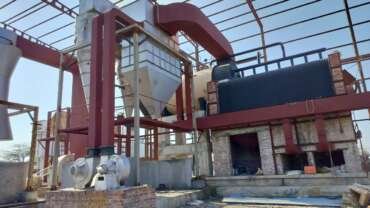
IBR vs Non-IBR vs SIB Boilers play a crucial role in defining the operational efficiency, fuel consumption, and safety standards of industrial steam systems. Understanding the differences between these three types of boilers helps industries choose the best solution for their specific applications.
The debate around IBR vs Non-IBR vs SIB Boilers continues among industries seeking efficiency and compliance.
Choosing the right type of boiler can make a massive difference in your industry’s efficiency, compliance, and cost savings. The debate around IBR vs Non-IBR vs SIB Boilers is common among engineers, plant owners, and operations managers.
Steam generation is the backbone of most industrial processes, from textile dyeing and paper production to food sterilization and chemical reactions. Every industry depends on boilers for consistent heating, and the type of boiler you select determines your long-term operational efficiency and compliance. In India, boiler design and usage are governed by the Indian Boiler Regulations (IBR), which divide boilers into three primary categories — IBR, Non-IBR, and SIB Boilers. Understanding the differences between IBR, Non-IBR, and SIB Boilers helps plant engineers, energy managers, and procurement teams make strategic choices that influence energy savings, safety, and production output.
Each of these boilers serves a unique purpose based on capacity, regulatory standards, design pressure, and industrial use. Understanding the distinctions between them ensures that your choice aligns perfectly with your operational goals and regulatory requirements.
The ongoing comparison between IBR vs Non-IBR vs SIB Boilers helps industries select the most efficient and compliant solution for their process requirements.
Understanding the differences between IBR vs Non-IBR vs SIB Boilers helps industries make the right investment decision.
In this detailed guide, we’ll explore the five major differences between IBR, Non-IBR, and SIB Boilers, comparing their efficiency, fuel consumption, lifespan, and environmental impact — so you can make a confident and informed decision.
Top 5 Powerful Differences Between IBR vs Non-IBR vs SIB Boilers
IBR Boilers — Regulation, Design & Applications
IBR Boilers are governed by the Indian Boiler Regulations (IBR), 1950, which set strict safety, design, and performance standards for all high-pressure steam boilers used in India.
These boilers are legally defined as units with a steam capacity exceeding 25 liters and a design pressure of 1 kg/cm² or higher. Every IBR boiler must be registered with the government and inspected periodically by certified authorities.
Among IBR vs Non-IBR vs SIB Boilers, the IBR type stands out for its robust regulatory compliance.
Example:
Many large-scale industries—such as textile processing units, food manufacturing plants, and chemical refineries—prefer IBR boilers because they can handle continuous 24×7 operations with high-pressure steam. Their design allows precise temperature control, making them perfect for applications where product quality depends on stable heat. When maintained according to IBR guidelines, these boilers can operate safely for decades without efficiency loss.
Core Characteristics
- Covered under IBR — fully compliant with national regulations
- Design pressure ≥ 1 kg/cm²
- Virtually limitless capacity
- Mandatory inspection and certification
- Fuel flexibility: coal, oil, gas, biomass
- Long service life, often over 35 years
Advantages of IBR Boilers
- High safety and legal compliance
- High efficiency (80–85% or more)
- Robust construction and heat transfer efficiency
- Reduced long-term fuel consumption
- Extended operational lifespan
Disadvantages
- Requires certified operators and IBR piping
- Higher upfront and regulatory costs
IBR Boilers are ideal for large-scale industries such as textiles, paper, food processing, and chemicals, where high steam pressure, safety, and reliability are essential.
Non-IBR Boilers — Flexibility and Cost-Effectiveness
Non-IBR boilers fall outside the purview of the Indian Boiler Regulations. They are typically smaller in size and are designed for steam generation below 25 liters and pressure less than 1 kg/cm².
Because they are not governed by IBR standards, they are widely used in small-scale industrial setups, laboratories, and commercial establishments where steam requirements are moderate.
In the context of IBR vs Non-IBR vs SIB Boilers, non-IBR units are more flexible and cost-effective.
Example:
Non-IBR boilers are most common in small industrial clusters and commercial setups where space, cost, and mobility are major considerations. They are also used in temporary installations or industries that need steam for short production cycles, such as bakeries or dry-cleaning facilities. Because they are easier to move and install, they are ideal for start-ups or companies with moderate steam demands.
Key Features
- Not covered under IBR
- Simple construction and easy installation
- Flexible design for multiple applications
- Capacity up to 700 kg/h (biomass) or 850 kg/h (diesel/gas)
Advantages
- Lower initial and maintenance costs
- Easy to install and operate
- Minimal downtime and faster startup
- Ideal for smaller operations with limited steam demand
Disadvantages
- Efficiency limited to 70–77%
- Requires excellent water quality
- Lower lifespan (7–10 years average)
Non-IBR Boilers are a cost-effective choice for industries with limited space or smaller steam requirements — for example, laundries, small food units, and workshops.
SIB Boilers — Compact Yet Compliant
SIB (Small Industrial Boilers) represent the perfect balance between compactness and compliance. Despite their smaller capacity, these boilers are still regulated under IBR, ensuring they meet safety and quality benchmarks.
When comparing IBR vs Non-IBR vs SIB Boilers, SIB units strike the perfect middle ground.
Example:
SIB boilers bridge the gap between large regulated units and flexible non-IBR options. Their compact design and quick start-up time make them ideal for institutions such as hospitals, hotels, and small manufacturing facilities that require an uninterrupted steam supply for sterilisation or heating but have limited installation space.
Specifications
- Capacity: 25–500 liters
- Operating pressure: below 7 kg/cm²
- Compact and portable for limited space
- Suitable for small industrial and hospitality applications
Advantages
- Compact and space-saving design
- Superior heat transfer and fuel flexibility
- IBR-approved — ensures safety and quality
- Reliable performance for small-scale industries
Disadvantages
- Requires certified operator and IBR inspection
- Slightly higher cost compared to non-IBR options
SIB Boilers are often used in food processing, garment manufacturing, small hotels, and hospitals, offering reliable steam generation within a small footprint.

Efficiency and Fuel Use in IBR vs Non-IBR vs SIB Boilers
In performance and operation, IBR vs Non-IBR vs SIB Boilers differ significantly in combustion design, thermal efficiency, and regulatory scope.
Over the lifecycle of a boiler, efficiency plays a far greater role than the initial purchase price. A difference of even 10% in efficiency can result in thousands of rupees saved annually in fuel costs. Modern IBR boilers, when fitted with economizers or air pre-heaters, can push efficiencies beyond 88%, especially when firing on natural gas or biomass. Non-IBR boilers, on the other hand, are limited by design but still serve well where low-pressure steam is sufficient.
Additionally, regular maintenance, feed-water treatment, and insulation improvements can further narrow the efficiency gap. Choosing the right type of boiler and maintaining it correctly ensures optimal performance and reduced carbon emissions over its lifetime.
Efficiency Comparison
IBR Boilers:
With efficiencies above 80–85%, IBR boilers excel in fuel utilization. Their multi-pass heat exchangers, forced draft systems, and precise combustion control minimize wastage.
Non-IBR Boilers:
Efficiency typically lies between 70–77%, owing to basic design and limited heat transfer surfaces.
Difference:
Energy data shows that in IBR vs Non-IBR vs SIB Boilers, IBR systems deliver 10–15% more efficiency.
Fuel Consumption Example
- 1 ton/hr Non-IBR Boiler: ~67.39 SCM/hr natural gas
- 1 ton/hr IBR Boiler: ~60 SCM/hr natural gas
➡️ Fuel savings: ~13,000 SCM/year
These savings, combined with lower emissions, make IBR boilers a cost-efficient long-term investment.
Lifespan, Environmental Impact & Compliance
The lifespan of a boiler doesn’t just depend on its design; it also reflects operational discipline and water treatment quality. IBR boilers, with their thicker plates and higher-grade materials, withstand repeated heating cycles and pressure variations better than non-IBR types. Proper descaling, blow-down practices, and adherence to inspection schedules can easily extend their service life beyond four decades.
In the context of IBR vs Non-IBR vs SIB Boilers, the lifespan difference is often decisive in choosing the right model.
From an environmental perspective, IBR boilers’ higher combustion efficiency results in lower fuel use and consequently fewer CO₂ emissions. The ability to integrate advanced flue-gas cleaning systems also means they can meet evolving emission norms without major design changes. Non-IBR boilers, while more flexible, often lack such add-on systems, making them less suitable for regions with strict pollution control standards.
Lifespan
A major difference in IBR vs Non-IBR vs SIB Boilers lies in operational lifespan and maintenance.
IBR Boilers typically last 35–40 years due to superior materials, rigorous testing, and mandatory inspections.
Non-IBR Boilers, in contrast, last 7–10 years, though proper maintenance can extend life up to 20+ years.
Environmental Benefits
Environmental compliance is another area where IBR vs Non-IBR vs SIB Boilers showcase major differences, especially in emissions and sustainability.
IBR boilers:
- Higher combustion efficiency = Lower CO₂, NOx, and SOx emissions
- Compatible with biomass and renewable fuels
- Integrated pollution control systems like dust collectors and scrubbers
Non-IBR boilers:
- Suitable for smaller setups where total emissions are inherently lower
- Some designs allow renewable biomass use
Conclusion:
For industries focusing on sustainability and compliance, IBR Boilers are the superior choice. Their long lifespan, reduced emissions, and efficiency make them environmentally and economically advantageous.
Cost Comparison of IBR vs Non-IBR vs SIB Boilers
While IBR boilers have higher upfront costs due to their robust construction and certification requirements, they offer superior long-term value through fuel savings, efficiency, and longevity. Non-IBR boilers, though cheaper initially, can lead to higher fuel and maintenance expenses over time. SIB boilers provide a balanced investment — moderate cost with dependable performance, making them ideal for medium-scale industries seeking both compliance and affordability.
Future Trends in IBR vs Non-IBR vs SIB Boilers
The future of industrial steam generation is shifting toward sustainable fuels, automation, and intelligent monitoring systems. Boilers falling under IBR are increasingly adopting digital controls, IoT sensors, and eco-friendly combustion technologies. Meanwhile, compact SIB and Non-IBR boilers are being re-engineered for higher efficiency and lower emissions. As industries move toward carbon neutrality, the evolution of IBR vs Non-IBR vs SIB Boilers will center on cleaner, smarter, and more adaptable designs.
Quick Comparison Chart
| Feature | IBR Boiler | Non-IBR Boiler | SIB Boiler |
|---|---|---|---|
| Regulation | Under IBR | Not under IBR | Under IBR |
| Capacity | >25 liters | <25 liters | 25–500 liters |
| Pressure | ≥ 1 kg/cm² | < 1 kg/cm² | < 7 kg/cm² |
| Efficiency | 80–85% | 70–77% | 75–80% |
| Lifespan | 35–40 years | 7–10 years | 15–25 years |
| Ideal Use | Heavy Industry | Small setups | Compact industries |
Choosing the Right Boiler for Your Industry
When evaluating IBR vs Non-IBR vs SIB Boilers, consider your steam demand, available space, budget, and regulatory obligations. Large manufacturing units or plants that operate continuously under high pressure should invest in IBR models for long-term safety and efficiency. Smaller setups or mobile operations can benefit from the affordability and simplicity of Non-IBR boilers. For industries looking for a middle ground, SIB boilers deliver reliability and compact design without sacrificing compliance. Consulting with an experienced manufacturer like Maanya Boilers Pvt. Ltd. ensures that you select the most suitable configuration for your process requirements. Read more about this at : Choose the right boiler for your needs
Why Choose Maanya Boilers Pvt. Ltd.?
At Maanya Boilers Pvt. Ltd., we specialize in manufacturing IBR, Non-IBR, and SIB Boilers tailored to diverse industrial needs. Our solutions are designed to deliver maximum efficiency, compliance, and performance, ensuring long-term value for every client.
To know which boiler best fits your industrial setup, connect with the experts at Maanya Boilers Pvt. Ltd. for a personalized consultation on IBR vs Non-IBR vs SIB Boilers and other energy-efficient systems.
To explore our range of industrial boilers, visit our
👉 Official Products Page
For more information on government boiler standards, refer to
👉 Energy.gov Boiler Efficiency Guide
Conclusion
The choice between IBR vs Non-IBR vs SIB Boilers depends on your industry’s scale, safety requirements, and operational priorities. To summarize, IBR vs Non-IBR vs SIB Boilers each have unique benefits depending on the scale of your industry.
Ultimately, the choice between IBR vs Non-IBR vs SIB Boilers depends on your capacity needs and compliance goals.
When choosing between IBR vs Non-IBR vs SIB Boilers, consider your steam pressure, fuel type, and long-term maintenance goals.
Each option in the IBR vs Non-IBR vs SIB Boilers category serves a distinct purpose, from large-scale industrial operations to small manufacturing setups.
- IBR Boilers deliver unmatched safety, efficiency, and lifespan — ideal for large-scale industries.
- Non-IBR Boilers are cost-efficient and flexible for smaller operations.
- SIB Boilers provide compactness and compliance for mid-sized setups.
No matter your industry, Maanya Boilers Pvt. Ltd. offers trusted, certified, and energy-efficient boiler solutions designed to power your success sustainably.
FAQs on IBR vs Non-IBR vs SIB Boilers
Q1. What makes IBR boilers more efficient than Non-IBR boilers?
They are designed under strict regulations with better heat-exchange surfaces, advanced burners, and multi-pass systems that recover more heat from exhaust gases.
Q2. Are SIB boilers easier to maintain?
Yes. Their compact design simplifies operation and cleaning while still requiring periodic IBR-approved inspections.
Q3. Can Non-IBR boilers run on renewable fuels?
Some Non-IBR models are compatible with biomass or agro-waste fuels, though efficiency and emissions depend on the fuel’s quality and moisture content.
No responses yet