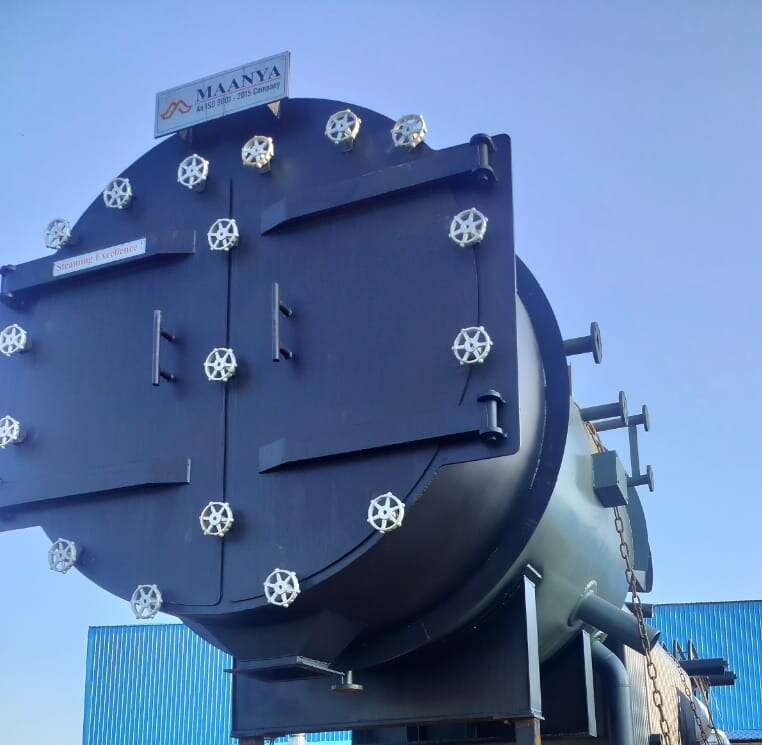
Ensure cleaner, greener operations with our Bag Filters, Cyclone Separators, and Wet Scrubbers, designed to control emissions and meet environmental standards.
Boost efficiency and cut fuel costs with our Air Preheaters, Pressurised Economisers, Condensate Recovery Systems, and Burner Management Systems engineered to deliver maximum energy savings.
Protect your boilers with pure feedwater using our Sand Filters & Softeners, Iron Removal Plants, and DM Plants ensuring long life, low maintenance, and uninterrupted performance.
Maanya Boilers offers a range of spare parts used in industrial boilers. Including commonly required replacement components that help maintain smooth boiler operation. These parts support regular servicing needs and ensure continued performance of existing boiler systems.
For more details on boilers we supply parts for, you can also visit our Boiler page.
Yes, the spare parts provided are suitable for a variety of industrial boiler models and support general maintenance requirements. They are ideal for plants that require basic replacement components to keep their boiler systems running efficiently.
To understand compatibility with regulations, you can refer to official IBR guidelines.
Yes, the spare parts listed are appropriate for regular boiler maintenance and help industries ensure steady performance and reliability. They support operations by providing essential replacements that reduce downtime.
If you need installation assistance or service support, feel free to Contact our Team.
Maanya Boilers provides spare parts that can be used for various boiler types, including older models that require routine component change-outs. These parts help extend the operational life of existing systems and support basic boiler upkeep.
For more information on our other products, please see theCombimac Boiler page.
Maanya Boilers supports industrial operations by maintaining a reliable supply of replacement components and consumable items that are commonly required for routine boiler maintenance and servicing.
These spare parts are selected to meet common operational requirements and help technical teams perform scheduled inspection tasks and minor corrective work without delay.
Having access to standardized replacement items reduces response time in maintenance scenarios and streamlines procurement planning for production facilities.Procurement and maintenance staff benefit from clear documentation of component availability, which assists in inventory control and helps avoid unplanned outages.
When operational teams find appropriate spare parts readily accessible, they can follow preventive maintenance schedules with confidence and avoid the improvisation that may occur when original components are not available.
This improves operational safety, lowers the likelihood of emergency repairs, and supports better lifecycle management for steam-generating equipment.Compatibility and fitment are important considerations for these spare parts.
Spare parts are commonly chosen to match key tolerance ranges and mechanical dimensions of existing equipment.
This reduces the need for extensive modifications during installation and helps preserve system integrity.
Technicians can replace worn or degraded spare parts with parts that meet necessary fit and function criteria, preserving the performance characteristics of the original installation.Supply chain considerations for replacement items include packaging, logistics, and lead times.
Suppliers that maintain consistent packaging and quality control reduce the administrative overhead for stores and procurement divisions.
Timely deliveries and reliable stock information allow operations managers to plan maintenance windows more accurately and reduce the risk of prolonged production interruptions.
When spare parts are shipped with clear labeling and accompanying documentation, on-site teams can verify compatibility before beginning any remedial tasks.Operational advantages extend to reduced downtime and improved uptime metrics.
Facilities that keep an organized catalog of common replacement items and maintain appropriate reorder points can shorten repair cycles and avoid productivity losses.
This also supports preventive maintenance strategies that have a direct effect on efficiency and cost control.
By managing a small buffer stock of critical items, organizations can ensure they remain productive even during supply chain fluctuations.Technical teams also find value in access to basic consumables and components that are frequently required during scheduled service intervals.
These items support routine inspections, sealing and fastening tasks, and replacement of wear parts.
Consistent use of quality replacement items helps maintain thermal performance, pressure stability, and overall equipment reliability.
This contributes to predictable operational behaviour and decreases the frequency of reactive maintenance calls.Finally, having a dependable source for replacement items simplifies coordination between procurement, stores, and maintenance departments.
Clear communication about availability, expected delivery times, and handling instructions enables better planning and safer on-site interventions.
As a result, production teams can maintain steady output and avoid emergency stoppages that are costly both in time and resources.
In many industrial environments, the availability of reliable replacement items contributes significantly to operational planning and long-term performance targets. When technical departments have predictable access to commonly required components, they are able to allocate manpower more effectively and schedule routine service activities without disrupting core production work. This enables a more structured workflow and reduces unexpected downtime arising from avoidable mechanical issues.Another important factor is the reduction of administrative delays. When operations rely on frequently used replacement items that are already documented and understood by the maintenance team, the approval and requisition cycles become much faster. This simplifies coordination between stores, procurement departments, and supervisors responsible for daily upkeep. As a result, maintenance intervals can be executed on time, preventing minor issues from escalating into larger operational disruptions.Organizations that maintain clear communication channels regarding availability and lead times of replacement components often notice better alignment between maintenance goals and production targets. The transparency of information helps various departments anticipate upcoming requirements and arrange resources accordingly. This level of planning contributes to safer working conditions, improved equipment reliability, and enhanced consistency in steam production where boilers are in continuous use.Basic component availability also supports training and skill development.
New technicians can practice routine servicing tasks using standard replacement items during supervised sessions.
This helps them gain hands-on familiarity with installation, handling, and safety protocols.
Over time, teams become more confident and efficient in managing routine mechanical upkeep, resulting in improved productivity and reduced interruptions.
When organizations commit to maintaining an adequate supply of such items, the long-term benefits can be observed in reduced maintenance costs and higher equipment availability.
Industrial Boiler Spare Parts – Maintenance, Availability & Operational Support
Maanya Boilers supports industrial operations by maintaining a reliable supply of replacement components and consumable items that are commonly required for routine boiler maintenance and servicing.
These spare parts are selected to meet common operational requirements and help technical teams perform scheduled inspection tasks and minor corrective work without delay.
Having access to standardized replacement items reduces response time in maintenance scenarios and streamlines procurement planning for production facilities.
Procurement and maintenance staff benefit from clear documentation of component availability, which assists in inventory control and helps avoid unplanned outages.
When operational teams find appropriate spare parts readily accessible, they can follow preventive maintenance schedules with confidence and avoid the improvisation that may occur when original components are not available.
This improves operational safety, lowers the likelihood of emergency repairs, and supports better lifecycle management for steam-generating equipment.
Compatibility and fitment are important considerations for these spare parts.
Spare parts are commonly chosen to match key tolerance ranges and mechanical dimensions of existing equipment.
This reduces the need for extensive modifications during installation and helps preserve system integrity.
Technicians can replace worn or degraded spare parts with parts that meet necessary fit and function criteria, preserving the performance characteristics of the original installation.
Supply chain considerations for replacement items include packaging, logistics, and lead times.
Suppliers that maintain consistent packaging and quality control reduce the administrative overhead for stores and procurement divisions.
Timely deliveries and reliable stock information allow operations managers to plan maintenance windows more accurately and reduce the risk of prolonged production interruptions.
When spare parts are shipped with clear labeling and accompanying documentation, on-site teams can verify compatibility before beginning any remedial tasks.
Operational advantages extend to reduced downtime and improved uptime metrics.
Facilities that keep an organized catalog of common replacement items and maintain appropriate reorder points can shorten repair cycles and avoid productivity losses.
This also supports preventive maintenance strategies that have a direct effect on efficiency and cost control.
By managing a small buffer stock of critical items, organizations can ensure they remain productive even during supply chain fluctuations.
Technical teams also find value in access to basic consumables and components that are frequently required during scheduled service intervals.
These items support routine inspections, sealing and fastening tasks, and replacement of wear parts.
Consistent use of quality replacement items helps maintain thermal performance, pressure stability, and overall equipment reliability.
This contributes to predictable operational behaviour and decreases the frequency of reactive maintenance calls.
Finally, having a dependable source for replacement items simplifies coordination between procurement, stores, and maintenance departments.
Clear communication about availability, expected delivery times, and handling instructions enables better planning and safer on-site interventions.
As a result, production teams can maintain steady output and avoid emergency stoppages that are costly both in time and resources.
In many industrial environments, the availability of reliable replacement items contributes significantly to operational planning and long-term performance targets.
When technical departments have predictable access to commonly required components, they are able to allocate manpower more effectively and schedule routine service activities without disrupting core production work.
This enables a more structured workflow and reduces unexpected downtime arising from avoidable mechanical issues.
Another important factor is the reduction of administrative delays.
When operations rely on frequently used replacement items that are already documented and understood by the maintenance team, the approval and requisition cycles become much faster.
This simplifies coordination between stores, procurement departments, and supervisors responsible for daily upkeep.
As a result, maintenance intervals can be executed on time, preventing minor issues from escalating into larger operational disruptions.
Organizations that maintain clear communication channels regarding availability and lead times of replacement components often notice better alignment between maintenance goals and production targets.
The transparency of information helps various departments anticipate upcoming requirements and arrange resources accordingly.
This level of planning contributes to safer working conditions, improved equipment reliability, and enhanced consistency in steam production where boilers are in continuous use.
Basic component availability also supports training and skill development.
New technicians can practice routine servicing tasks using standard replacement items during supervised sessions.
This helps them gain hands-on familiarity with installation, handling, and safety protocols.
Over time, teams become more confident and efficient in managing routine mechanical upkeep, resulting in improved productivity and reduced interruptions.
When organizations commit to maintaining an adequate supply of such items, the long-term benefits can be observed in reduced maintenance costs and higher equipment availability.
alt=”industrial boiler technology evolution from coal to biomass”alt=”industrial boiler technology evolution from coal to biomass”alt=”industrial boiler technology evolution from coal to biomass”alt=”industrial boiler technology evolution from coal to biomass”alt=”industrial boiler technology evolution from coal to biomass”alt=”industrial boiler technology evolution from coal to biomass”alt=”industrial boiler technology evolution from coal to biomass”alt=”industrial boiler technology evolution from coal to biomass”alt=”industrial boiler technology evolution from coal to biomass”alt=”industrial boiler technology evolution from coal to biomass”alt=”industrial boiler technology evolution from coal to biomass”alt=”industrial boiler technology evolution from coal to biomass”alt=”industrial boiler technology evolution from coal to biomass”alt=”industrial boiler technology evolution from coal to biomass”alt=”industrial boiler technology evolution from coal to biomass”alt=”industrial boiler technology evolution from coal to biomass”alt=”industrial boiler technology evolution from coal to biomass”alt=”industrial boiler technology evolution from coal to biomass”alt=”industrial boiler technology evolution from coal to biomass”alt=”industrial boiler technology evolution from coal to biomass”alt=”industrial boiler technology evolution from coal to biomass”alt=”industrial boiler technology evolution from coal to biomass”alt=”industrial boiler technology evolution from coal to biomass”alt=”industrial boiler technology evolution from coal to biomass”alt=”industrial boiler technology evolution from coal to biomass”alt=”industrial boiler technology evolution from coal to biomass”alt=”industrial boiler technology evolution from coal to biomass”alt=”industrial boiler technology evolution from coal to biomass”alt=”industrial boiler technology evolution from coal to biomass”alt=”industrial boiler technology evolution from coal to biomass”alt=”industrial boiler technology evolution from coal to biomass”alt=”industrial boiler technology evolution from coal to biomass”alt=”industrial boiler technology evolution from coal to biomass”alt=”industrial boiler technology evolution from coal to biomass”alt=”industrial boiler technology evolution from coal to biomass”alt=”industrial boiler technology evolution from coal to biomass”alt=”industrial boiler technology evolution from coal to biomass”alt=”industrial boiler technology evolution from coal to biomass”alt=”industrial boiler technology evolution from coal to biomass”alt=”industrial boiler technology evolution from coal to biomass”alt=”industrial boiler technology evolution from coal to biomass”alt=”industrial boiler technology evolution from coal to biomass”alt=”industrial boiler technology evolution from coal to biomass”alt=”industrial boiler technology evolution from coal to biomass”alt=”industrial boiler technology evolution from coal to biomass”alt=”industrial boiler technology evolution from coal to biomass”alt=”industrial boiler technology evolution from coal to biomass”alt=”industrial boiler technology evolution from coal to biomass”alt=”industrial boiler technology evolution from coal to biomass”alt=”industrial boiler technology evolution from coal to biomass”alt=”industrial boiler technology evolution from coal to biomass”alt=”industrial boiler technology evolution from coal to biomass”alt=”industrial boiler technology evolution from coal to biomass”alt=”industrial boiler technology evolution from coal to biomass”alt=”industrial boiler technology evolution from coal to biomass”alt=”industrial boiler technology evolution from coal to biomass”alt=”industrial boiler technology evolution from coal to biomass”alt=”industrial boiler technology evolution from coal to biomass”alt=”industrial boiler technology evolution from coal to biomass”alt=”industrial boiler technology evolution from coal to biomass”alt=”industrial boiler technology evolution from coal to biomass”alt=”industrial boiler technology evolution from coal to biomass”alt=”industrial boiler technology evolution from coal to biomass”alt=”industrial boiler technology evolution from coal to biomass”alt=”industrial boiler technology evolution from coal to biomass”alt=”industrial boiler technology evolution from coal to biomass”alt=”industrial boiler technology evolution from coal to biomass”alt=”industrial boiler technology evolution from coal to biomass”alt=”industrial boiler technology evolution from coal to biomass”alt=”industrial boiler technology evolution from coal to biomass”alt=”industrial boiler technology evolution from coal to biomass”alt=”industrial boiler technology evolution from coal to biomass”alt=”industrial boiler technology evolution from coal to biomass”alt=”industrial boiler technology evolution from coal to biomass”alt=”industrial boiler technology evolution from coal to biomass”alt=”industrial boiler technology evolution from coal to biomass”alt=”industrial boiler technology evolution from coal to biomass”alt=”industrial boiler technology evolution from coal to biomass”alt=”industrial boiler technology evolution from coal to biomass”alt=”industrial boiler technology evolution from coal to biomass”alt=”industrial boiler technology evolution from coal to biomass”alt=”industrial boiler technology evolution from coal to biomass”alt=”industrial boiler technology evolution from coal to biomass”alt=”industrial boiler technology evolution from coal to biomass”alt=”industrial boiler technology evolution from coal to biomass”alt=”industrial boiler technology evolution from coal to biomass”alt=”industrial boiler technology evolution from coal to biomass”alt=”industrial boiler technology evolution from coal to biomass”alt=”industrial boiler technology evolution from coal to biomass”alt=”industrial boiler technology evolution from coal to biomass”alt=”industrial boiler technology evolution from coal to biomass”alt=”industrial boiler technology evolution from coal to biomass”alt=”industrial boiler technology evolution from coal to biomass”alt=”industrial boiler technology evolution from coal to biomass”alt=”industrial boiler technology evolution from coal to biomass”alt=”industrial boiler technology evolution from coal to biomass”alt=”industrial boiler technology evolution from coal to biomass”spare parts alt=”industrial boiler technology evolution from coal to biomass”alt=”industrial boiler technology evolution from coal to biomass”alt=”industrial boiler technology evolution from coal to biomass”alt=”industrial boiler technology evolution from coal to biomass”alt=”industrial boiler technology evolution from coal to biomass”alt=”industrial boiler technology evolution from coal to biomass”alt=”industrial boiler technology evolution from coal to biomass”alt=”industrial boiler technology evolution from coal to biomass”alt=”industrial boiler technology evolution from coal to biomass”alt=”industrial boiler technology evolution from coal to biomass”alt=”industrial boiler technology evolution from coal to biomass”alt=”industrial boiler technology evolution from coal to biomass”alt=”industrial boiler technology evolution from coal to biomass”alt=”industrial boiler technology evolution from coal to biomass”alt=”industrial boiler technology evolution from coal to biomass”alt=”industrial boiler technology evolution from coal to biomass”alt=”industrial boiler technology evolution from coal to biomass”alt=”industrial boiler technology evolution from coal to biomass” spare parts spare parts spare parts spare parts spare parts spare parts spare parts