

Boiler in Sugar Factory and Jaggery Units: What Changes vs. Other Industries
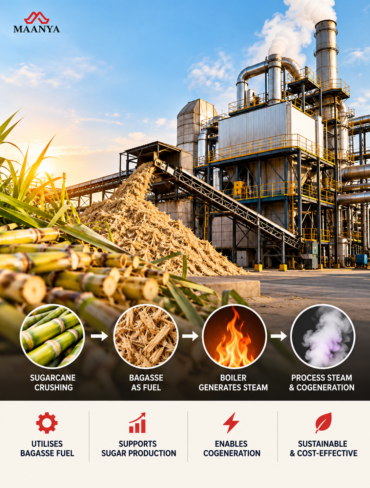
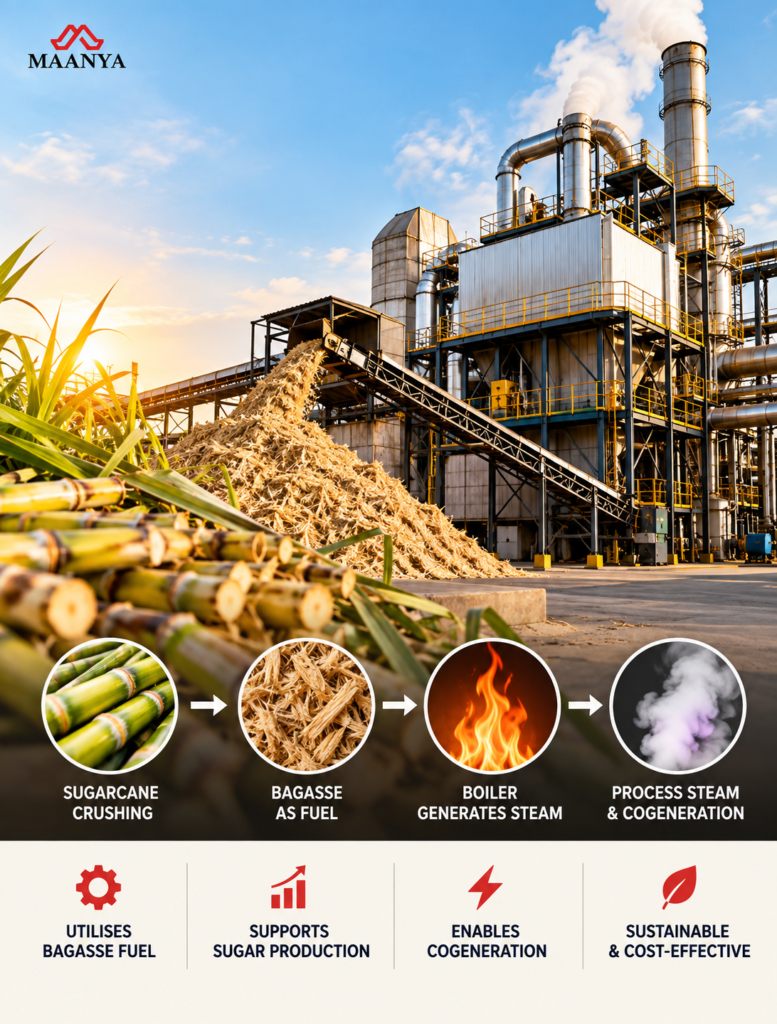
A boiler in a sugar factory does much more than generate process steam. It is closely tied to the mill’s fuel cycle because sugarcane crushing produces bagasse, which can be used as boiler fuel.
The US EPA notes that bagasse generally accounts for about 30% of the weight of raw sugarcane and typically contains more than 50% moisture. This makes boilers used in sugar industry applications fundamentally different from boilers designed around a more uniform commercial fuel.
For sugar and jaggery units, boiler selection therefore depends on fuel characteristics, steam demand, pressure, combustion technology, ash handling, and how steam integrates with production.
Why Is a Boiler in a Sugar Factory Different?
In industries such as textiles, food processing, or chemicals, the boiler is generally a utility that receives fuel from an external supply chain and provides steam to the production process. A sugar mill has a different relationship with its boiler.
Sugarcane is crushed to extract juice, and the fibrous residue left behind is called bagasse. Instead of treating it only as waste, bagasse can be burned to generate steam for the mill. The steam can meet process requirements and, where the plant is designed for cogeneration, generate electricity.
The Government of India has described bagasse as the principal fuel used to raise steam in sugar mills.
This means the boiler in sugar factory applications must be designed around a fuel generated by the same production process.
How Does Bagasse Change Boiler Design?
Boilers used in sugar industry applications need combustion systems that can handle a fibrous, relatively moist solid fuel. This affects several parts of the plant.
1. Fuel feeding
Bagasse has a different physical structure from coal or liquid fuels. It needs suitable conveying and feeding arrangements to deliver the fuel consistently into the furnace.
Uneven feeding can create uneven combustion, which can affect steam generation and furnace performance.
2. Furnace and grate design
The combustion system must provide sufficient residence time, temperature, and air to ensure the bagasse burns properly.
EPA documentation identifies solid-hearth and travelling-grate arrangements in bagasse combustion. More recent documentation also describes spreader-stoker systems in which bagasse is distributed across the furnace and burns partly in suspension and partly on the grate.
This is one reason why the types of boilers used in the sugar industry cannot be reduced to one standard design.
3. Combustion air
Bagasse combustion requires carefully controlled primary and secondary air.
Too little air can contribute to incomplete combustion and higher unburnt losses. Excessive air, on the other hand, can increase heat carried away through the flue gas.
The objective is controlled combustion, not simply supplying as much air as possible.
The Boiler Commonly Used in Sugar Mills Is Not One Fixed Design
No single boiler design fits every sugar mill. The choice depends on the plant’s:
- Steam capacity
- Working pressure
- Fuel characteristics
- Combustion requirements
- Process steam demand
- Cogeneration requirements
- Operating conditions
- Emission-control requirements
The important point is to distinguish between the boiler’s construction and its fuel-combustion system.
What Types of Boilers Are Used in the Sugar Industry?
The types of boilers used in sugar industry applications are easier to understand by looking at both boiler construction and combustion arrangement.
- Water-Tube Boilers
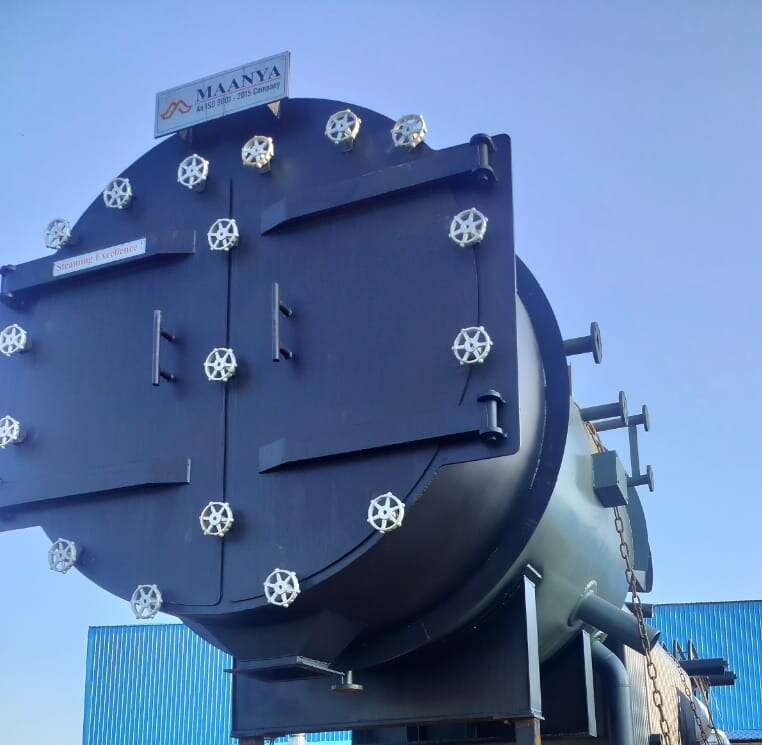
Water-tube construction suits applications requiring higher steam capacities and pressures. Maanya’s Water Tube Biomax Boiler is designed for biomass fuels and high-pressure applications, including bagasse.
- Grate and Stoker-Based Biomass Boilers
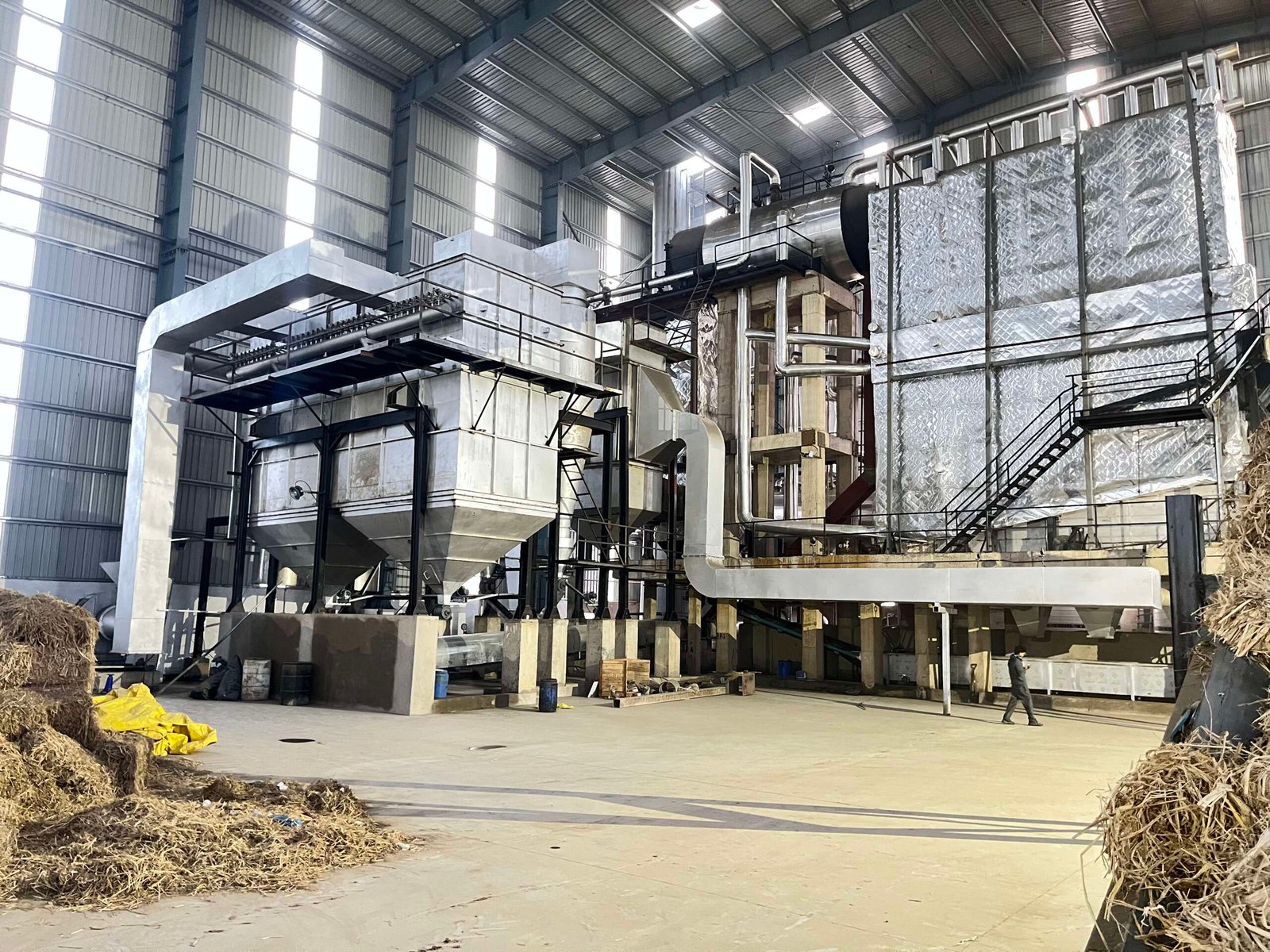
For solid fuels such as bagasse, the combustion arrangement is particularly important. EPA documentation identifies spreader-stoker and other solid-fuel firing arrangements in bagasse applications.
The fuel is distributed into the furnace, where combustion occurs with a controlled air supply. The grate, fuel-feeding arrangement, and air distribution must therefore be engineered as a coordinated system.
- Multi-Fuel Boiler Systems
Some sugar plants may need to use more than one approved fuel, depending on availability and operating requirements. However, multi-fuel capability does not mean every fuel can be burned under identical conditions. Moisture, ash, calorific value, particle characteristics and feeding behaviour still need to be assessed.
How Is a Sugar Mill Boiler Different from a Conventional Industrial Boiler?
The difference is clearer when you compare the complete energy cycle.
| Parameter | Conventional Industrial Boiler | Sugar Mill Boiler |
| Fuel source | Often externally supplied | Bagasse can be generated within the plant |
| Fuel characteristics | Depend on selected fuel | Bagasse has significant moisture and fibrous characteristics |
| Fuel handling | Depends on fuel | Requires bagasse conveying and feeding |
| Steam use | Usually process heating | Process heating and potentially power generation |
| Power generation | May be separate | Can be integrated through cogeneration |
| Fuel-production link | Usually limited | Closely linked to sugarcane crushing |
| Design focus | Steam generation | Fuel, steam and power integration |
The important difference is therefore integration. A sugar mill’s boiler can be part of a system in which the manufacturing process creates the fuel that then produces the steam needed for the process.
Why Does High-Pressure Steam Matter in Sugar Mills?
A sugar mill boiler can do more than provide process heat.
High-pressure steam can be passed through a turbine to generate electricity. The Government of India explains that high-pressure steam generated in sugar-mill boilers can drive turbo-generators, with the mill using the electricity and potentially supplying surplus to the grid.
Therefore, when selecting a boiler in sugar factory applications, the question is not only how much steam is required. The plant may also need to determine what steam conditions are appropriate for its cogeneration system.
This is why boiler pressure, temperature, and capacity should be established through an overall steam and energy balance.
What Changes in Jaggery Units?
A jaggery unit should not simply be treated as a smaller sugar factory.
Although both processes use sugarcane, their production scale and heating requirements can differ. If a boiler is required, size the system around the actual thermal or steam load.
The key parameters include:
- Required steam capacity
- Working pressure
- Fuel availability
- Fuel characteristics
- Operating hours
- Future expansion
The final selection should always follow the plant’s actual process requirements.
How Should a Sugar Mill Boiler Be Selected?
Selecting the right boilers used in sugar industry applications requires looking beyond TPH capacity.
| Selection factor | Why it matters |
| Steam capacity | Determines whether process demand can be met |
| Working pressure | Important for process and cogeneration requirements |
| Bagasse moisture | Influences combustion and useful heat |
| Fuel availability | Determines fuel-handling requirements |
| Combustion system | Must match fuel characteristics |
| Water quality | Supports reliable boiler operation |
| Emission control | Needs to match the installation and applicable requirements |
| Future expansion | Prevents premature capacity limitations |
Why Choose Maanya Boilers for Sugar and Jaggery Units?
Choosing a boiler for a sugar or jaggery unit requires more than matching a required steam capacity to a catalogue model. Fuel type, moisture, pressure, process demand, and installation conditions all influence the appropriate configuration.
Maanya Boilers offers a range covering biomass, solid-fuel and other industrial boiler applications. Its Biomax Boiler is particularly relevant to sugar-industry applications because it supports bagasse and offers hybrid and water-tube configurations.
Explore Maanya Boilers’ full range of industrial boilers to compare solutions by fuel, capacity, and operating requirements.
Conclusion
A boiler in sugar factory applications differs from a generic industrial steam boiler because its fuel and steam cycle can be directly connected to sugar production.
Bagasse availability and moisture influence combustion and fuel handling, while steam pressure and capacity become particularly important when cogeneration is planned.
The types of boilers used in the sugar industry therefore need to be selected according to the plant’s actual fuel, process requirements and operating conditions rather than capacity alone.
Frequently Asked Questions
1. What fuel is commonly used in a sugar mill boiler?
According to the Government of India, bagasse is the principal fuel used to raise steam in sugar mills.
2. What type of boiler is commonly used in sugar mills?
There is no single universal type. The appropriate configuration depends on fuel, steam capacity, pressure, combustion requirements, and cogeneration objectives.
3. Can a bagasse boiler use other fuels?
Some industrial boiler systems can be designed for multi-fuel operation. The suitability of a specific combination depends on the engineered boiler configuration and fuel characteristics.
4. Can a sugar mill boiler generate electricity?
Yes. High-pressure steam generated in sugar-mill boilers can drive turbo-generators to produce electricity as part of a cogeneration system.
5. Which Maanya boiler is relevant for bagasse applications?
Maanya’s Biomax Boiler is specifically listed for biomass fuels, including bagasse, and is available in hybrid and water-tube configurations.
No responses yet