
Top Rice Mill Boiler Manufacturers in India: Best Husk-Fired Boilers for Parboiling Plants
A rice mill boiler generates the steam that parboiling plants use for soaking, steaming and drying paddy. Businesses comparing rice mill boiler manufacturers in India should match the equipment to paddy throughput, husk availability, working pressure and safety obligations. Because the mill produces rice husk itself, a husk-fired design is often the first option examined for any boiler used in rice mill operations.
Choosing a supplier involves more than comparing quotations. Steam capacity, combustion technology, ash handling, regulatory compliance and service support all influence long-term performance, whether the project is a large rice mill boiler plant or a mini boiler for rice mill applications serving a smaller unit. The checks below help mill owners shortlist suppliers whose equipment and support suit their plant.
Why a Husk-Fired Rice Mill Boiler Suits Parboiling Plants
Parboiling is steam-intensive. Paddy is soaked, steamed and then dried, so a steady steam supply directly affects throughput and rice quality. A boiler used in rice mill plants of this kind must deliver stable pressure through the whole shift, not just meet a peak figure on paper.
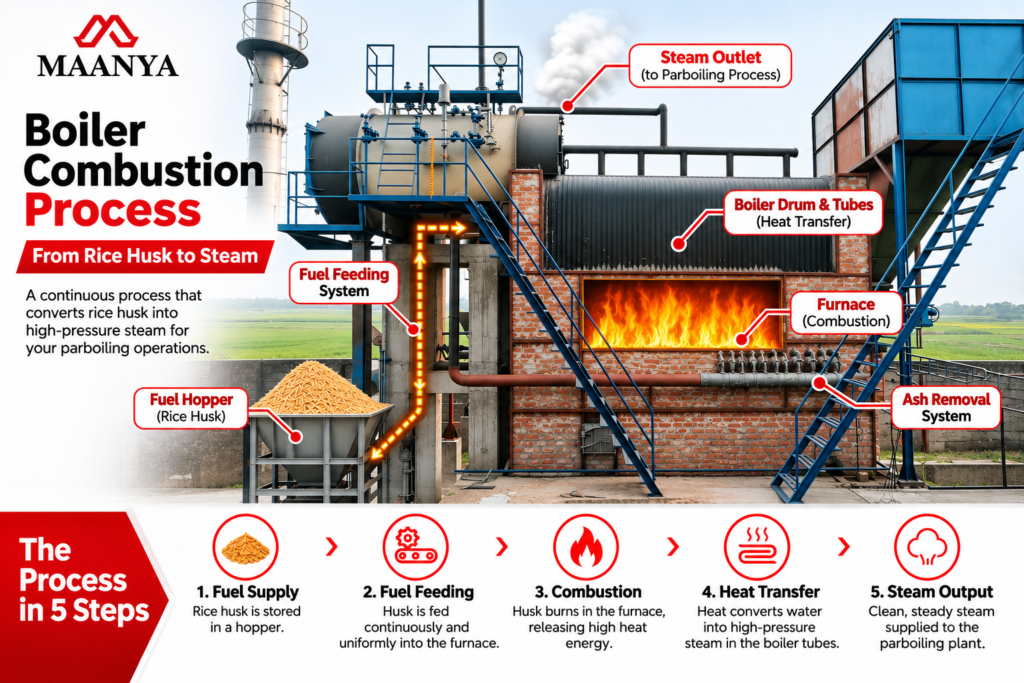
Rice husk is a practical fuel because the mill generates it on site. A TIFAC publication on rice husk energy use notes that mills producing parboiled rice use roughly 40–45% of the husk they generate for their own energy needs, and that about half of the rice consumed in India is parboiled. A husk-fired rice mill boiler can therefore reduce dependence on purchased fuel, although handling, storage and ash disposal still carry costs that must be planned for.
Steam Demand and Operating Pressure
The plant’s steam consumption determines the output rating required. An undersized unit restricts production, while an oversized one raises the initial investment and may run inefficiently at low loads.
- Calculate average and peak steam demand across soaking, steaming and drying.
- Confirm the working pressure and steam quality the process needs.
- Allow for seasonal paddy arrivals and planned expansion.
- Check that the configuration suits the mill’s daily operating hours.
Husk Supply, Feeding and Ash Handling
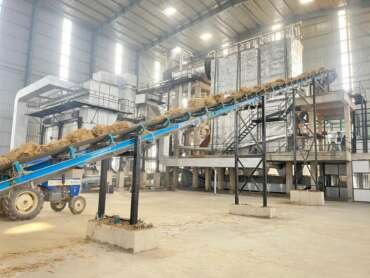
Husk availability, moisture and consistency affect combustion. Any boiler used in rice mill operations should be specified together with its feeding system, ash removal arrangement and storage space. Ask each supplier which husk grades the proposed model supports and whether it can accept other biomass if husk supply tightens.
IBR Compliance and Emissions
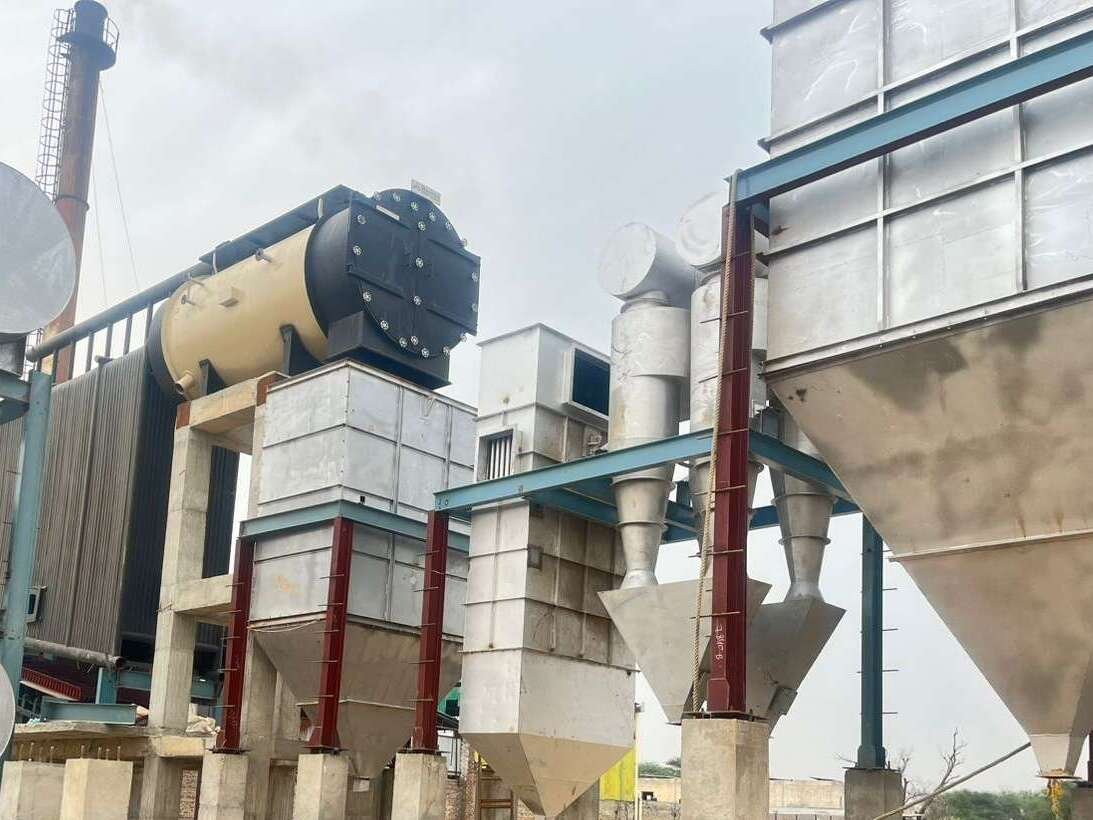
Boiler selection must account for the Indian Boiler Regulations (IBR), inspection requirements and relevant documentation. Buyers should verify the approvals required for their specific installation rather than assuming every unit follows the same route. Husk firing also produces particulate matter, so ask what dust-collection and chimney arrangements are included, and review pollution control equipment options alongside local pollution-control requirements.
Rice Mill Boiler Manufacturers in India: Companies to Compare
The companies below offer husk-fired or biomass-capable boilers, or have published content on rice mill applications. The list is a starting point for research, not a verified ranking of quality or service. Confirm current products, capacities and approvals directly with each supplier.
1. Thermax
Thermax, headquartered in Pune, lists HuskPac Ultra as a boiler engineered specifically for rice husk firing, and its steam boiler pages describe bubbling-bed combustion for husk. Published capacities sit in the low single-digit tonnes-per-hour range, so confirm the current datasheet. It is worth examining for a larger rice mill boiler plant where engineered packages, automation and commissioning scope matter.
2. Rakhoh Industries
Rakhoh Industries operates from Bhosari, Pune, and manufactures packaged, solid-fuel, biomass and waste-heat recovery boilers for sectors that include rice mills. Mills should identify the model matching their required capacity and fuel before requesting a quotation, and ask about feeding arrangements and ash handling.
3. Thermodyne Engineering Systems
Thermodyne publishes dedicated material on rice mill steam boilers, including a husk-fired and fluidised-bed option and a calculator for sizing paddy-dryer boiler requirements. Use any such tool only as a starting estimate and ask for a formal proposal with stated performance assumptions.
4. Microtech Boilers
Microtech Boilers is based in Kathwada GIDC, Ahmedabad, and appears on trade listings for IBR-approved husk-fired steam boilers. Confirm the current model range, pressure rating and service coverage in your state before shortlisting.
5. Shanti Boilers & Pressure Vessels and Shree Laxmi Boilers
Shanti Boilers & Pressure Vessels (Hyderabad) and Shree Laxmi Boilers (Nashik) appear in trade directories for husk-fired and rice husk boilers. Regional suppliers can simplify site visits and servicing, but ask for datasheets, approvals and references from comparable rice mills.
6. Cheema Boilers
Cheema Boilers supplies industrial boilers and energy-related equipment for process industries. Request the relevant datasheet, fuel compatibility details, compliance documents and service arrangements for your region before including a model in the final comparison.
7. Forbes Marshall
Forbes Marshall specialises in steam engineering, process efficiency and energy management. Its expertise suits mills that want to review steam distribution, condensate recovery and monitoring alongside boiler selection. Clarify whether you need a complete boiler, supporting equipment or an efficiency assessment.
Choosing a Mini Boiler for Rice Mill Applications
Not every mill needs a large installation. A mini boiler for rice mill use can suit smaller parboiling units, mills with limited paddy throughput or plants adding steam capacity in stages. A mini rice mill boiler still has to meet the same pressure, safety and fuel-handling requirements as a larger unit, so size should follow a steam calculation rather than a budget target.
Points to check before buying a mini boiler for rice mill operations:
- Whether the rated steam output covers average and peak parboiling load.
- Whether the unit can burn rice husk directly or needs a different fuel.
- Whether the mini rice mill boiler falls under IBR, and which approvals apply.
- Availability of spares, operator training and service in your region.
Treat “mini” as a size description, not an exemption from regulation. Ask each supplier to state capacity, pressure and applicable approvals in writing before comparing a mini rice mill boiler with larger systems.
Planning a Rice Mill Boiler Plant
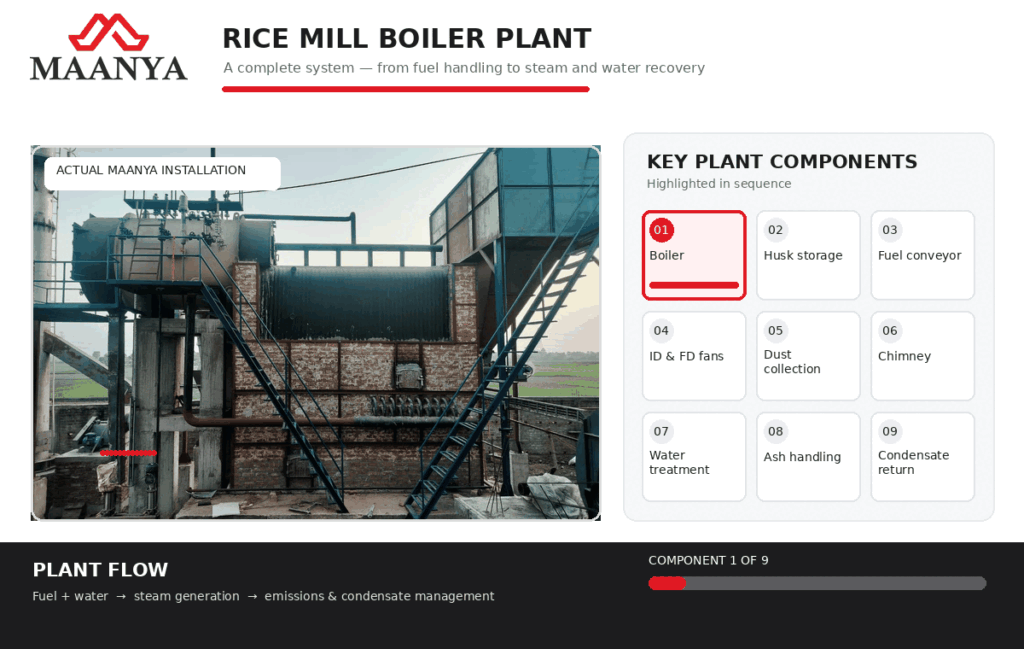
A rice mill boiler plant is more than the boiler itself. The complete installation usually includes the boiler, husk feeding and storage, induced and forced draught fans, dust collection, a chimney, water treatment, ash handling and condensate return. Ask suppliers to list exactly which of these items are inside their quotation.
Plant layout also matters. Leave space for husk storage, ash removal and maintenance access, and keep the husk route short to reduce handling losses. A well-planned rice mill boiler plant is easier to operate, inspect and service over its working life.
How to Compare Rice Mill Boiler Quotations
Send each shortlisted supplier the same request for quotation (RFQ), covering steam output, working pressure, fuel analysis, operating hours, feedwater conditions and installation constraints. Ask for a written list of exclusions, such as piping, controls, installation and commissioning.
Purchase price is only part of the cost. Husk consumption, electricity use, water treatment, maintenance, spares and downtime all shape expenditure over the life of the boiler used in rice mill operations. Use the same operating assumptions for every quote so that expected fuel use and running costs can be compared fairly.
Finally, confirm who will handle installation, commissioning, operator training and routine servicing, and obtain warranty terms, spare-parts lead times and emergency-response commitments in writing.
For further guidance, explore Maanya Boilers’ industrial boiler solutions and Minipac steam boiler guide.
Why Consider Maanya Boilers for a Rice Mill Boiler?
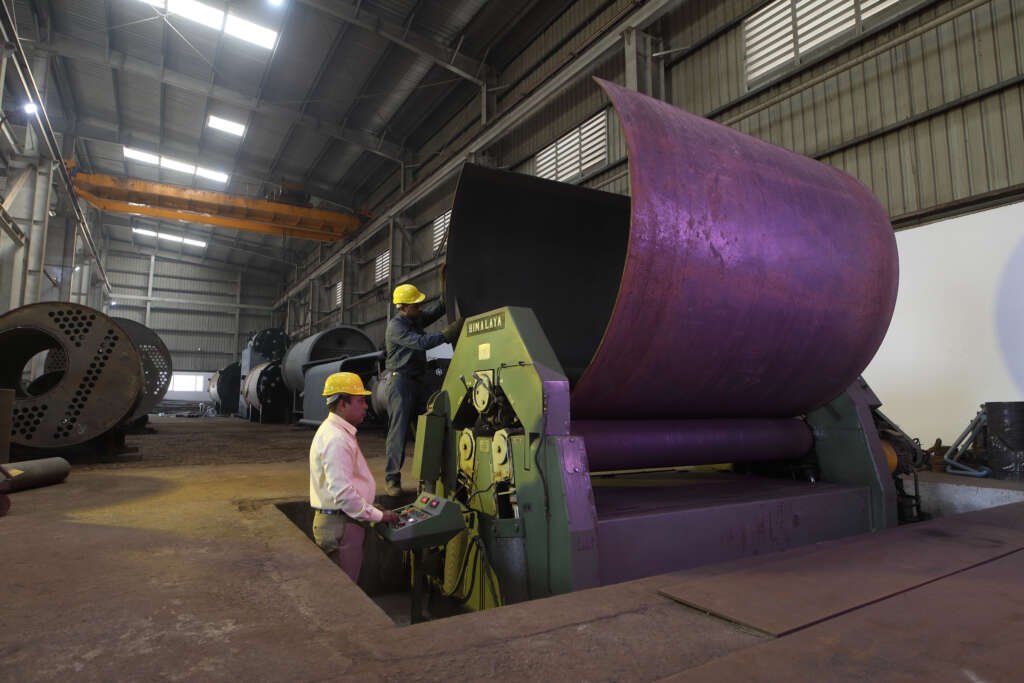
Maanya Boilers serves industrial applications including rice mills, pharmaceuticals, chemicals, textiles, FMCG, plywood and sugar processing. Its portfolio includes Agripac, Agromax, Combimac, Petromax, Minipac, Maxpac and Biomax models, manufactured at its facility in Rohtak, Haryana.
For a rice mill boiler requirement, the assessment should begin with paddy throughput, parboiling steam demand, husk supply and available space. The engineering team can then advise which models, if any, suit the mill’s operating conditions, including smaller requirements that call for a mini boiler for rice mill use.
Before finalising a purchase, request model-specific performance information, applicable approvals, fuel-handling details, installation scope and maintenance terms. Use these to compare Maanya Boilers’ proposal with competing quotations on capacity, performance and after-sales support.
Conclusion
Selecting among rice mill boiler manufacturers in India requires a clear view of steam demand, husk supply, safety obligations and long-term operating cost. Whether the requirement is a full rice mill boiler plant or a mini rice mill boiler for a smaller unit, compare suppliers against the same technical brief and verify their capabilities before committing. Maanya Boilers can also be approached to discuss a boiler used in rice mill applications and evaluate a suitable configuration.
Frequently Asked Questions
1. Which fuel is best for a rice mill boiler?
Rice husk is widely used because mills generate it on site, but the best choice depends on husk availability, moisture, handling arrangements and the boiler design. Confirm which fuels the proposed model supports before ordering.
2. What is a boiler used in rice mill operations for?
A boiler used in rice mill plants produces steam for parboiling, including soaking, steaming and drying paddy, and for other process heating needs. Parboiling plants typically depend on it most heavily.
3. Is a mini boiler for rice mill suitable for parboiling?
It can be if its steam output covers the plant’s average and peak demand. Confirm capacity, pressure, fuel compatibility, and applicable IBR requirements with the supplier before treating a mini rice mill boiler as a substitute for a larger unit.
4. What does a rice mill boiler plant include?
A rice mill boiler plant normally includes the boiler, husk feeding and storage, fans, dust collection, chimney, water treatment, ash handling and condensate return. Check each quotation for exclusions.
5. What information is needed for a rice mill boiler quotation?
Share the required steam capacity, working pressure, fuel type, operating hours, feedwater conditions, available space and process details. These help manufacturers recommend an appropriate configuration.
No responses yet