

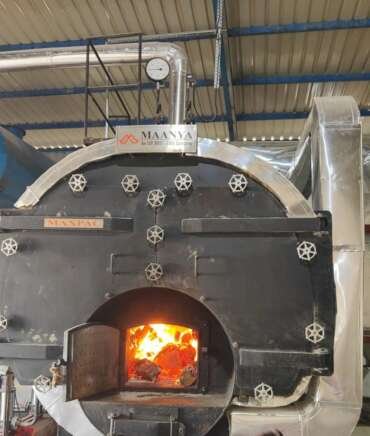
Case Study: Fuel-Fired Package Boiler in Action
Fuel-Fired Package Boiler – Compact Industrial Steam Solution
Introduction
A Fuel Fired Package Boiler is one of the most reliable and efficient steam generation solutions used across modern industries today. Whether you’re operating a food processing plant, pharmaceutical unit, textile factory, dairy, chemical manufacturing facility, hospital, or commercial kitchen, choosing the right boiler plays a crucial role in ensuring uninterrupted production, better fuel efficiency, and long-term operational savings.
In today’s competitive industrial landscape, efficiency isn’t just a goal—it’s a necessity. Every manufacturing unit depends on reliable equipment to maintain consistent production, reduce operating costs, and deliver quality products on time. Among all the essential equipment used in industrial processes, the steam boiler is often considered the heart of the operation.
Steam is used for heating, sterilization, drying, cooking, cleaning, chemical processing, and many other industrial applications. However, not all boilers are designed to meet the evolving demands of modern manufacturing. Industries now require compact, factory-built, energy-efficient systems that are easy to install, simple to maintain, and capable of operating on multiple fuel options.
This is exactly where a Fuel Fired Package Boiler offers significant advantages.
Unlike conventional boilers that require extensive site fabrication and longer installation periods, a fuel fired package boiler is factory-engineered, factory-tested, and delivered as a complete unit. This reduces installation time, simplifies commissioning, and ensures consistent performance from day one.
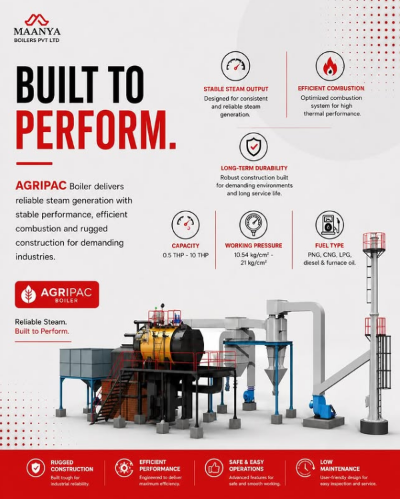
At Maanya Boilers Pvt. Ltd., we have designed the AGRIPAC Boiler to meet these industrial requirements. It is a compact fuel-fired package boiler that can operate using PNG, CNG, LPG, Diesel, and Furnace Oil, making it suitable for a wide range of industries looking for reliable steam generation.
👉 Learn more about the AGRIPAC Boiler:
https://maanyaboilers.co.in/agripac-boiler/
This guide is designed to help plant managers, factory owners, engineers, procurement professionals, and anyone exploring industrial steam solutions understand how fuel fired package boilers work, where they are used, and what factors should be considered before selecting one.
By the end of this guide, you’ll understand:
- What a fuel fired package boiler is
- How it works
- Different fuel options and their advantages
- Boiler capacity and working pressure explained
- Industrial applications
- Safety and maintenance best practices
- Common mistakes to avoid while purchasing a boiler
- How to choose the right steam boiler for your business
Whether you’re planning a new project or upgrading your existing steam generation system, this guide will help you make an informed decision.
What is a Fuel Fired Package Boiler?
A Fuel Fired Package Boiler is a compact, factory-assembled steam boiler designed to generate steam using liquid or gaseous fuels such as PNG (Piped Natural Gas), CNG (Compressed Natural Gas), LPG (Liquefied Petroleum Gas), Diesel, and Furnace Oil.
Unlike traditional boilers that require extensive fabrication at the installation site, a package boiler is manufactured, assembled, inspected, and tested in the factory before it reaches the customer. Since most of the engineering work is completed beforehand, installation becomes faster, easier, and more reliable.
The word “package” simply means that the boiler is delivered as a complete package with all major components integrated into one unit. This typically includes the pressure vessel, burner, combustion chamber, control systems, safety devices, piping connections, and other essential accessories required for steam generation.
Because of this integrated design, package boilers are widely preferred in industries where production schedules are tight, space is limited, and dependable steam supply is critical.
Why Are Package Boilers Becoming More Popular?
Industries today are looking for solutions that reduce downtime, improve fuel efficiency, and simplify maintenance. Package boilers meet these expectations by offering a ready-to-install system that minimizes on-site work and allows businesses to begin operations sooner.
Some of the key reasons industries prefer package boilers include:
- Factory-tested quality
- Faster installation and commissioning
- Compact footprint for facilities with limited space
- Reliable steam generation
- Easy operation and monitoring
- Lower maintenance requirements
- Flexibility to operate on multiple fuel types
For businesses aiming to improve operational efficiency while maintaining consistent steam production, a fuel fired package boiler provides a practical and dependable solution.
Key Components of a Fuel Fired Package Boiler
Although every boiler design may vary slightly depending on its capacity and application, most fuel fired package boilers include the following components:
1. Boiler Shell
The boiler shell is the main body of the boiler where water is stored and heated. It is designed to withstand high temperatures and operating pressures while ensuring safe and efficient steam generation.
2. Burner System
The burner is responsible for mixing fuel with air and creating controlled combustion. Depending on the selected fuel, the burner can operate using PNG, CNG, LPG, Diesel, or Furnace Oil.
The burner plays a crucial role in maintaining stable flame conditions and efficient heat transfer.
3. Combustion Chamber
Inside the combustion chamber, fuel burns under controlled conditions to produce high-temperature gases. These hot gases transfer heat to the surrounding water, initiating the steam generation process.
4. Heat Transfer Surface
The heat generated during combustion passes through specially designed heat transfer surfaces that maximize energy absorption while minimizing heat loss.
Efficient heat transfer directly contributes to improved boiler performance and reduced fuel consumption.
5. Steam Space
As water absorbs heat, it gradually converts into steam. The steam space collects this generated steam before it is supplied to industrial equipment and production processes.
6. Control Panel
Modern package boilers are equipped with user-friendly control systems that help operators monitor:
- Boiler pressure
- Water level
- Burner operation
- Temperature
- Safety alarms
- System performance
Automation improves operational safety while reducing manual intervention.
7. Safety Devices
Industrial boilers operate under high pressure and temperature conditions. Therefore, safety systems are essential for protecting both equipment and personnel.
Typical safety devices include:
- Safety valves
- Pressure gauges
- Water level indicators
- Low-water cut-off systems
- Pressure switches
- Flame monitoring systems
These components help maintain safe operating conditions throughout the boiler’s lifecycle.
Fuel Options Available in AGRIPAC Boiler
One of the major advantages of the AGRIPAC Boiler from Maanya Boilers is its compatibility with multiple industrial fuels.
Depending on your operational requirements and local fuel availability, AGRIPAC can operate using:
- PNG (Piped Natural Gas)
- CNG (Compressed Natural Gas)
- LPG (Liquefied Petroleum Gas)
- Diesel
- Furnace Oil
This flexibility allows industries to choose the most suitable fuel based on availability, operating costs, and production requirements.
👉 Explore the complete AGRIPAC Boiler specifications here:
https://maanyaboilers.co.in/agripac-boiler/
AGRIPAC Boiler Specifications
According to the official product specifications, the AGRIPAC Boiler offers:
| Specification | Details |
|---|---|
| Capacity | 0.5 THP – 10 TPH |
| Working Pressure | 10.54 kg/cm² – 21 kg/cm² |
| Fuel Types | PNG, CNG, LPG, Diesel & Furnace Oil |
These specifications make it suitable for a wide range of industrial steam applications.
Why Steam is Essential in Modern Industries
Imagine running a food processing plant where products need to be cooked at a controlled temperature, or a pharmaceutical company where every piece of equipment must be sterilized before production begins. Now think about a textile mill that needs heat for dyeing fabrics or a dairy plant that pasteurizes milk every day. Although these industries manufacture completely different products, they all have one thing in common—they depend on steam.
Steam has been one of the most trusted sources of industrial energy for decades because it is efficient, reliable, and capable of transferring large amounts of heat quickly. Unlike direct heating methods, steam distributes heat evenly, making it suitable for delicate as well as heavy-duty industrial processes.
This is why industries invest in high-quality steam boilers that can provide a continuous and dependable supply of steam throughout the day.
If you’re new to industrial boilers, you may also want to explore our AGRIPAC Boiler, a compact fuel-fired package boiler designed for efficient industrial steam generation using PNG, CNG, LPG, Diesel, and Furnace Oil.
👉 https://maanyaboilers.co.in/agripac-boiler/
Why Do Industries Prefer Steam?
Steam offers several advantages over other heating methods. It is easy to transport through insulated pipelines, transfers heat efficiently, and can be precisely controlled depending on the process requirement.
Some of the biggest reasons industries rely on steam include:
- Fast heat transfer for quicker production cycles
- Uniform heating to maintain consistent product quality
- Easy temperature control for sensitive manufacturing processes
- Reliable operation during continuous production
- Reduced energy wastage when the system is properly designed
- Suitable for both small-scale and large-scale industrial operations
Because of these advantages, steam remains one of the most widely used heat-transfer mediums in industrial manufacturing.
Industrial Processes That Depend on Steam
Every industry uses steam differently, but the objective remains the same—efficient heat transfer.
Food Processing Industry
In food manufacturing, steam is used for:
- Cooking and boiling food products
- Pasteurization
- Sterilization
- Cleaning production equipment
- Baking processes
- Drying packaged food
Consistent steam pressure ensures food quality while helping manufacturers maintain hygiene standards.
Pharmaceutical Industry
Pharmaceutical companies require extremely clean and reliable steam for:
- Sterilizing equipment
- Sterilizing production lines
- Cleaning vessels
- Manufacturing medicines
- Maintaining contamination-free environments
Even minor interruptions in steam supply can affect production schedules.
Textile Industry
Steam plays an important role in:
- Fabric dyeing
- Washing
- Drying
- Ironing
- Heat setting
Uniform steam helps achieve consistent colour and fabric quality.
Chemical Industry
Chemical manufacturing often requires controlled heating for various reactions.
Steam is commonly used for:
- Heating reactors
- Distillation
- Evaporation
- Solvent recovery
- Tank heating
Stable steam pressure improves both efficiency and product consistency.
Dairy Industry
Milk processing plants depend on steam for:
- Pasteurization
- Sterilization
- Equipment cleaning
- Milk heating
- Product processing
Reliable steam contributes to food safety and quality.
Hospitals & Healthcare
Hospitals use steam every day for:
- Sterilizing surgical instruments
- Laundry operations
- Kitchen facilities
- HVAC applications
Because healthcare facilities operate around the clock, uninterrupted steam generation is essential.
Hotels & Commercial Kitchens
Large hotels and commercial kitchens use steam for:
- Bulk cooking
- Laundry
- Hot water generation
- Kitchen operations
Compact package boilers are often preferred where installation space is limited.
The Growing Need for Efficient Steam Generation
As industries continue to expand, expectations around energy efficiency, operational reliability, and environmental responsibility are also increasing.
Factory owners are no longer looking for just a boiler—they’re looking for a complete steam solution that can:
- Deliver reliable steam throughout the production cycle
- Adapt to available fuel sources
- Reduce maintenance downtime
- Occupy less floor space
- Support future production expansion
This is one of the reasons why Fuel Fired Package Boilers have become increasingly popular across modern manufacturing facilities.
Understanding Package Boilers
Before discussing how a fuel fired package boiler works, it’s important to understand what makes a package boiler different from conventional industrial boilers.
Many people assume that the word package refers to the size of the boiler. In reality, it refers to the way the boiler is designed and supplied.
A package boiler is manufactured, assembled, and tested at the factory before it is delivered to the customer’s site. Instead of building the boiler piece by piece during installation, the entire system is supplied as a ready-to-install unit.
This significantly reduces installation time and ensures better manufacturing quality.
Why Is It Called a Package Boiler?
The name comes from the fact that the boiler arrives as a complete “package.”
Most essential components are already integrated into the system, including:
- Boiler shell
- Burner assembly
- Combustion chamber
- Control panel
- Safety devices
- Piping connections
- Electrical controls
This integrated design simplifies both installation and operation.
Package Boiler vs Conventional Boiler
| Package Boiler | Conventional Boiler |
|---|---|
| Factory assembled | Built on-site |
| Faster installation | Longer installation time |
| Compact design | Requires more installation space |
| Factory tested before dispatch | Performance testing after installation |
| Easier maintenance | Maintenance depends on site construction |
| Lower commissioning time | Higher commissioning time |
For industries where every day of production matters, reducing installation and commissioning time can result in significant operational benefits.
Key Advantages of a Package Boiler
Compact Design
Industrial facilities often have limited installation space. A package boiler occupies a smaller footprint, making it easier to integrate into existing plants.
Faster Installation
Since the boiler is delivered as a complete unit, civil work and on-site fabrication are minimized. This helps businesses begin operations sooner.
Reliable Performance
Factory testing before dispatch ensures that the boiler is checked under controlled conditions before reaching the customer.
Simplified Maintenance
Because all major systems are integrated into one package, inspection and routine maintenance become more straightforward.
Fuel Flexibility
One of the biggest advantages of the AGRIPAC Boiler is its ability to operate on multiple fuel options, allowing industries to select the most suitable fuel depending on local availability and operational requirements.
Supported fuels include:
- PNG
- CNG
- LPG
- Diesel
- Furnace Oil
👉 Product Specifications:
https://maanyaboilers.co.in/agripac-boiler/
How Does a Fuel Fired Package Boiler Work?
Although the technology inside a modern boiler is advanced, the basic working principle is surprisingly simple.
The primary objective of a fuel fired package boiler is to convert the energy stored in fuel into steam that can be used throughout an industrial facility.
Let’s understand the process step by step.
Step 1: Fuel Supply
The process begins when fuel is supplied to the burner.
Depending on the boiler configuration, the fuel may be:
- PNG
- CNG
- LPG
- Diesel
- Furnace Oil
Each fuel has different combustion characteristics, but the overall objective remains the same—to produce a stable and efficient flame.
Step 2: Air Mixing
Efficient combustion requires the correct balance of fuel and air.
The burner carefully mixes fuel with the required amount of air before ignition. Proper air-to-fuel ratio is important because:
- Too much air reduces efficiency.
- Too little air results in incomplete combustion.
Modern burners automatically regulate this mixture to improve performance.
Step 3: Combustion
Once ignited, the fuel burns inside the combustion chamber, generating high-temperature gases.
This heat is the primary energy source that drives the entire steam generation process.
The combustion chamber is designed to contain the flame safely while maximizing heat transfer.
Step 4: Heat Transfer
The hot combustion gases travel through specially designed heat transfer surfaces inside the boiler.
As these gases move through the boiler, heat is transferred efficiently to the surrounding water.
Instead of allowing valuable heat to escape, the boiler is engineered to extract as much useful energy as possible before the exhaust gases leave the system.
Efficient heat transfer is one of the key reasons modern package boilers achieve dependable steam generation.
Step 5: Steam Generation
As the water absorbs heat, its temperature gradually rises until it reaches its boiling point under pressure.
The water then changes into steam, which collects in the steam space of the boiler.
This steam is continuously supplied to various industrial processes through the plant’s steam distribution network.
Step 6: Steam Distribution
The generated steam travels through insulated pipelines to different sections of the factory.
Depending on the industry, the steam may be used for:
- Heating
- Cooking
- Sterilization
- Drying
- Cleaning
- Chemical processing
- Manufacturing operations
Once the steam releases its heat, it condenses back into water, which can often be recovered and reused in the boiler system to improve overall efficiency.
Understanding Different Fuel Types for Fuel Fired Package Boilers
One of the biggest advantages of investing in a Fuel Fired Package Boiler is the flexibility to choose the fuel that best suits your industrial operations. Every industry has different production requirements, fuel availability, operating budgets, and environmental considerations. That’s why selecting the right fuel is just as important as selecting the right boiler.
The AGRIPAC Boiler from Maanya Boilers Pvt. Ltd. is designed to operate using multiple fuel options, allowing industries to adapt according to local fuel availability and operational needs. Instead of being restricted to a single fuel source, businesses can choose from:
- PNG (Piped Natural Gas)
- CNG (Compressed Natural Gas)
- LPG (Liquefied Petroleum Gas)
- Diesel
- Furnace Oil
This flexibility makes AGRIPAC a practical solution for industries operating in different regions of India.
👉 Explore the complete AGRIPAC Boiler specifications:
https://maanyaboilers.co.in/agripac-boiler/
Why Does Fuel Selection Matter?
Many people assume that fuel only affects the running cost of a boiler. In reality, it influences several aspects of daily operations, including:
- Steam generation efficiency
- Fuel availability
- Operational expenses
- Maintenance requirements
- Emissions
- Storage requirements
- Burner performance
- Plant safety
- Future scalability
Choosing the right fuel ensures your boiler performs efficiently while aligning with your production goals and operating conditions.
PNG (Piped Natural Gas)
PNG, or Piped Natural Gas, is supplied directly to industries through an underground pipeline network. Because the fuel is delivered continuously, businesses don’t have to worry about storing fuel on-site or arranging frequent deliveries.
Advantages of PNG
- Continuous fuel supply
- Clean combustion
- No on-site fuel storage required
- Lower handling requirements
- Reduced maintenance due to cleaner burning
- Convenient for industries located in areas with gas pipeline infrastructure
Best Suited For
- Food processing units
- Pharmaceutical industries
- Commercial kitchens
- Hospitals
- Hotels
- Textile units
- Manufacturing facilities located in industrial gas network zones
If your industrial area has access to PNG infrastructure, it can offer a convenient and reliable fuel source for uninterrupted steam generation.
CNG (Compressed Natural Gas)
CNG contains the same primary fuel as PNG but is compressed and stored in high-pressure cylinders or cascades. It is commonly used in locations where pipeline connectivity is not available.
Advantages of CNG
- Cleaner combustion
- Suitable where PNG pipelines are unavailable
- Easy transportation through cylinder cascades
- Lower emissions compared to many liquid fuels
- Reliable performance with compatible burner systems
Best Suited For
- Small and medium manufacturing plants
- Temporary industrial facilities
- Industries outside pipeline-connected zones
- Businesses requiring flexible fuel delivery
LPG (Liquefied Petroleum Gas)
LPG is widely available across India and is stored in pressurized tanks. Because of its high calorific value and stable combustion characteristics, it is often preferred by industries requiring consistent heat output.
Advantages of LPG
- High energy content
- Stable flame characteristics
- Easy ignition
- Widely available
- Suitable for industries with moderate steam demand
- Cleaner combustion compared to heavier liquid fuels
Common Applications
- Food industries
- Bakeries
- Commercial kitchens
- Hotels
- Hospitals
- Educational institutions
- Pharmaceutical facilities
Diesel
Diesel has long been used as a dependable industrial fuel because of its availability and ease of transportation.
Unlike gaseous fuels, diesel can be stored on-site, making it useful for industries operating in remote areas.
Advantages of Diesel
- Easily available across India
- Suitable for emergency operations
- Reliable burner performance
- Simple storage infrastructure
- Can be transported almost anywhere
Industries That Commonly Use Diesel
- Remote manufacturing plants
- Construction projects
- Backup steam systems
- Seasonal processing industries
However, businesses should also consider fuel price fluctuations and maintenance requirements while choosing diesel as their primary fuel.
Furnace Oil
Furnace Oil is a heavy industrial fuel commonly used in applications requiring continuous high-capacity steam generation.
It has traditionally been preferred in several industrial sectors because of its availability and suitability for large-scale operations.
Advantages of Furnace Oil
- Suitable for continuous industrial operation
- High heat output
- Commonly used in heavy manufacturing
- Reliable fuel for high steam demand applications
Industries Using Furnace Oil
- Chemical plants
- Textile industries
- Paper manufacturing
- Process industries
- Heavy engineering plants
Since Furnace Oil has different combustion characteristics compared to gaseous fuels, proper burner selection and regular maintenance become even more important.
Fuel Comparison at a Glance
| Fuel | Storage Required | Continuous Supply | Typical Use Cases |
|---|---|---|---|
| PNG | No | Yes (pipeline) | Food, Pharma, Hotels, Hospitals |
| CNG | Yes (cascades) | Depends on supply | Manufacturing, Industrial Units |
| LPG | Yes | Cylinder/Tank | Food Processing, Commercial Kitchens |
| Diesel | Yes | Tank Storage | Remote Industries, Backup Operations |
| Furnace Oil | Yes | Tank Storage | Heavy Industrial Applications |
Note: The most suitable fuel depends on local availability, infrastructure, production requirements, operating costs, and applicable regulations. Consult your engineering team or boiler manufacturer before finalizing a fuel choice.
How to Choose the Right Fuel for Your Industry
There is no universal “best” fuel for every industry. The ideal choice depends on your operational priorities.
Before selecting a fuel, consider the following questions:
Is the fuel easily available in your area?
A highly efficient fuel is of little practical use if it cannot be supplied consistently. Check local availability and supply reliability before making a decision.
What are your operating hours?
If your plant operates 24×7, fuel supply continuity becomes a major consideration.
Do you have sufficient storage space?
Liquid fuels require dedicated storage tanks.
Gas-based fuels may require pipelines or cylinder storage depending on the fuel type.
What are your production requirements?
Different industries have different steam loads.
A dairy processing plant may have different steam demand compared to a textile factory or chemical plant.
Are you planning future expansion?
Choose a fuel system that can support increased production capacity if your business grows in the coming years.
Understanding Boiler Capacity
One of the most common questions buyers ask is:
“What boiler capacity do I need?”
Choosing the correct boiler capacity is one of the most important decisions because it directly affects operational efficiency, fuel consumption, and production performance.
The AGRIPAC Boiler is available in capacities ranging from:
0.5 THP to 10 TPH
👉 Product Details:
https://maanyaboilers.co.in/agripac-boiler/
What Does Boiler Capacity Mean?
Boiler capacity refers to the amount of steam the boiler can generate within a specific period under defined operating conditions.
Simply put:
A higher-capacity boiler can produce more steam to support larger industrial processes, while a lower-capacity boiler is generally suited for smaller operations.
The right capacity depends on factors such as:
- Production volume
- Number of steam-consuming machines
- Process heating requirements
- Future expansion plans
- Peak steam demand
Rather than selecting a boiler based only on current needs, many industries also consider future growth to avoid replacing equipment prematurely.
Understanding Boiler Working Pressure
Another important specification often overlooked during boiler selection is working pressure.
Working pressure indicates the pressure at which the boiler is designed to operate safely and efficiently during normal conditions.
The AGRIPAC Boiler is designed for a working pressure range of:
10.54 kg/cm² to 21 kg/cm²
This range makes it suitable for a variety of industrial steam applications where consistent and reliable steam delivery is required.
Different industrial processes may require different operating pressures depending on production requirements. Selecting a boiler with the appropriate working pressure helps ensure stable performance and efficient steam distribution throughout the plant.
Always ensure that the selected boiler’s working pressure aligns with your process requirements and complies with applicable safety regulations.
Why Capacity and Working Pressure Should Be Considered Together
Many first-time buyers focus only on boiler capacity. However, capacity and working pressure work together to determine whether a boiler can meet the needs of your production process.
For example, a plant may require a certain amount of steam, but if that steam is not delivered at the required operating pressure, the equipment may not perform as intended.
This is why experienced boiler manufacturers evaluate both steam demand and process pressure before recommending a suitable configuration.
If you’re unsure about the right boiler size or pressure for your application, it’s always a good idea to consult a qualified engineering team before making a purchase.
👉 Need assistance selecting the right boiler? Contact Maanya Boilers:
https://maanyaboilers.co.in/contact-us/
Industries That Use Fuel Fired Package Boilers
Steam is one of the most versatile energy sources used in modern manufacturing. From producing medicines and processing food to dyeing textiles and sterilizing medical equipment, industries rely on steam every single day to keep operations running efficiently.
A Fuel Fired Package Boiler is designed to provide a continuous and dependable supply of steam while occupying minimal floor space. Because it is factory-assembled and engineered for reliable performance, it has become a preferred industrial heating solution across numerous sectors.
One of the biggest advantages of the AGRIPAC Boiler is that it can operate using PNG, CNG, LPG, Diesel, and Furnace Oil, allowing industries to choose the most suitable fuel based on local availability and operational requirements.
👉 Explore the AGRIPAC Boiler specifications:
https://maanyaboilers.co.in/agripac-boiler/
Let’s explore how different industries use industrial steam boilers in their day-to-day operations.
1. Food Processing Industry
The food processing industry depends heavily on steam because hygiene, temperature control, and production consistency are critical.
Steam is used in almost every stage of food production, including:
- Cooking
- Boiling
- Pasteurization
- Cleaning equipment
- Drying food products
- Sterilization
- Packaging processes
For example, when producing ready-to-eat foods or dairy products, maintaining precise temperatures is essential to preserve quality and meet food safety standards.
A reliable Fuel Fired Package Boiler ensures a steady steam supply, helping manufacturers maintain production efficiency while minimizing downtime.
Common Food Processing Applications
- Rice mills
- Flour mills
- Spice processing units
- Snack manufacturing
- Beverage plants
- Dairy processing
- Bakery products
- Frozen food production
2. Pharmaceutical Industry
In pharmaceutical manufacturing, cleanliness isn’t optional—it’s mandatory.
Steam plays an essential role in:
- Sterilizing production equipment
- Cleaning pipelines
- Sterilizing reactors
- Maintaining clean manufacturing environments
- Heating process vessels
Because steam directly affects product quality and compliance, pharmaceutical companies require a boiler system capable of delivering reliable and consistent performance.
3. Textile Industry
Steam has been used in textile manufacturing for decades because many textile processes depend on controlled heating.
Typical applications include:
- Fabric dyeing
- Bleaching
- Washing
- Drying
- Heat setting
- Ironing
- Finishing operations
Consistent steam pressure helps improve colour consistency and production quality while reducing processing time.
4. Chemical Industry
Chemical manufacturing involves processes that often require precise temperature control.
Steam is commonly used for:
- Heating chemical reactors
- Distillation
- Evaporation
- Tank heating
- Process heating
- Solvent recovery
A stable steam generation system allows manufacturers to maintain process consistency and improve production efficiency.
5. Dairy Industry
Steam is one of the most important utilities inside modern dairy plants.
Applications include:
- Pasteurizing milk
- Heating dairy products
- Cleaning production lines
- Sterilizing storage tanks
- Packaging processes
Because dairy production operates under strict hygiene requirements, a dependable industrial steam boiler becomes an essential part of the plant.
6. Hotels & Hospitality
Large hotels operate almost like miniature industrial facilities.
Steam is used for:
- Central kitchens
- Laundry services
- Hot water generation
- Food preparation
- Cleaning operations
Package boilers are often preferred because they occupy less space and provide reliable steam throughout daily operations.
7. Hospitals
Hospitals require steam every single day for maintaining hygiene standards.
Common applications include:
- Sterilizing surgical instruments
- Laundry operations
- Kitchen services
- Central sterilization departments
- Hot water generation
Reliable steam generation helps hospitals maintain uninterrupted healthcare services.
8. Commercial Laundries
Industrial laundries depend on steam for:
- Washing
- Drying
- Ironing
- Pressing garments
- Textile finishing
Continuous steam generation allows large laundry facilities to process thousands of garments efficiently.
9. Packaging Industry
Packaging facilities often require steam during manufacturing processes involving:
- Laminating
- Adhesive preparation
- Heat treatment
- Packaging equipment
Reliable steam helps improve production quality while maintaining operational efficiency.
10. Automobile Industry
Automotive manufacturing facilities also use steam for:
- Surface treatment
- Component cleaning
- Painting processes
- Equipment maintenance
Although not the primary utility, steam remains important in several manufacturing operations.
Why Industries Prefer Fuel Fired Package Boilers
Every hour of production matters.
Unexpected boiler downtime can delay manufacturing schedules, increase operating costs, and affect customer deliveries.
This is why businesses increasingly choose package boilers over traditional systems.
Let’s understand the benefits.
1. Compact Design
One of the biggest advantages of a package boiler is its compact footprint.
Many factories have limited installation space, especially when expanding existing production lines.
Because package boilers are factory assembled, they occupy significantly less space than conventional site-built systems.
This allows industries to utilize valuable floor space more efficiently.
2. Faster Installation
Traditional boilers often require:
- Extensive civil work
- On-site fabrication
- Longer commissioning periods
Package boilers arrive as ready-to-install systems.
Since most engineering work is completed before delivery, installation time is significantly reduced.
This means businesses can begin production much sooner.
3. Factory-Tested Quality
Before dispatch, package boilers undergo inspection and testing under controlled manufacturing conditions.
Factory testing helps ensure:
- Proper burner performance
- Pressure integrity
- Safety system operation
- Reliable overall performance
This reduces uncertainty during commissioning.
4. Reliable Steam Generation
Industrial production depends on uninterrupted steam.
Whether you’re processing food, manufacturing pharmaceuticals, or dyeing textiles, a reliable steam supply is essential.
Fuel fired package boilers are designed to deliver consistent steam generation throughout normal operating conditions.
5. Fuel Flexibility
One of the key highlights of the AGRIPAC Boiler is its ability to operate using multiple fuel options.
Industries can choose from:
- PNG
- CNG
- LPG
- Diesel
- Furnace Oil
This flexibility allows businesses to select the most practical fuel depending on availability, infrastructure, and operational requirements.
👉 View AGRIPAC Boiler fuel specifications:
https://maanyaboilers.co.in/agripac-boiler/
6. Simplified Maintenance
Modern package boilers are designed to simplify routine maintenance.
Integrated construction provides easier access to inspection points, making it more convenient for maintenance teams to carry out regular servicing.
Routine maintenance helps improve:
- Boiler efficiency
- Equipment lifespan
- Operational reliability
- Production continuity
7. Consistent Performance
Manufacturing quality often depends on maintaining stable process conditions.
Fluctuations in steam supply can affect:
- Product quality
- Production speed
- Process consistency
A properly selected industrial steam boiler helps maintain reliable operating conditions throughout production.
Common Challenges Faced by Industries
Many industries experience problems because they choose a boiler based only on initial purchase cost.
Some common challenges include:
- Incorrect boiler capacity
- Unsuitable fuel selection
- Poor installation planning
- Inadequate maintenance
- Choosing a boiler without considering future expansion
These issues can lead to:
- Higher fuel consumption
- Increased maintenance costs
- Unexpected downtime
- Lower production efficiency
Instead of focusing only on upfront investment, businesses should evaluate the total lifecycle performance of the boiler.
Why Choosing the Right Boiler Matters
Selecting the right boiler is not just an engineering decision—it is a business decision.
A well-designed steam system can contribute to:
- Better productivity
- Improved fuel utilization
- Reliable steam generation
- Lower maintenance requirements
- Higher equipment availability
- Long-term operational efficiency
Before finalizing a boiler, it is advisable to evaluate:
- Required steam demand
- Working pressure
- Fuel availability
- Installation space
- Future production plans
- Applicable regulations and safety requirements
Working with an experienced manufacturer can help ensure the selected boiler aligns with your operational needs.
👉 Need guidance? Contact the Maanya Boilers team to discuss your steam requirements:
https://maanyaboilers.co.in/contact-us/
Helpful Resources:
If you’re exploring industrial steam solutions, these resources may also help:
- Home: https://maanyaboilers.co.in/
- AGRIPAC Boiler: https://maanyaboilers.co.in/agripac-boiler/
- All Boiler Solutions: https://maanyaboilers.co.in/boilers/
- About Maanya Boilers: https://maanyaboilers.co.in/about-us/
- Contact Our Team: https://maanyaboilers.co.in/contact-us/
External Resources
For readers interested in industry standards and energy efficiency, the following organizations provide valuable information:
- Bureau of Energy Efficiency (BEE): https://beeindia.gov.in/
- Ministry of New and Renewable Energy (MNRE): https://mnre.gov.in/
- Central Pollution Control Board (CPCB): https://cpcb.nic.in/
- Indian Boiler Regulations (IBR): https://egazette.nic.in/
No responses yet