
Fuel Fired Package Boiler: Uses, Fuels, Efficiency and Selection Guide (2026)
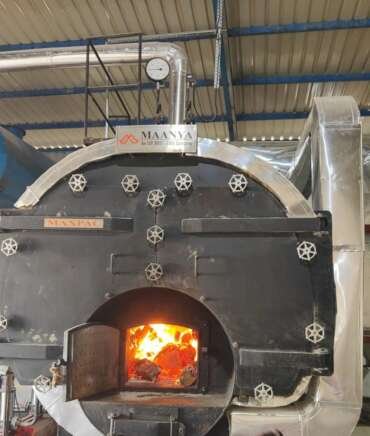
Case Study: Fuel-Fired Package Boiler in Action
Introduction
A fuel fired boiler is a boiler that makes steam by burning fuel in a furnace and passing the heat to water in a closed pressure vessel. Maanya’s fuel fired boilers run on briquettes, coal, paddy husk and agro-waste. A fuel fired package boiler is the factory-assembled version: the pressure vessel, furnace, controls and safety devices are built and tested at the factory and delivered as one unit, so installation and commissioning are faster than for a site-built boiler.
Fuel fired boilers are used wherever a plant needs steady process steam: food processing, dairy, pharmaceuticals, textiles, chemicals, paper, rice mills and laundries. Boilers that burn husk and agro-waste let plants near farming regions use low-cost local fuel, and when supplied under IBR they meet India’s statutory pressure-vessel safety rules.
This guide explains what a fuel fired boiler is, how it works, its uses by industry, fuel options, efficiency, sizing, IBR and emission compliance, and maintenance, so you can specify the right boiler before you ask for quotes.
Fuel Fired Package Boiler at a Glance
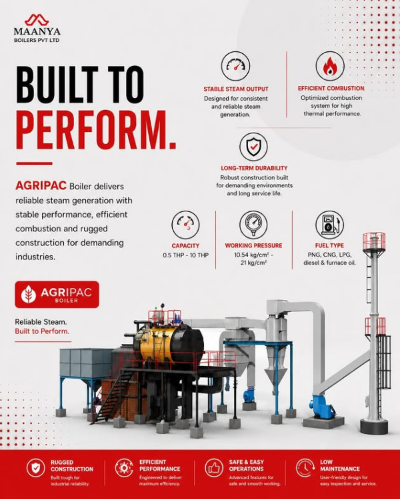
| Item | Specification (Agripac) |
| Fuels | Briquettes, coal, paddy husk, agro-waste |
| Capacity | 2 TPH to 20 TPH |
| Working pressure | 10.54 to 21 kg/cm2 |
| Output | Steam |
| Supply | Factory-assembled and factory-tested package |
| Regulation | Designed, built and certified under IBR (Indian Boiler Regulations) |
| Typical users | Food, dairy, pharma, textile, chemical, paper, rice mills, laundries |
👉 Learn more about the AGRIPAC Boiler:
https://maanyaboilers.co.in/agripac-boiler/
👉 Get a Free Quote → Contact Us
What is a Fuel Fired Package Boiler?
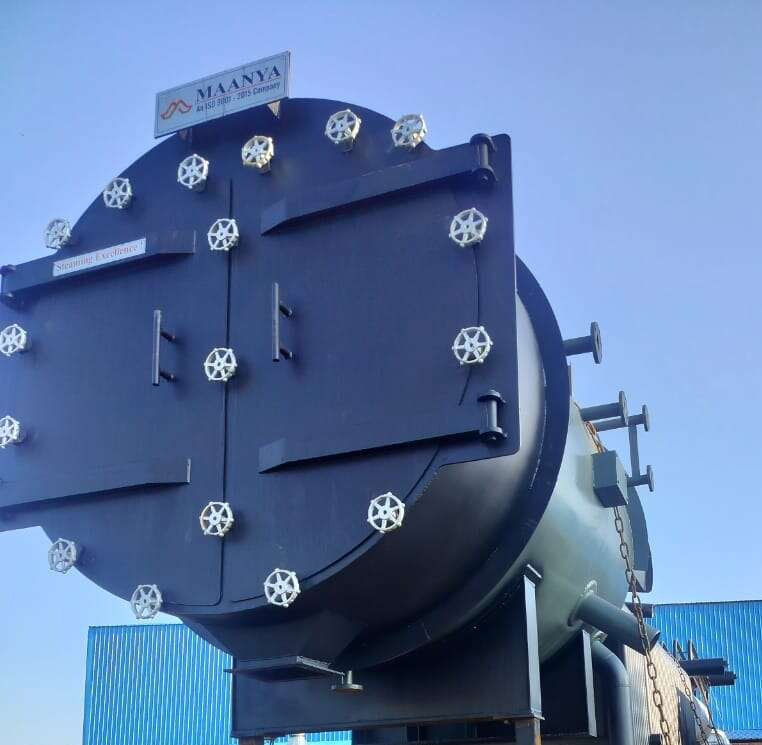
A fuel fired package boiler is a compact steam boiler that is manufactured, assembled and tested at the factory, then delivered as a complete unit. “Package” describes how it is supplied, not how big it is. The unit typically includes the pressure vessel, furnace, fuel feeding arrangement, fans, control panel, safety devices and piping connections.
Package Boiler vs Conventional Boiler
| Package boiler | Conventional (site-built) boiler |
| Factory assembled | Built on site |
| Faster installation and commissioning | Longer installation and commissioning |
| Compact footprint | Needs more space and civil work |
| Tested at the factory before dispatch | Performance tested after installation |
| Simpler maintenance access | Depends on site construction |
Advantages of a Fuel Fired Package Boiler
· Compact design: fits plants with limited floor space
· Faster installation: less on-site fabrication and civil work
· Factory-tested quality: pressure parts, controls and safety systems checked before dispatch
· Fuel flexibility: briquettes, coal, paddy husk or agro-waste, depending on the model
· Lower fuel cost: husk and agro-waste are often cheaper than purchased fuels where they are locally available
· Simpler maintenance: integrated layout with accessible inspection points
Types of Fuel Fired Boilers
Fuel fired boilers are classified by fuel, by construction and by output.
| Basis | Type | What it means | Where it fits |
| Fuel | Biomass fired | Burns briquettes, paddy husk or agro-waste | Plants near farming regions or with access to residues; low fuel cost |
| Fuel | Coal fired | Burns coal | Plants that need high heat content and steady supply |
| Fuel | Multi-fuel | Designed for more than one of these fuels | Plants that want to switch fuel with price and availability |
| Construction | Fire tube | Hot gases pass through tubes surrounded by water | Small to mid capacities; common in package boilers |
| Construction | Water tube | Water flows inside tubes, hot gases outside | High pressure and high capacity |
| Output | Steam boiler | Generates steam at working pressure | Process heating, sterilisation, cooking, drying |
| Output | Hot water generator | Heats water without generating steam | Food plants, laundries, space heating |
Fire tube package designs are the usual choice at small and mid capacities because they are compact and simpler to operate. Water tube designs are normally chosen for higher pressures and capacities. For a wider comparison, see Maanya’s guide to the types of boilers.
Key Components of a Fuel Fired Package Boiler
· Boiler shell: the pressure vessel that holds water and steam
· Furnace and grate: where the fuel burns
· Fuel feeding system: moves fuel into the furnace at a controlled rate
· Draft system (fans and chimney): supplies combustion air and carries flue gases out
· Heat transfer surfaces: tubes or shell passages that move heat into the water
· Steam space: collects steam before it leaves the boiler
· Control panel: monitors pressure, water level, temperature and alarms
· Safety devices: safety valves, pressure gauges, water level indicators, low-water cut-off and pressure switches
· Feed water pump and tank: replace the water that leaves as steam
· Ash removal and dust collector: clear ash from the furnace and capture fly ash before the chimney
AGRIPAC Boiler Specifications
According to the official product specifications, the AGRIPAC Boiler offers:
| Specification | Details |
|---|---|
| Capacity | 2 THP – 20 TPH |
| Working Pressure | 10.54 kg/cm² – 21 kg/cm² |
| Fuel Types | Coal, Paddy Husk, Agro-Waste, Patta Kutti, Wood, Briquettes |
These specifications make it suitable for a wide range of industrial steam applications.
👉 Explore the complete AGRIPAC Boiler specifications here:
https://maanyaboilers.co.in/agripac-boiler/
Uses of Fuel Fired Package Boilers
Fuel fired boilers supply steam for heating, cooking, sterilising, drying, cleaning and chemical processing. The table shows where each industry typically uses it.
| Industry | Typical uses of steam |
| Food processing | Cooking, blanching, pasteurisation, drying, equipment cleaning |
| Dairy | Pasteurisation, sterilisation, evaporation, cleaning of lines and tanks |
| Pharmaceutical | Sterilising equipment and vessels, process heating, cleaning |
| Textile | Dyeing, bleaching, washing, drying, heat setting, finishing |
| Chemical | Reactor heating, distillation, evaporation, tank heating, solvent recovery |
| Paper and packaging | Drying, laminating, adhesive preparation |
| Rice mills and agro-processing | Parboiling and drying, with husk and agro-waste used as fuel |
| Rubber and plastic | Moulding, curing and process heating |
| Breweries and distilleries | Mashing, wort boiling, distillation |
| Commercial laundries | Washing, drying, pressing |
| Engineering workshops | Surface treatment, parts cleaning, process heating |
Other Uses: Hot Water, Space Heating and Power Generation
Beyond process steam, a fuel fired boiler can supply hot water for washing, heat for space heating through coils and heat exchangers, and steam for power generation in plants with a turbine.
Why These Industries Choose Fuel Fired Boilers
· Low-cost local fuel, such as husk and agro-waste, where it is available
· Choice of fuel to match price and supply
· Factory-built package that is quick to install
· Steady steam for continuous production
See the full list of industries we serve.
Which Fuel Should a Fuel Fired Boiler Use?
| Fuel | Strengths | Watch out for | Best suited for |
| Briquettes | Uniform size, low moisture, easy to feed and store | Price tracks biomass demand; keep dry | Plants that want steady combustion and clean handling |
| Coal | High heat content, consistent supply | More ash, higher sulphur and fly ash emissions, needs stricter emission control | Plants with high steam demand and good coal access |
| Paddy husk | Low cost, easy to source in rice-growing regions | Bulky, needs large storage and a feeder; leaves a high volume of ash | Rice mills and plants near rice-growing regions |
| Agro-waste | Renewable, low cost where available | Supply is seasonal; moisture and size vary | Agro-processing plants and sites with a reliable residue source |
Compare Fuels by Cost per Unit of Heat
Do not compare fuels by price per tonne. Compare the cost per unit of heat delivered, which depends on the fuel’s heat content and moisture and the boiler’s efficiency on that fuel. Ask the manufacturer for the steam-to-fuel ratio quoted for each fuel, and ask your supplier for a test report on the fuel’s moisture and heat content.
Fuel Quality Matters
Moisture, size and ash content change how a fuel burns. Wet or oversized fuel lowers furnace temperature, reduces steam output and raises smoke and ash. Buy to a written specification and keep stock covered and dry.
Using More Than One Fuel
A multi-fuel boiler can burn more than one fuel, which gives flexibility when prices or supply change. Confirm with the manufacturer which fuel combinations the model is designed for and what size and moisture limits apply to each.
How to Choose Your Fuel
· Is the fuel available within a practical haul distance, and for how much of the year?
· Is supply seasonal, as with agro-waste after harvest?
· Do you have covered storage space for the fuel you need?
· Do you have a plan for ash handling and disposal?
· What is your steam load pattern, and do you plan to expand?
Note: The most suitable fuel depends on local availability, infrastructure, production requirements, operating costs, and applicable regulations. Consult your engineering team or boiler manufacturer before finalizing a fuel choice.
How to Choose Boiler Capacity and Working Pressure
Understanding Boiler Capacity
One of the most common questions buyers ask is:
“What boiler capacity do I need?”
The AGRIPAC Boiler is available in capacities ranging from:
0.5 THP to 10 TPH
👉 Product Details:
https://maanyaboilers.co.in/agripac-boiler/
What Does Boiler Capacity Mean?
Capacity is the amount of steam the boiler generates per hour, shown in kg/hr or TPH.
Boiler capacity refers to the amount of steam the boiler can generate within a specific period under defined operating conditions.
Simply put:
A higher-capacity boiler can produce more steam to support larger industrial processes, while a lower-capacity boiler is generally suited for smaller operations.
The right capacity depends on factors such as:
- Production volume
- Number of steam-consuming machines
- Process heating requirements
- Future expansion plans
- Peak steam demand
Rather than selecting a boiler based only on current needs, many industries also consider future growth to avoid replacing equipment prematurely.
Understanding Boiler Working Pressure
Another important specification often overlooked during boiler selection is working pressure.
Working pressure is the pressure at which it delivers that steam. Both must match your process.
In another words, Working pressure indicates the pressure at which the boiler is designed to operate safely and efficiently during normal conditions.
The AGRIPAC Boiler is designed for a working pressure range of:
10.54 kg/cm² to 21 kg/cm²
This range makes it suitable for a variety of industrial steam applications where consistent and reliable steam delivery is required.
Different industrial processes may require different operating pressures depending on production requirements. Selecting a boiler with the appropriate working pressure helps ensure stable performance and efficient steam distribution throughout the plant.
Always ensure that the selected boiler’s working pressure aligns with your process requirements and complies with applicable safety regulations.
Sizing Formula
Required capacity = peak process steam demand + distribution losses (about 5 to 10%) + design margin (about 10 to 15%).
Example: a plant with a peak demand of 3,000 kg/hr adds 8% for losses (3,240 kg/hr), then 10% margin (about 3,560 kg/hr). The next standard size is a 4 TPH boiler.
Pressure and Other Checks
· Choose a working pressure above your highest process pressure plus the pressure drop in the pipework
· Confirm whether the quoted capacity is “from and at 100 deg C” or at your actual working pressure and feedwater temperature. The two figures are not equal.
· Check that steam output holds on the fuel you will actually burn, not only on the best fuel
· Avoid large oversizing. A boiler that runs at low load for long periods wastes fuel.
· For very variable loads, consider two smaller boilers in parallel
The Agripac range covers 2 to 20 TPH at 10.54 to 21 kg/cm2.
👉 Send Us Your Steam Load for Sizing → Contact Us
Fuel Fired Package Boilers from Maanya Boilers
Maanya Boilers Pvt. Ltd., part of the Maanya Group in Haryana, builds IBR-certified industrial boilers. The Agripac boiler is Maanya’s fuel fired package boiler for briquettes, coal, paddy husk and agro-waste, from 2 to 20 TPH at 10.54 to 21 kg/cm2.
[Maanya to add: firing method, fuel feeding system, control panel features, typical delivery time, number of units installed, and one example of a client industry with its capacity and fuel.]
| If your steam need is | Maanya model |
|---|---|
| 300 to 400 kg/hr at 7-10.54 kg/cm2 pressure | Minipac |
| 500 to 6,000 kg/hr at 10.54-17.5 kg/cm2 pressure | Maxpac |
| 0.5 to 10 TPH at 10.54-21 kg/cm2 pressure | Petromax |
| 2 to 20 TPH at 10.54-21 kg/cm2 pressure | Agripac |
| 2 to 5 TPH at 10.54-14 kg/cm2 pressure | Combimac |
| 2 to 5 TPH at 10.54-14 kg/cm2 pressure | Agromax |
| 16 to 84 TPH at 10.54-54 kg/cm2 pressure | Biomax |
Browse all Maanya boilers or check ready stock boilers.
Get a Free Quote → Click Here
Frequently Asked Questions
Q: What is a fuel fired boiler?
A fuel fired boiler is a boiler that produces steam by burning fuel in a furnace and passing the heat to water in a closed pressure vessel. Maanya’s fuel fired boilers run on briquettes, coal, paddy husk and agro-waste. The steam goes to process equipment for heating, cooking, drying and sterilising.
Q: What is a fuel fired package boiler?
A fuel fired package boiler is a boiler built, assembled and tested at the factory, then delivered as one unit with the furnace, controls and safety devices already fitted. Compared with a site-built boiler it needs less civil work, installs faster and takes up less floor space.
Q: What are the uses of a fuel fired boiler?
Fuel fired boilers supply steam for cooking, pasteurisation, sterilisation, drying, dyeing, cleaning and chemical process heating. They are used in food and dairy plants, pharmaceutical units, textile mills, chemical plants, paper and packaging units, rice mills and laundries. They can also supply hot water and space heating.
Q: Which fuels can a fuel fired package boiler use?
Maanya’s fuel fired package boilers run on briquettes, coal, paddy husk and agro-waste. Husk and agro-waste are low-cost where locally available, briquettes burn evenly and are easy to store, and coal gives high heat content. Confirm the fuels and combinations your model is designed for.
Q: Is a fuel fired package boiler fire tube or water tube?
Many fuel fired package boilers at small to mid capacities are fire tube designs, where hot gases pass through tubes surrounded by water. Water tube designs, with water inside the tubes, are used for higher pressures and larger capacities. Check the datasheet for the exact design of the model you are buying.
Q: How efficient is a fuel fired boiler, and how can efficiency be improved?
Efficiency depends on fuel moisture and size, air supply, flue gas temperature, feedwater temperature, scale and operating load, so ask the manufacturer for the tested figure for your model and fuel. You can improve it by using dry uniform fuel, tuning air supply, fitting an economiser, returning condensate and treating feedwater.
Q: Which fuel is cheaper to run: husk, briquettes or coal?
It depends on local prices, so compare the cost per unit of heat delivered, not the price per tonne. Husk and agro-waste are usually cheapest where they are locally available but are bulky and seasonal. Briquettes burn evenly and store easily. Coal has high heat content but needs stricter emission control.
Q: Does a fuel fired boiler need pollution control equipment?
Usually yes. Solid fuels produce fly ash and particulate matter, and coal also produces sulphur dioxide. Most plants fit a dust collector such as a multi-cyclone, bag filter or wet scrubber before the chimney, and must meet the emission limits in their State Pollution Control Board consent.
Q: Is IBR certification mandatory for a fuel fired boiler?
Yes, for steam boilers above the size limit in the Boilers Act, 1923. The boiler must be built and tested under the Indian Boiler Regulations, 1950, and inspected and certified by the state boiler inspectorate before use, then re-inspected periodically. Ask the manufacturer for the IBR certificates and test reports before you buy.
Q: How do I choose the right boiler capacity and pressure?
Add your peak process steam demand, 5 to 10 percent for distribution losses and 10 to 15 percent for margin, then pick the next standard size. Choose a working pressure above your highest process pressure plus pipe pressure drop. Avoid large oversizing, which wastes fuel at low load. Share your load details with Maanya for sizing.
Conclusion: Choosing the Right Fuel Fired Package Boiler
The right fuel fired package boiler depends on your steam load, working pressure and fuel supply. Choose husk or agro-waste where it is easy to source, briquettes for steady combustion and easy storage, and coal for high heat content. Size the boiler to your real peak demand, ask for IBR documents, and plan fuel storage, ash handling, water treatment and pollution control from day one.
Maanya Boilers can size and supply a fuel fired package boiler for your plant. Get a free quote
Helpful Resources:
If you’re exploring industrial steam solutions, these resources may also help:
- Home: https://maanyaboilers.co.in/
- AGRIPAC Boiler: https://maanyaboilers.co.in/agripac-boiler/
- All Boiler Solutions: https://maanyaboilers.co.in/boilers/
- About Maanya Boilers: https://maanyaboilers.co.in/about-us/
- Contact Our Team: https://maanyaboilers.co.in/contact-us/
External Resources
For readers interested in industry standards and energy efficiency, the following organizations provide valuable information:
- Bureau of Energy Efficiency (BEE): https://beeindia.gov.in/
- Ministry of New and Renewable Energy (MNRE): https://mnre.gov.in/
- Central Pollution Control Board (CPCB): https://cpcb.nic.in/
- Indian Boiler Regulations (IBR): https://egazette.nic.in/
No responses yet