

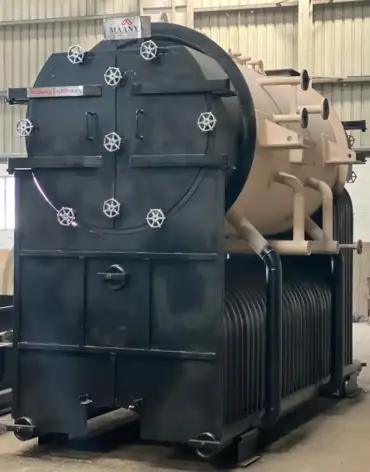
Rice Husk vs Coal for Industrial Boilers
Rice husk can be a practical alternative to coal for industrial boilers, particularly where a reliable supply is available from rice milling or nearby agro-processing units. In the Rice Husk vs Coal comparison, the right Fuel depends on more than heat output. Calorific value, moisture, ash content, fuel cost, storage, handling and boiler compatibility all influence how effectively a fuel can support continuous steam generation.
Coal offers higher energy density and established fuel-supply networks, while rice husk provides an opportunity to use an agricultural residue as an energy source. A suitable boiler configuration is essential because the two fuels behave differently during feeding and combustion. Understanding these differences helps industries assess fuel consumption, operating requirements and overall economics before selecting or switching to a particular fuel.
Rice Husk vs Coal: What Is the Difference?
Rice husk is produced during rice milling, while coal is a mined fossil fuel. Their physical and chemical characteristics affect fuel feeding, combustion, storage, ash removal and overall boiler performance.
- How Rice Husk Is Used as Boiler Fuel
Rice husk serves as a boiler fuel when the combustion system is designed to handle its physical and fuel characteristics. Its low bulk density requires adequate storage space, while the ash produced during firing needs a reliable collection and removal arrangement.
For rice mills, using husk generated during milling can reduce reliance on externally purchased fuel. The Bureau of Energy Efficiency’s guidance on energy efficiency in rice mills highlights rice husk as a commonly used fuel and provides relevant guidance on boiler operation and energy use. Availability still depends on the mill’s location, milling output and storage conditions, so these factors should be assessed before making husk the main fuel source.
- How Coal Performs in Industrial Boilers
Coal has a higher energy density than many biomass fuels, so less material may be needed for the same heat input. It is also supported by established procurement and handling systems in many industrial locations.
Coal quality varies by grade, moisture, ash and calorific value. These characteristics influence firing behaviour and fuel consumption.
Calorific Value of Rice Husk vs Coal
Calorific value indicates the heat released when a fuel burns under defined testing conditions. It helps estimate fuel demand, but moisture, efficiency and delivered cost matter too.
- Understanding the Calorific Value of Rice Husk
The calorific value of rice husk varies with moisture, composition and the testing basis. A published study of an industrial rice-husk boiler reported a gross calorific value of 2,917 kcal/kg for its tested sample. The same study reported 4,000 kcal/kg for the coal used in its comparison.
Other studies report different values, so a representative fuel analysis is preferable to one generic figure. Rice husk generally provides less heat per kilogram than many coal grades, increasing the quantity needed for a given heat requirement.
- Why Calorific Value Matters in Boiler Operation
A lower heating value does not automatically make rice husk unsuitable. Fuel price, moisture, combustion efficiency, steam demand, ash handling and transport costs all affect steam-generation economics.
Rice Husk vs Coal: Fuel Cost and Availability
The overall cost includes transport, storage, feeding, ash disposal and boiler performance, as well as purchase price.
- Rice Husk Availability
Rice husk has a natural advantage for rice mills because it is generated within the milling process. Using it close to the source can reduce the need to purchase and transport another fuel.
Availability varies by region. Mills away from rice-processing centres may face higher transport costs, while seasonal changes and storage moisture can affect supply and usable energy.
- Coal Procurement and Storage
Coal may offer a more established supply route for plants with existing coal-handling infrastructure. Its higher bulk energy density can also reduce the physical volume required for storage.
Coal storage still requires attention to moisture, movement and contamination. Changes in grade can affect combustion and fuel consumption.
Comparing Boiler Performance
Fuel characteristics affect how a boiler converts solid fuel into steam, so the furnace, grate, air supply and heat-transfer surfaces must suit the selected fuel.
- Combustion and Heat Generation
Rice husk requires controlled feeding and suitable air distribution because its particle characteristics differ from coal. Poor fuel distribution or inadequate air leaves unburnt material, while excessive air increases heat losses through flue gas.
Coal also requires controlled combustion suited to its grade and furnace arrangement. Stable firing supports consistent steam generation.
- Ash Generation and Removal
Rice husk produces significant ash because of its mineral and silica content. A dedicated ash-removal arrangement is therefore important for continuous operation.
Coal ash varies according to fuel quality. The quantity and behaviour of that ash should be considered when sizing collection and disposal systems.
- Fuel-Handling Requirements
Loose rice husk has low bulk density, so conveyors, feeders and storage areas need to accommodate a larger physical volume. The feeding route should deliver material steadily to maintain combustion.
Coal is denser and commonly handled through established bulk-fuel systems, although crushing, conveying and dust-control equipment may be required.
Environmental Considerations
Fuel selection affects emissions, resource use and waste management. Rice husk is an agricultural residue, whereas coal is a fossil fuel.
- Emissions from Coal Combustion
Coal combustion produces carbon dioxide and pollutants such as sulphur oxides and particulate matter. Industrial plants may therefore require pollution-control equipment and monitoring.
- Using Rice Husk as an Agricultural Residue
Using rice husk for energy gives a milling by-product a productive application. Research published in Fuel has examined rice-husk boiler performance and the influence of combustion conditions on energy efficiency.
When Does Rice Husk Make Sense?
There is no universal answer to the Rice Husk vs Coal comparison. The choice is shaped by fuel availability, steam demand, boiler configuration and total operating cost.
- For Rice Mills and Agro-Processing Units
Rice husk makes practical sense for rice mills and other agro-processing units when a steady quantity is generated on site. Using this residue as boiler fuel reduces dependence on externally sourced fuel while making productive use of a by-product from the milling process.
The Maanya Boilers guide on biomass boilers for grain units also looks at how grain-processing operations can integrate biomass fuel with their steam-generation needs.
- For Plants With Established Coal Systems
Coal remains practical where biomass supply is limited, or an existing installation has been designed around coal. In such cases, switching fuels can involve changes to feeding, furnace and ash-handling systems.
Compare delivered fuel cost, steam output, operating hours and conversion investment rather than fuel price alone.
What to Check Before Switching From Coal to Rice Husk
Changing fuel requires more than replacing one material with another; the boiler and supporting equipment need assessment before conversion.
- Boiler Compatibility
Before converting from coal to rice husk, assess the furnace, grate and feeding system. Loose husk has different feeding and combustion characteristics, so that the setup may need modification.
Maanya Boilers’ guide to industrial boiler technology evolution covers fuel-flexible systems and automated feeding.
- Fuel Quality and Moisture
Review moisture, ash, particle size and calorific value. These properties influence combustion stability and fuel demand.
- Storage and Feeding
Rice husk needs covered storage and feeding equipment suited to its low bulk density. The route to the furnace should remain dependable as steam demand changes.
Why Choose Maanya Boilers for Biomass-Fired Applications?
Selecting a boiler for rice husk or other solid fuels requires more than matching the required steam capacity. Maanya Boilers offers systems for rice husk, coal, biomass briquettes and other agro-residues, with ranges such as Agripac and Agromax designed around varied fuel requirements.
For a plant considering a move from coal to biomass, factors such as fuel quality, daily steam demand, feeding arrangements, ash handling and site conditions need to be assessed together. Maanya Boilers’ Minipac Steam Boiler guide provides further insight into packaged steam generation and fuel flexibility.
Conclusion
The Rice Husk vs Coal comparison involves much more than heating value. Coal generally provides greater heat per kilogram, while rice husk is attractive for rice mills and agro-industries with reliable access to the residue.
A sound decision considers supply, moisture, ash, combustion, storage, emissions, steam demand and total operating cost. A correctly matched boiler makes rice husk a practical route to industrial steam generation while reducing reliance on fossil fuels.
Frequently Asked Questions About Rice Husk vs Coal
1. Is rice husk better than coal for industrial boilers?
Neither fuel is universally better. Rice husk is practical where it is readily available, and the boiler is designed for its characteristics. Coal may suit plants with established coal systems or limited biomass access.
2. What is the calorific value of rice husk?
Published figures vary with moisture, composition and testing conditions. One industrial study measured 2,917 kcal/kg for its rice-husk sample.
3. Can rice husk replace coal in an existing boiler?
Not always. The furnace, grate, feeding system, air supply and ash-handling system should be assessed before changing fuel. Engineering modifications may be necessary.
4. Does rice husk produce more ash than coal?
Rice husk can have relatively high ash content, while coal varies considerably by grade. Testing the actual fuels gives a clearer comparison for plant planning.
5. What should industries consider before switching to rice husk?
Assess fuel availability, moisture, calorific value, ash, storage, feeding, boiler compatibility, emissions control and delivered steam cost.
No responses yet